PuraCostaBrava
ES

Villages

The villages of the Costa Brava

From Portbou to Sant Feliu de Guíxols: every village with its own character.

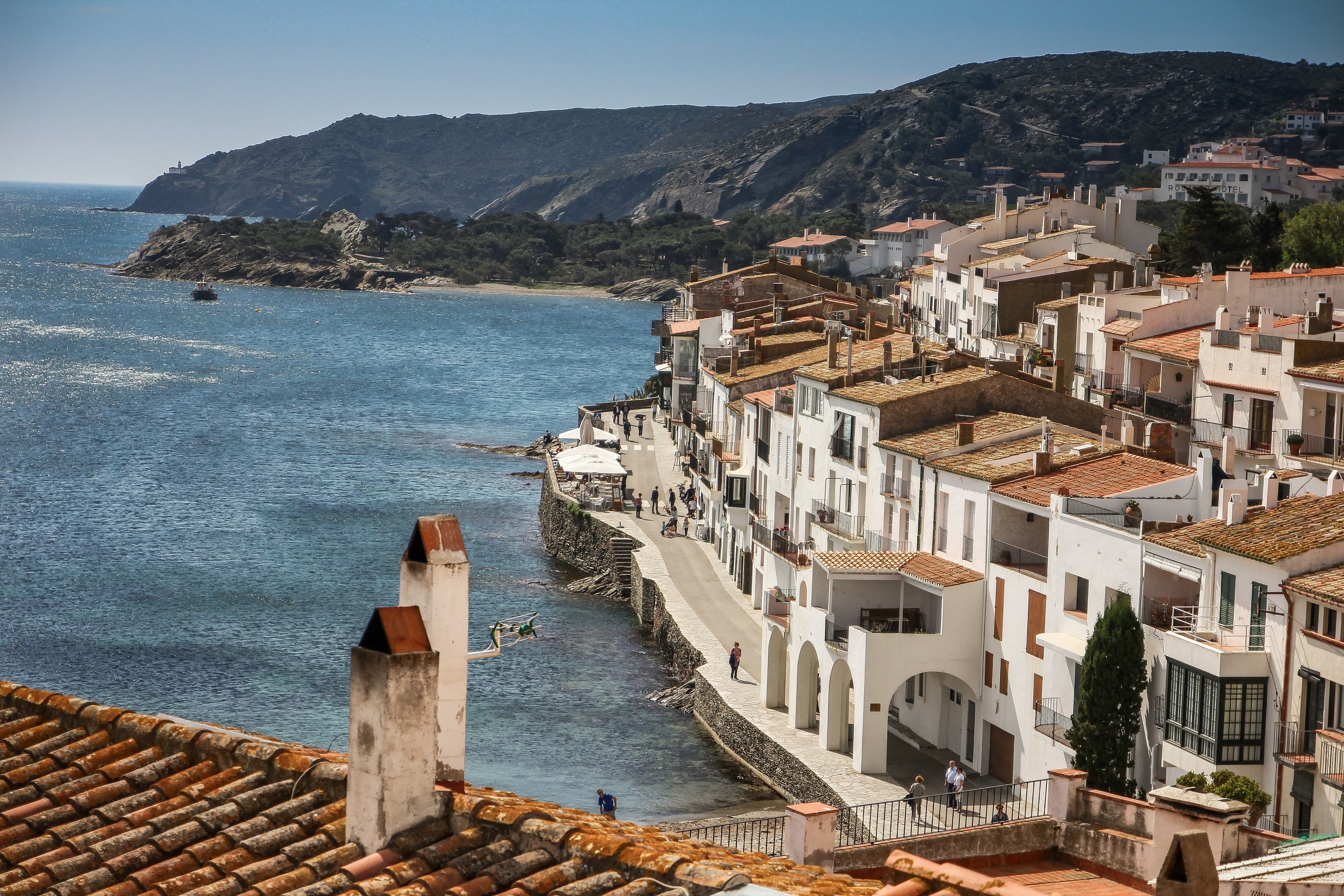
The seafront of Cadaqués beside the water, with the white houses and tiled roofs of the old town and the Cap de Creus coastline behind

Alt Empordà

Cadaqués

Cadaqués is the most photographed town on the Costa Brava, and the hardest to actually get to know. White houses, green shutters, boats drawn up facing the sea, the light that undid Dalí — it's all over every postcard, and none of it explains why people keep coming back. Maybe it has to do with the winding road that kept the town cut off from the rest of the Empordà for centuries, or with that light, which changes by the hour and makes the place feel like somewhere new each morning, noon and evening. You don't come here for wide sandy beaches or a promenade lined with shops. You come to walk slowly, to lose yourself in slate-paved streets, to watch the sea from the rocks, and to understand why this corner of the coast ended up gathering some of the twentieth century's most important artists.

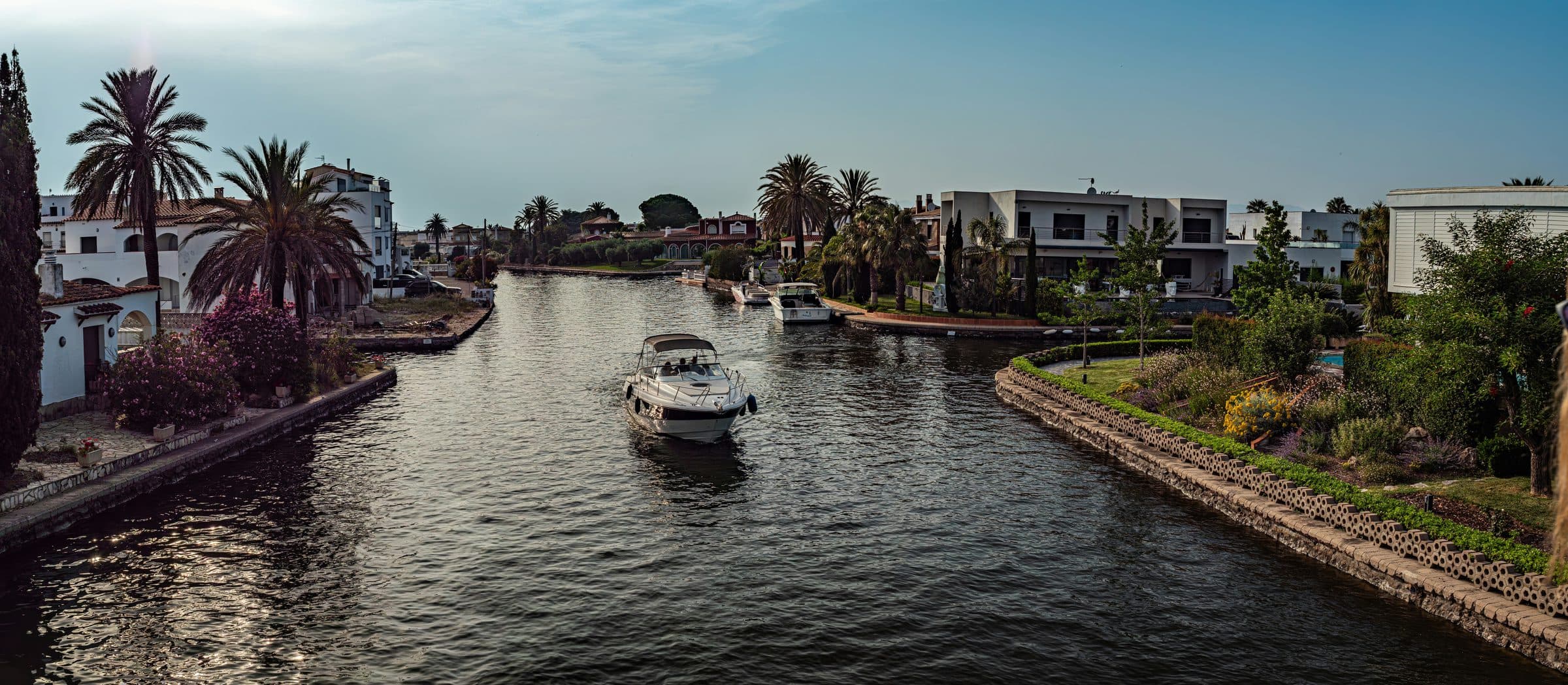
Navigable canals of Empuriabrava, Costa Brava

Alt Empordà

Empuriabrava

Empuriabrava doesn't look like anywhere else on the Costa Brava, and it isn't trying to. While every other town here grew slowly around a fishing harbor, this one started on a drawing board: in the late 1960s, the old marshland at the mouth of the Muga river was turned into a town built entirely around water, with more than 24 kilometers of navigable canals, thousands of private moorings, and the largest residential marina in Europe. It could easily read as artificial, but spend a day here and the appeal becomes obvious: where other towns park the car, this one moors the boat. And while one half of the town lives with its eyes on the canals, a few meters away begin the Aiguamolls de l'Empordà, a wetland landscape where flamingos, herons and storks take to the air. Engineering and nature rarely sit together this comfortably.

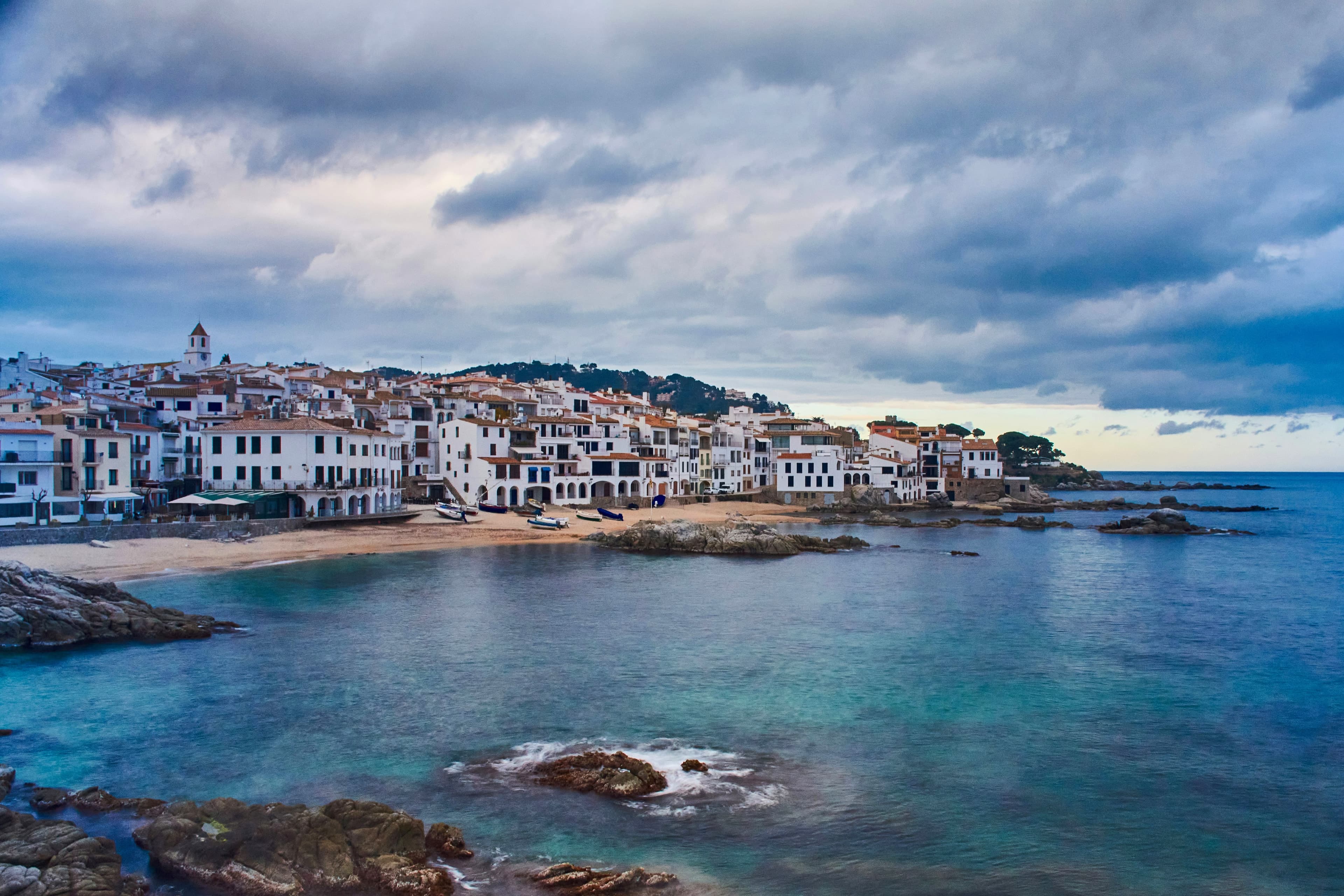
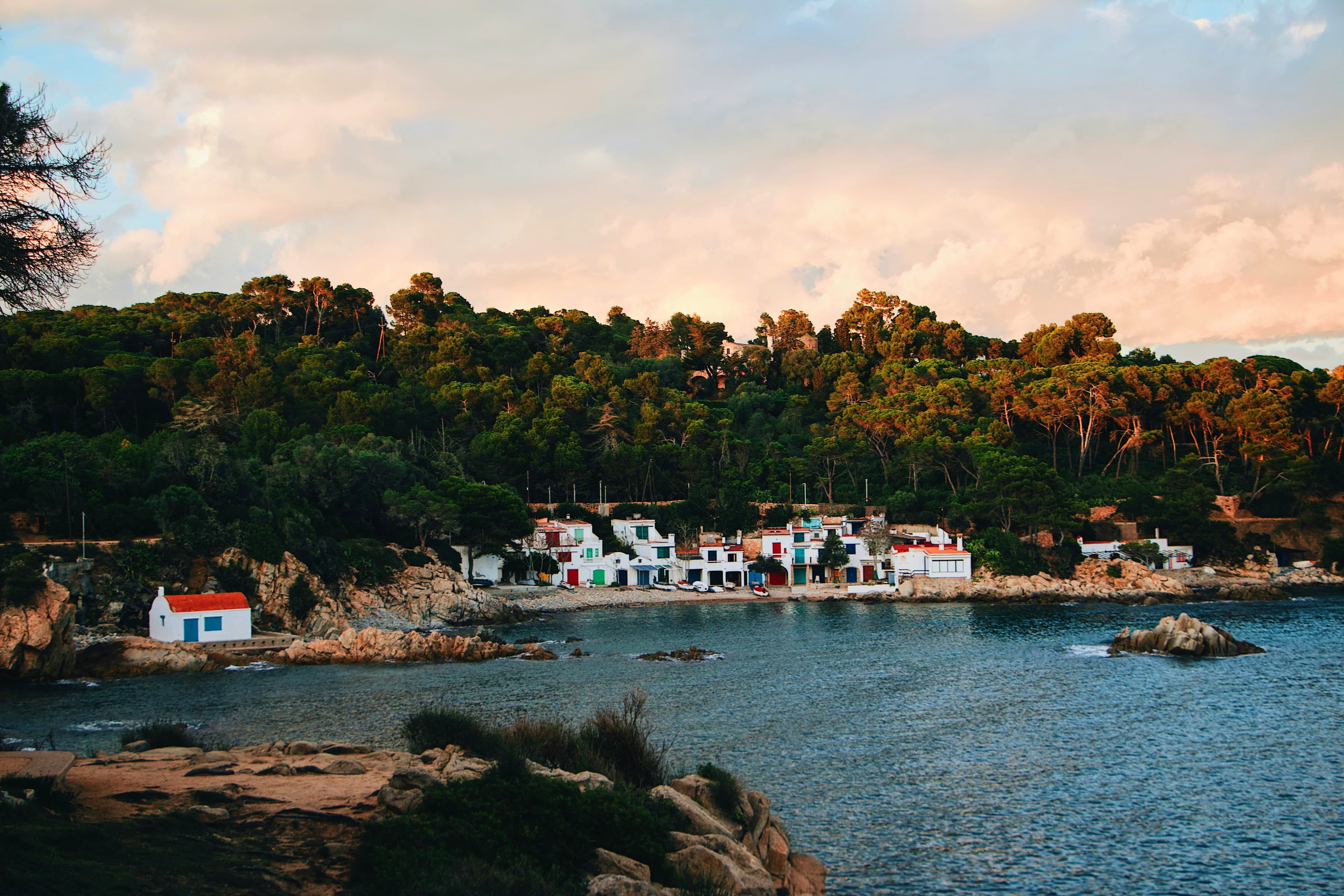
The white fishermen's huts of Cala S'Alguer, in Palamós, on the rock facing a sheltered cala at dusk

Baix Empordà

Palamós

Some towns live facing the sea. Palamós still lives off it. While most of the Costa Brava turned its harbors into leisure marinas, here the boats still come back every evening loaded with fish, the auction house still opens for business, and the restaurants still wait on the day's catch: the harbor keeps setting the town's rhythm the way it has for centuries. But walk a few minutes north and you find another Costa Brava entirely, where the landscape changes at once: the fishermen's huts of Cala S'Alguer, the untouched sands of Castell beach, pine woods running down to the water, a coastline that has somehow stayed clear of development. Palamós holds together two sides that rarely coexist in one place — the authenticity of a working fishing harbor, and some of the best-preserved calas on the Mediterranean.

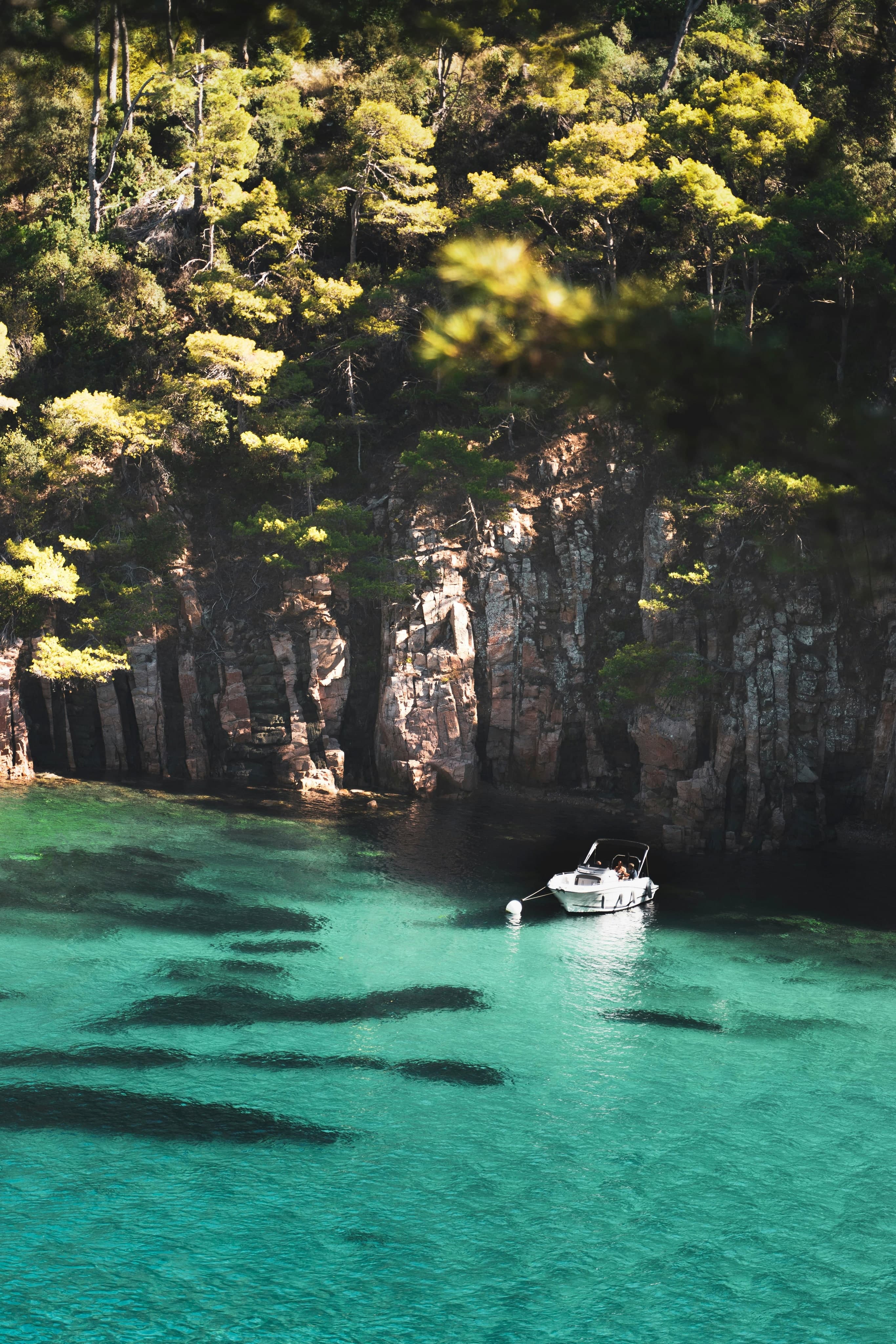
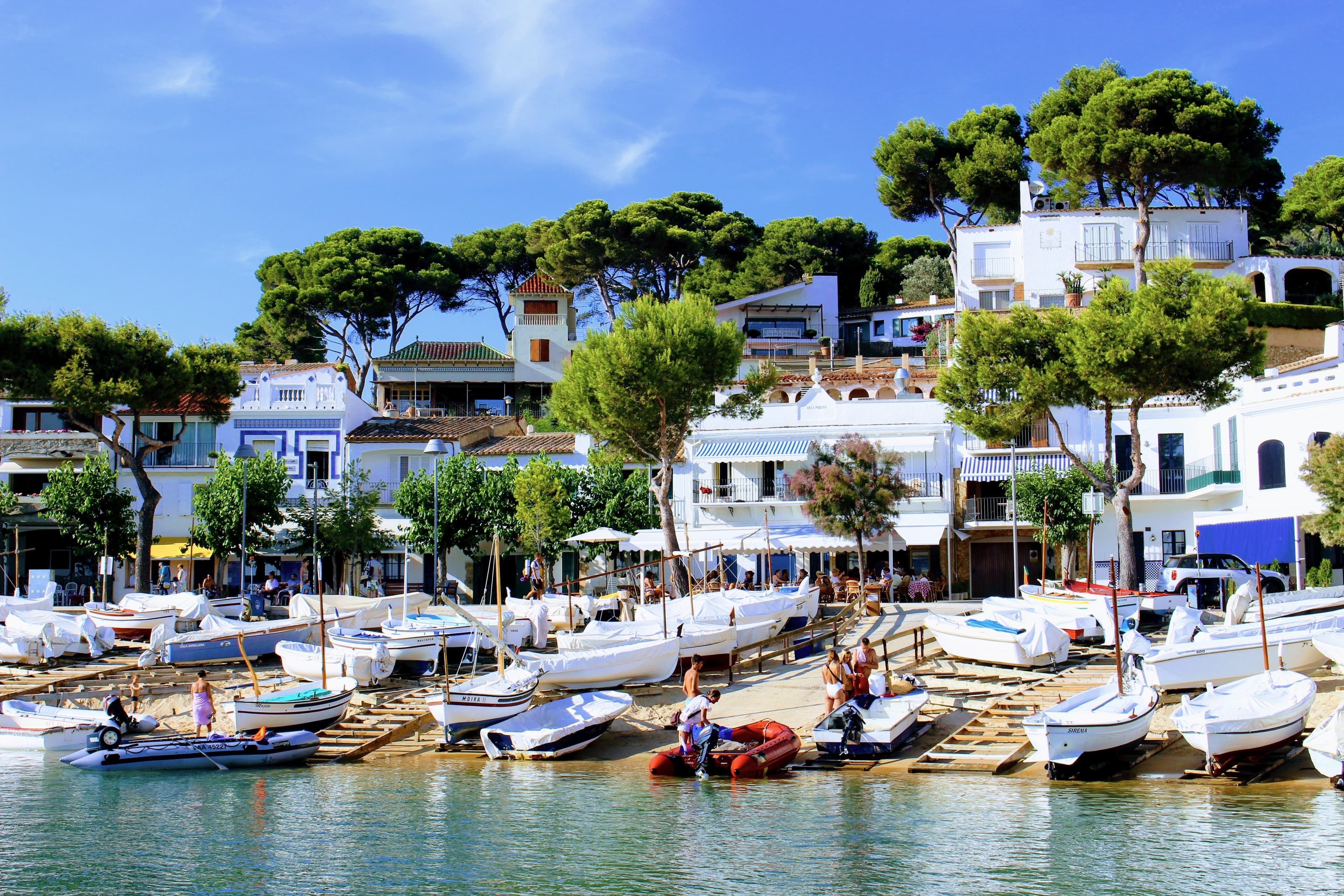
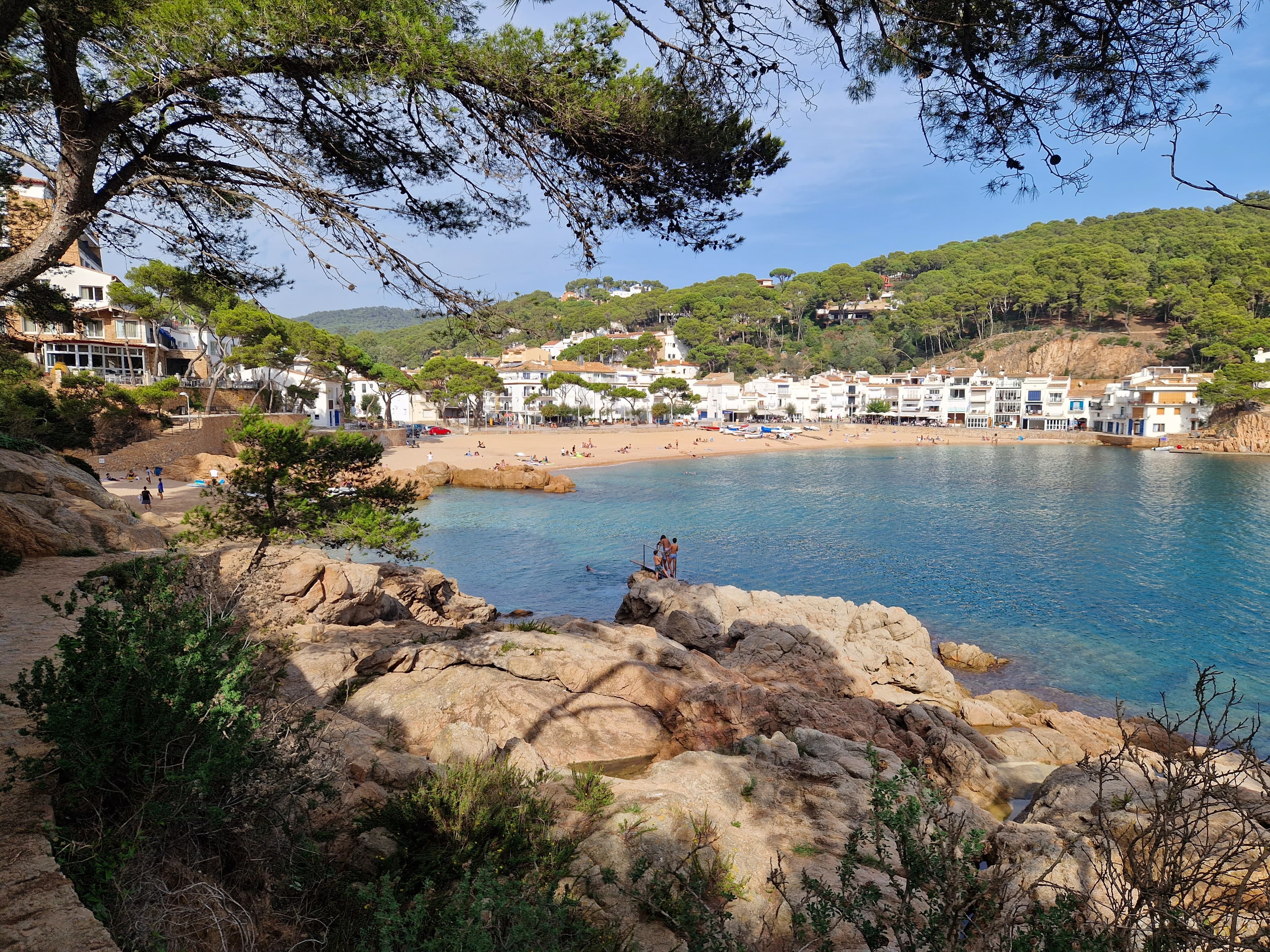
Tamariu seen from the camí de ronda, the beach and the town framed by a pine

Baix Empordà

Tamariu

Tamariu takes its name from the tamariu, the tamarisk that grew on this cala long before the town existed. Today it's still the smallest and quietest of Palafrugell's three coastal towns — [Calella](/en/pueblos/calella-de-palafrugell), [Llafranc](/en/pueblos/llafranc) and Tamariu — and that's exactly where its charm lives. There's no grand promenade here, no harbor crowded with boats: the houses run straight to the sand, the boats rest on the beach, and the sea is simply part of everyday life. The beach isn't somewhere you go — it's the town's living room. Even though it fills up with life in summer, Tamariu holds on to something that's grown scarce on the Costa Brava: quiet. Walk a few minutes along the Camí de Ronda and the terraces fall away, leaving only cliffs, pine woods, and some of the clearest water on the Mediterranean.