PuraCostaBrava
ES
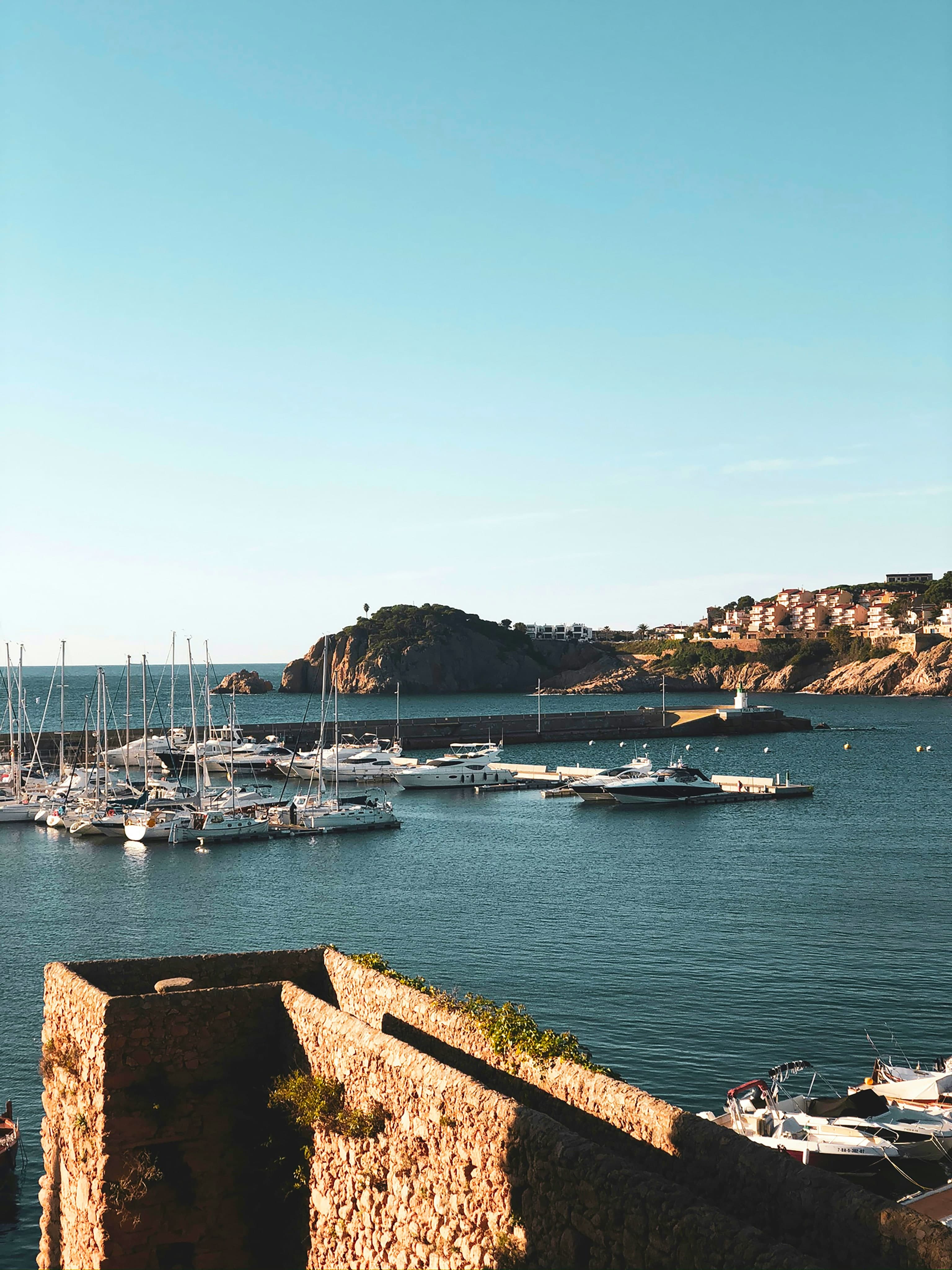
Sant Feliu de Guíxols's marina, with the headland and houses behind

Baix Empordà

Sant Feliu de Guíxols

Sant Feliu de Guíxols was, for centuries, this region's front door: the harbor everything moved through, crowned by a Benedictine monastery already a hundred years old when the last millennium began. That past hasn't gone anywhere — it's still there in the horseshoe arches of the Porta Ferrada, in the tiled domes along the passeig, in the very name of the music festival that fills the monastery square every summer — but Sant Feliu doesn't live off memory alone. It's a real, working town, with a market and year-round neighbors, and it happens to have the good fortune that the Costa Brava's most celebrated camí de ronda begins, literally, on its beach.

The monastery, the Porta Ferrada, and the hermitages of the district

The Porta Ferrada is the first thing to understand about Sant Feliu: a tenth-century façade of horseshoe arches on columns, with a later upper tier of Lombard arches added on top. It's the oldest surviving piece of the Benedictine monastery that gave rise to the town, and it's still its symbol today, present on the coat of arms and in the memory of anyone who's spent time here. Part of the old monastic complex now houses the town's Museu d'Història; the basilica, with its eighteenth-century neoclassical façade, still serves as the parish church. Every summer, the monastery courtyard hosts the Porta Ferrada International Festival, one of the oldest music festivals in Catalonia, with classical music, jazz, theater and dance.

Outside the town center, scattered across the hills of the district, several stone hermitages survive that once served as parish churches for farming communities before the town grew toward the sea. They're not the kind of monument with opening hours — they're the sort of discovery you make on foot: a bell-gable, a bell, a door shut most of the year, and pines all around.
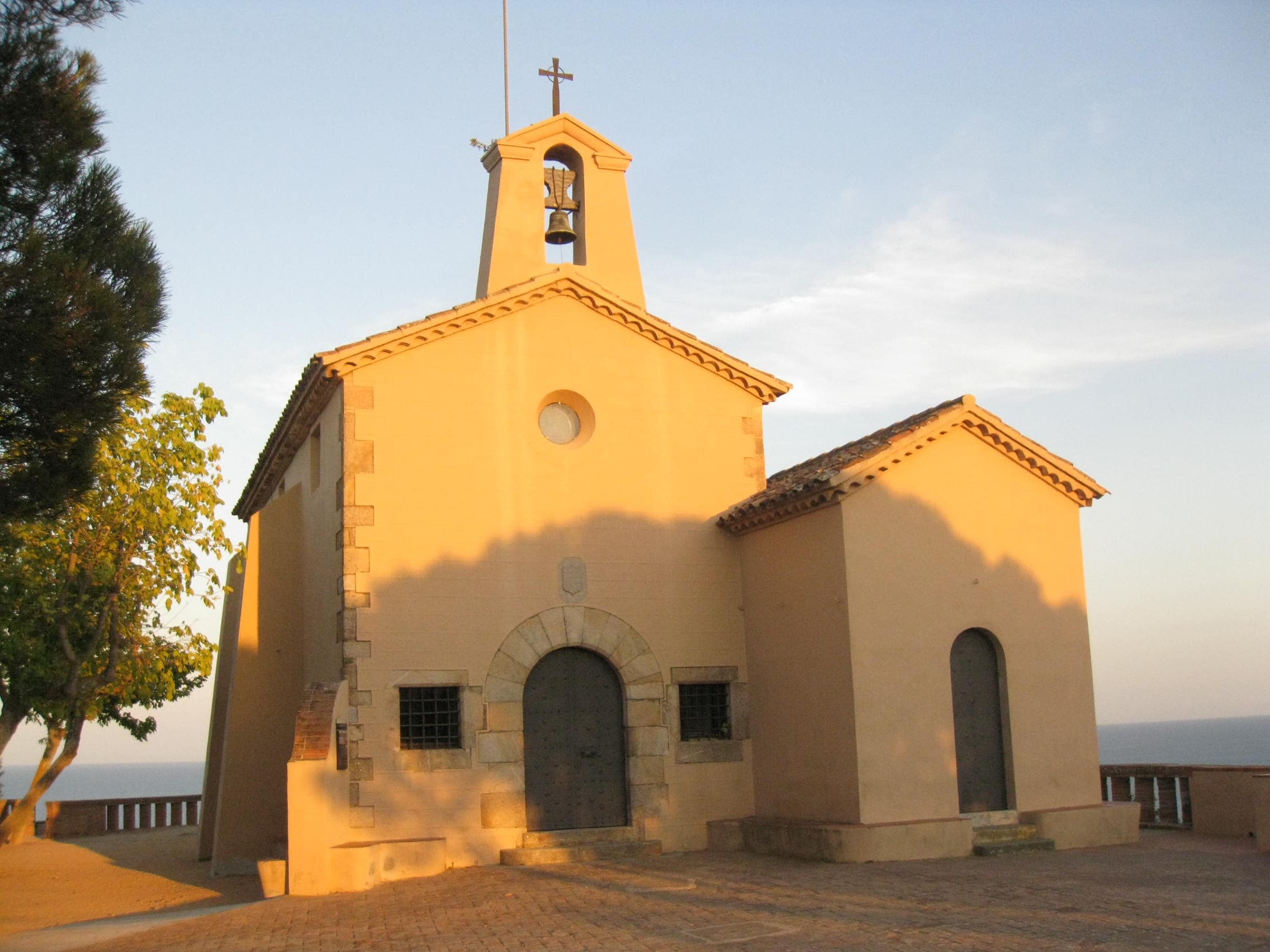
The Ermita de Sant Elm, a plain-façaded chapel with a bell-gable, above the sea at Sant Feliu de Guíxols in the evening light
The Ermita de Sant Elm, above the sea, at the district's best-known lookout.Photo: Enfo / Wikimedia Commons (CC BY-SA 3.0)

The passeig, the Casino, and the sweets of a guixolenc

The Casino La Constància, with its tiled tower and dome, is the most photographed building on the passeig, and for good reason: behind a façade that looks pulled from another latitude entirely, it still functions as a social club, keeping an old-world café atmosphere you can borrow for the price of a coffee from this one. Around it, the historic center holds cafés with real character — ANNNA, where design meets local produce — and bakeries that have spent generations perfecting the guixolenc, the pastry that gives the town's residents their nickname: La Vienesa and the Pastisseria Gironès are the two addresses worth noting.

From the Carrer Major to the Passeig del Mar, the town unfolds a run of façades from the Gothic of the church of Sant Feliu to the modernisme of the Cases Patxot, testimony to the years when maritime trade filled the town with colonial money and the appetite to show it off.
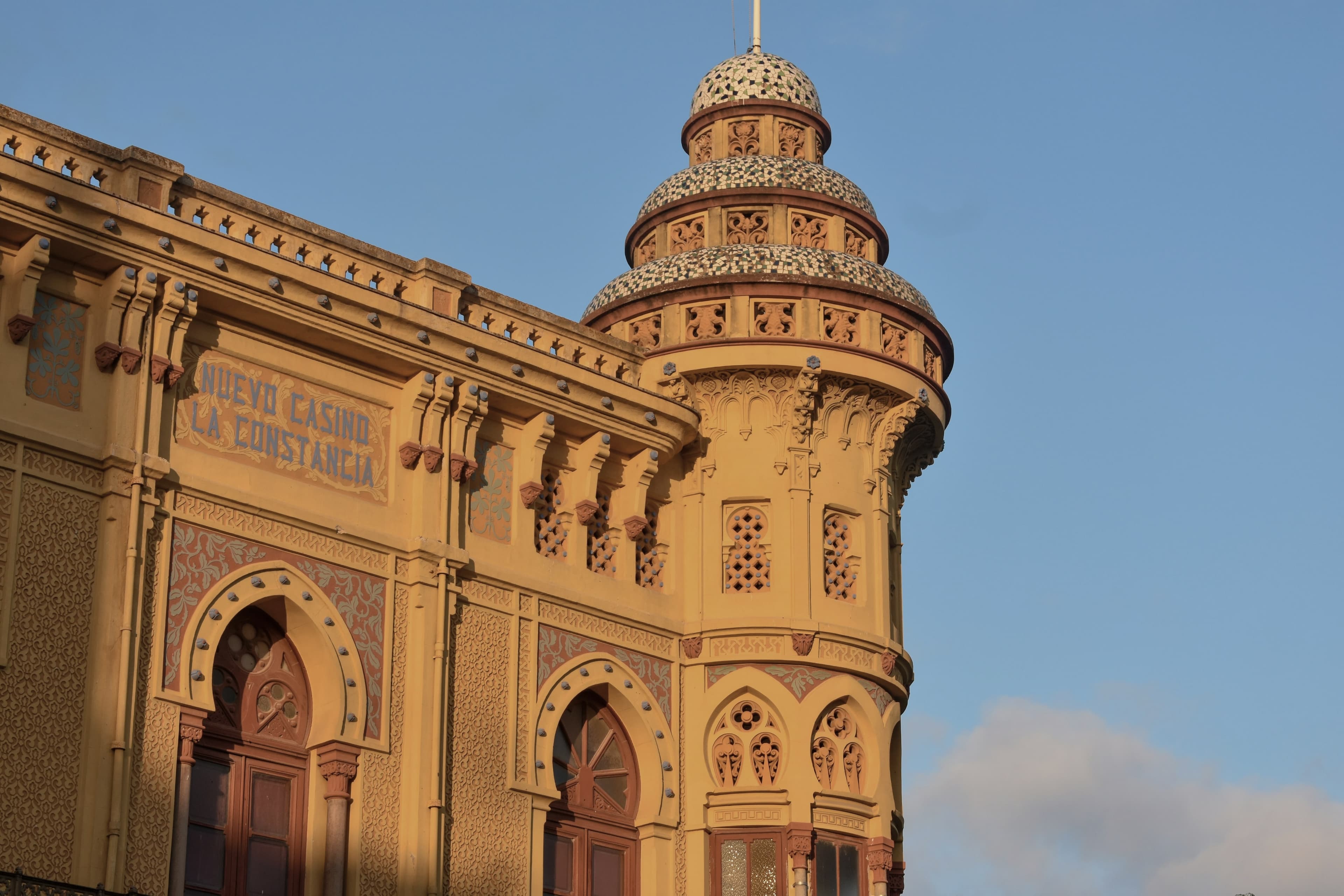
The yellow façade and tiled tower of the Casino La Constància in Sant Feliu de Guíxols, in the evening light
The Casino La Constància, all tile and dome, in the heart of the historic center.

Beaches and calas, on the way to S’Agaró

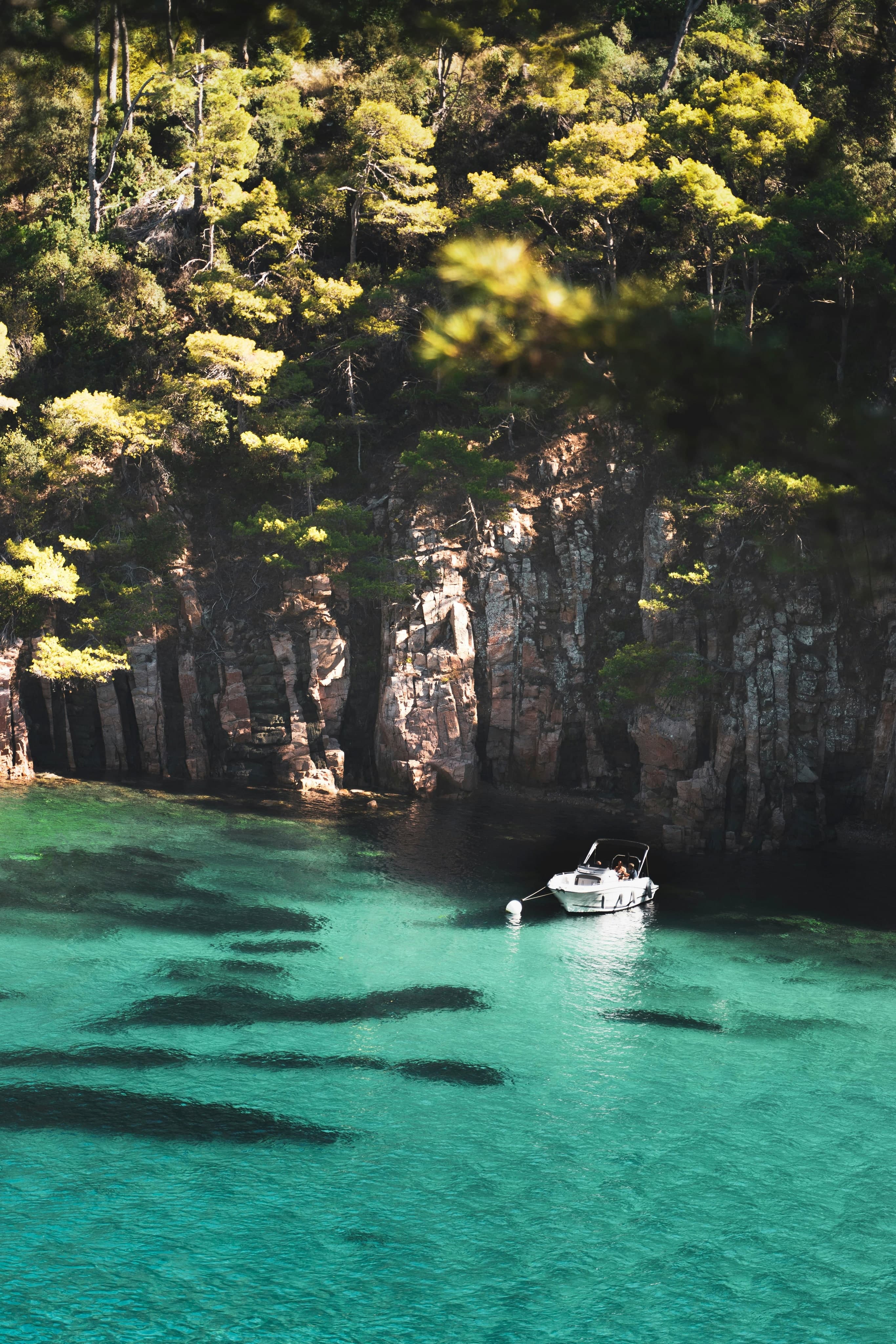
Sant Feliu's beach, the one in the center, is wide and easy to reach, with the whole life of the town a step away. For something more sheltered, there's Cala Jonca, small and less busy, and from there the best part begins: the camí de ronda toward S’Agaró, about 2.5 km of cliffside path covered at an easy pace in a little over an hour, climbing and descending stairs cut into the rock. Along the way come Cala Maset and Sa Caleta, perfect for a swim at the halfway point, before you reach the wide Platja de Sant Pol, already in S’Agaró.

It's a walk that asks nothing of the body beyond a little patience with the stairs, and rewards it with the most photographed stretch of coast in the whole Baix Empordà.
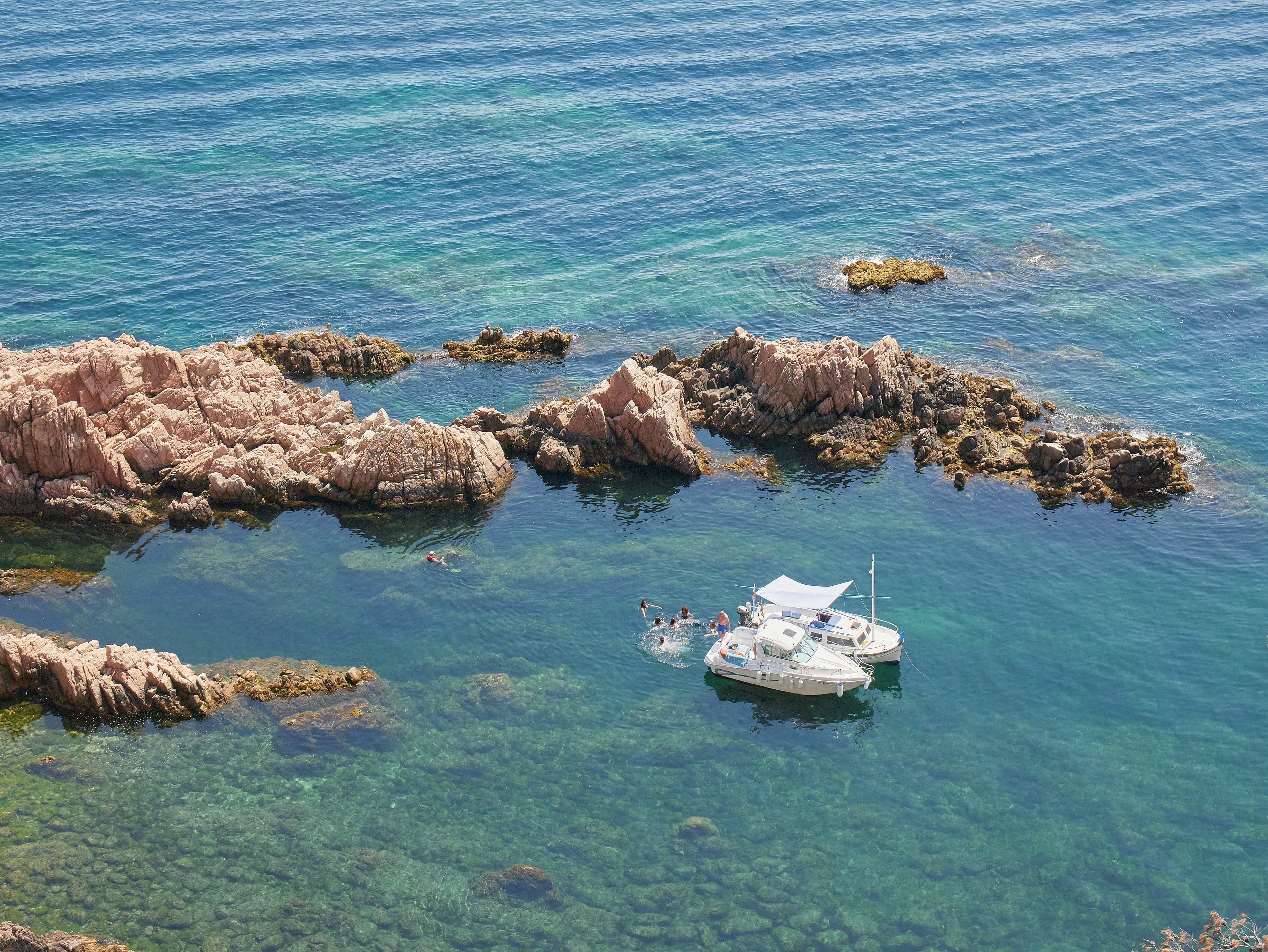
A rocky, turquoise-water cala near Sant Feliu de Guíxols, reddish rock and a boat at anchor
One of the small rocky calas dotting the coast on the way to S’Agaró.

Where to stay: from the Alàbriga to the town beach

The Alàbriga Hotel & Home Suites tops Sant Feliu's luxury offering: five stars, a spa, a gourmet restaurant with sea views, and an infinity pool looking out toward S’Agaró. It's the choice for anyone after a stay with nothing left to plan.

Right on the beachfront, a handful of four-star hotels — the Elke Spa Hotel, the Hotel Boutique OMA, the Ilunion Caleta Park, the Van der Valk Hotel Barcarola — round out the rest, each with its own character: spa, design, accessibility, or simply the beach at the door. It's worth booking ahead in summer; the town is small and the options, while good, aren't unlimited.
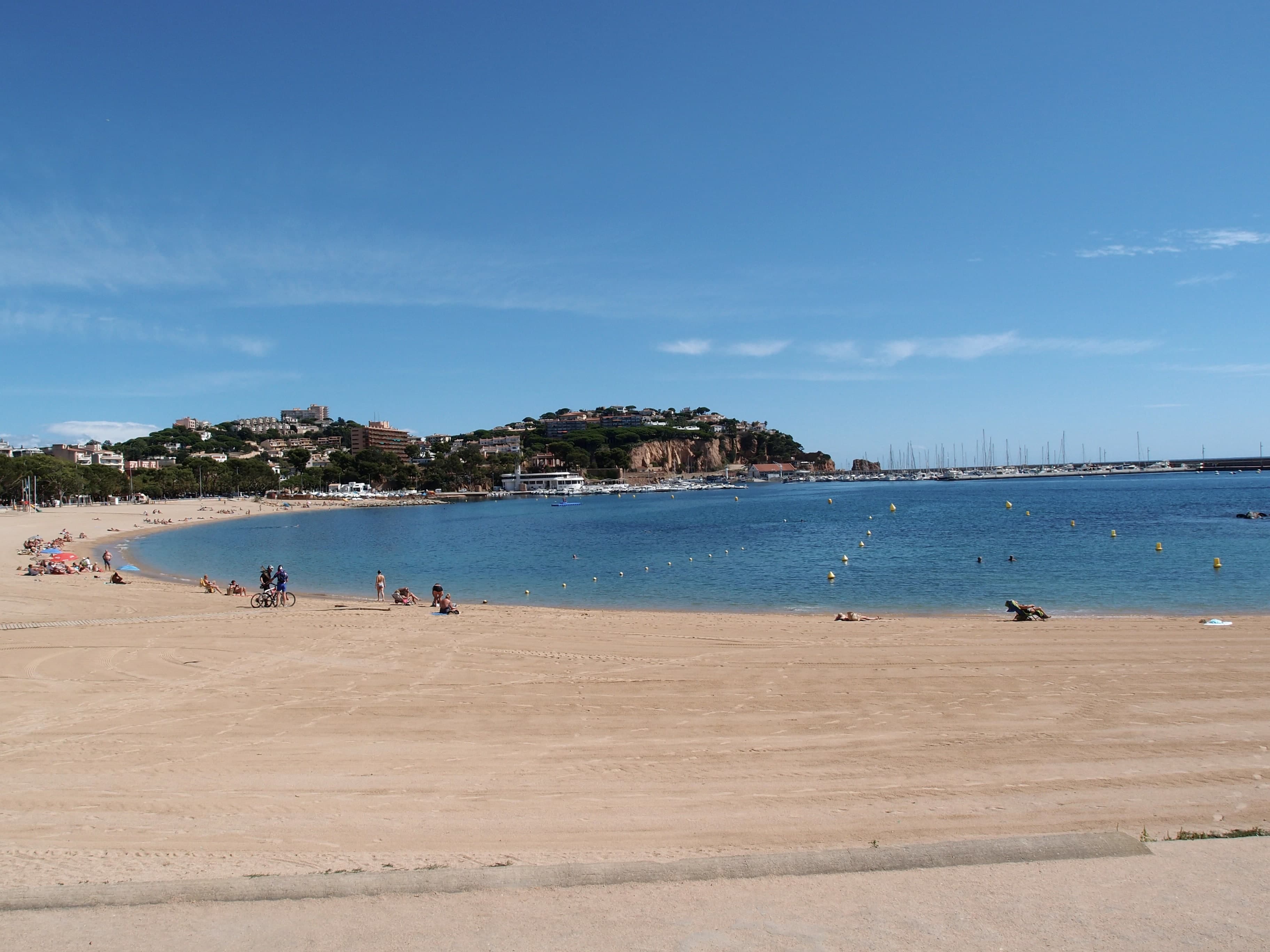
Sant Feliu de Guíxols's wide beach and bay, with the marina and headland behind
The town beach and the bay of Sant Feliu, with the harbor in the distance.Photo: Gordito1869 / Wikimedia Commons (CC BY 3.0)

The Sant Feliu de Guíxols notebook

Where we go

Sant Feliu can be covered in a day, but it's better spread over two: one for the town and its history, another for the walk to S’Agaró. Here's the short list: where to eat with a view, where to get a good coffee, and which cala to head to when the town beach fills up.

Approximate positions · Sant Feliu de Guíxols · Cartography © OpenStreetMap contributors, tiles by OpenFreeMap

Tap a pin or a place in the list to zoom in

Where to eat

  • Seafaring cooking with a harbor view. The classic choice for fresh fish with no surprises.

  • The destination for carnivores: a meat selection that's earned its own reputation.

Where to drink

  • Well-chosen wines and a welcoming mood, for a drink that runs long.

  • Coffee or a drink in the most photogenic building on the passeig. You go as much for the place as for what's in the glass.

Coves & swimming

  • Small and tucked away, a step from the center. For when the main beach fills up.

  • At the halfway point of the camí de ronda toward S’Agaró. A required stop for a swim.

What to do

  • The camí de ronda to S’Agaró

    2.5 km of cliffside path to Platja de Sant Pol. The best plan for the morning.

    No fixed pin
  • In the old monastery, beside the Porta Ferrada. Half an hour that puts the whole town in context.

  • In summer, music in the monastery courtyard. One of the oldest festivals in Catalonia: worth checking the lineup ahead of time.

Where to shop

Good to know

Frequently asked questions

What is the Porta Ferrada?

It's the oldest and most recognizable façade of Sant Feliu's Benedictine monastery, and the symbol of the town. Its tier of horseshoe arches on columns dates to the tenth century, with a later upper tier of Lombard arches added on top. Part of the old monastic complex now houses the town's Museu d'Història, while the basilica still serves as the parish church.

How do you get to Sant Feliu de Guíxols?

Sant Feliu has no train station, so you'll get there by car or bus. There's a direct service from the Girona bus station, roughly an hour's journey, with connections to Girona airport that run more often in season. It's worth checking timetables before you travel, since they shift with the time of year.

What are the best beaches in Sant Feliu de Guíxols?

The town beach, in the center, is the largest and most accessible. For something more sheltered there's Cala Jonca, and following the camí de ronda toward S’Agaró you'll find Cala Maset and Sa Caleta, two small calas with barely any facilities and among the prettiest on the whole stretch.

How long does the camí de ronda from Sant Feliu de Guíxols to S’Agaró take?

It's about 2.5 km between the two towns, a steady climb and descent of stairs covered at an easy pace in a little over an hour. Along the way you pass Cala Maset and Sa Caleta — perfect for a swim at the halfway point — before reaching the beach at Sant Pol, already in S’Agaró.

Other villages to discover

A turquoise-water cala in Begur, between reddish rock cliffs and pines, with a boat at anchor

Baix Empordà

Begur

Begur sits a little inland, and that one fact explains almost everything else. It isn't a town built beside the water but on a hill above it, with the Mediterranean laid out below: while other Costa Brava towns grew up around a harbor, Begur grew up around a castle, and the calas came later. So nobody here asks which is the beach — they ask which cala you're going down to today. Sa Tuna, Sa Riera, Aiguablava, Platja Fonda, Fornells, Aiguafreda, Illa Roja: a string of small bays linked by the Camí de Ronda, the coastal footpath, each with its own temperament. And behind all of them sits an old quarter of Indiano mansions, quiet squares and cobbled streets that remember something easy to forget now — before it became one of the most coveted places on the Costa Brava, Begur looked west toward Cuba more than east toward Barcelona.

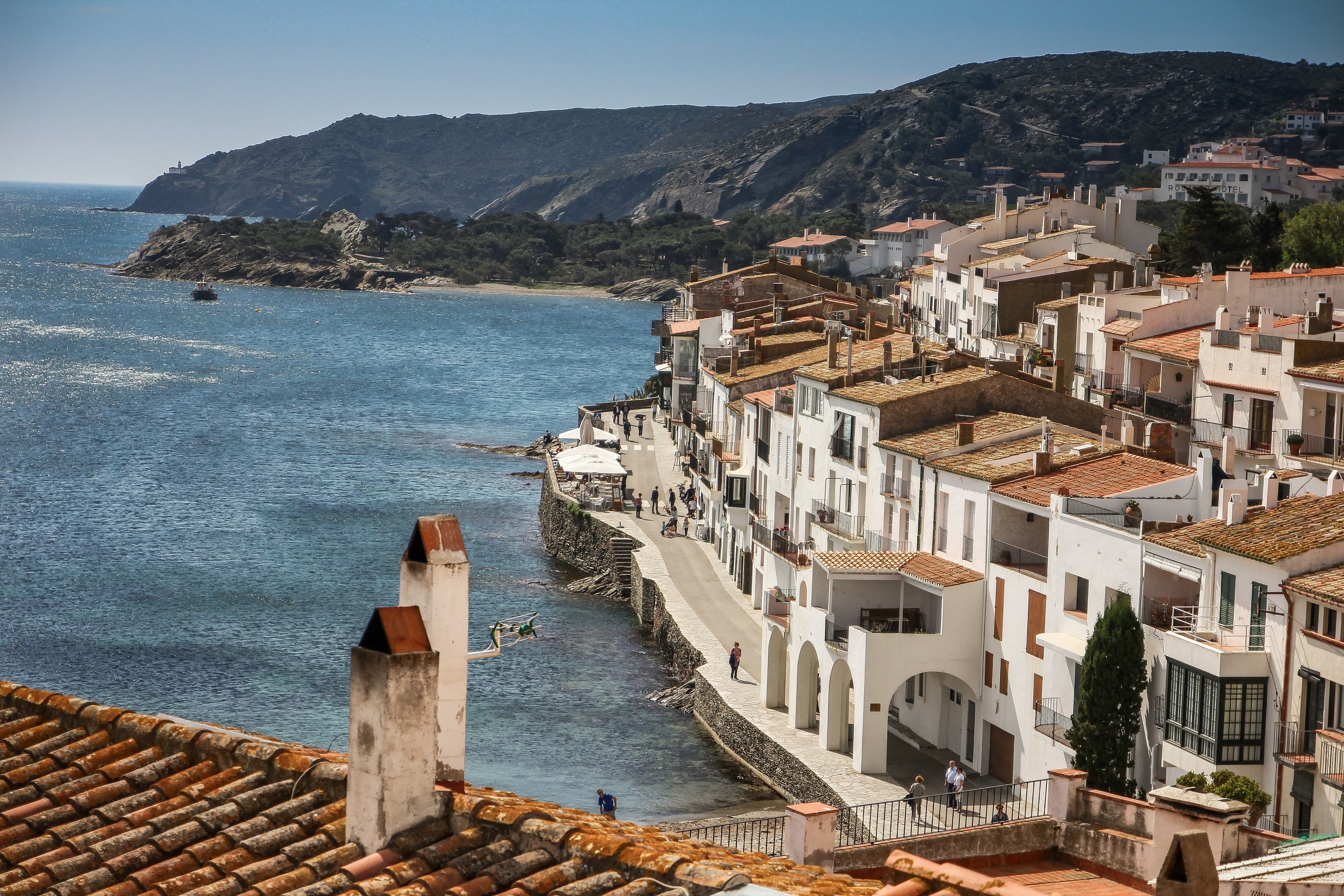
The seafront of Cadaqués beside the water, with the white houses and tiled roofs of the old town and the Cap de Creus coastline behind

Alt Empordà

Cadaqués

Cadaqués is the most photographed town on the Costa Brava, and the hardest to actually get to know. White houses, green shutters, boats drawn up facing the sea, the light that undid Dalí — it's all over every postcard, and none of it explains why people keep coming back. Maybe it has to do with the winding road that kept the town cut off from the rest of the Empordà for centuries, or with that light, which changes by the hour and makes the place feel like somewhere new each morning, noon and evening. You don't come here for wide sandy beaches or a promenade lined with shops. You come to walk slowly, to lose yourself in slate-paved streets, to watch the sea from the rocks, and to understand why this corner of the coast ended up gathering some of the twentieth century's most important artists.

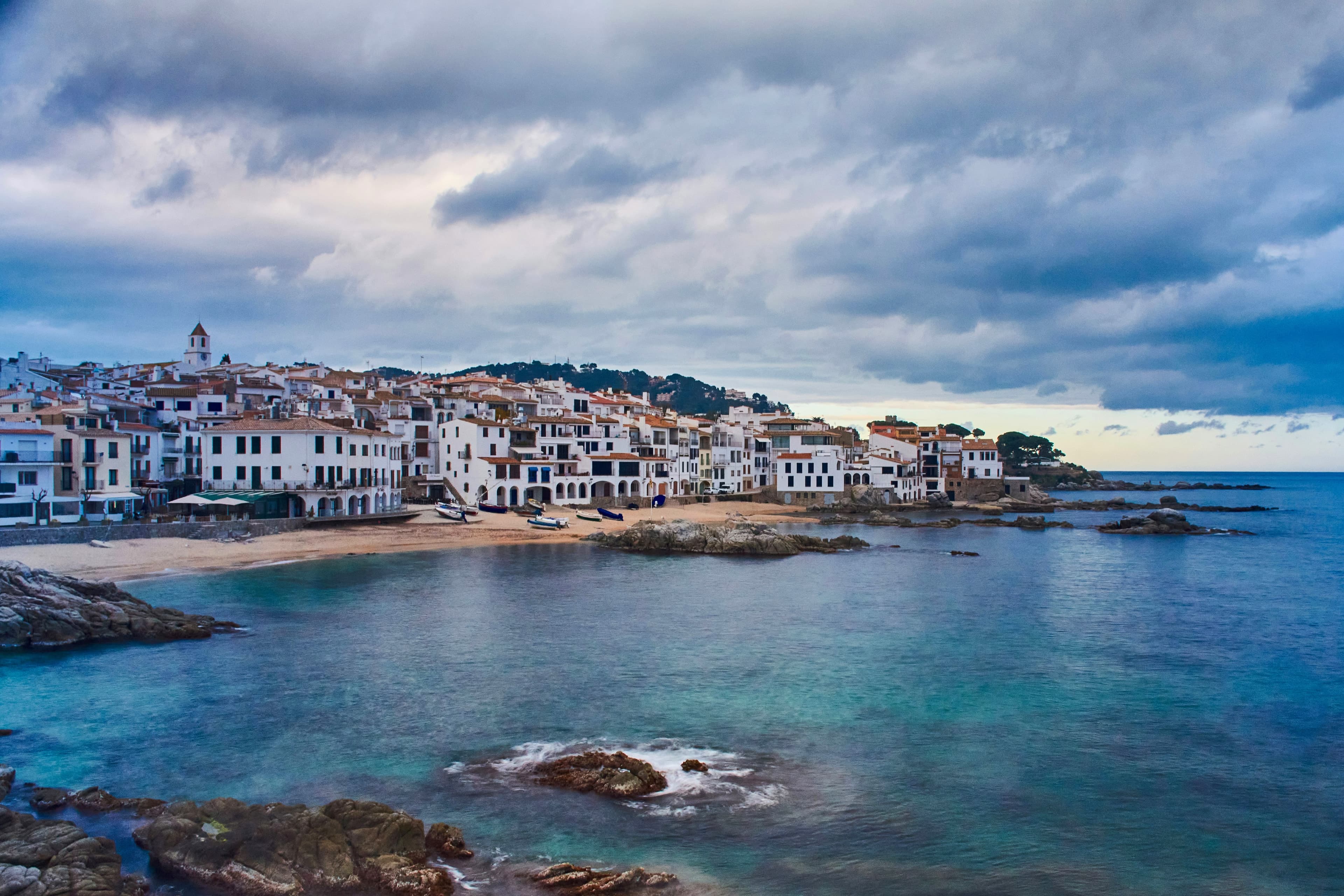
The white town of Calella de Palafrugell and its cala under an overcast sky at dusk, turquoise sea and rocks in the foreground

Baix Empordà

Calella de Palafrugell

Calella de Palafrugell is probably the most recognizable image of the whole Costa Brava. White houses, les Voltes of Port Bo, boats drawn up on the sand, the Mediterranean woven into the town's daily life — it turns up in thousands of photographs every summer. And yet that postcard only tells part of the story: the real Calella shows itself once you step a few meters off the main promenade, walk the Camí de Ronda without hurrying, or come back at dusk, when the terraces start to empty and the town settles back into the unhurried pace it always kept. Because before it became one of the great icons of the Mediterranean, Calella was — and still is — a fishing village.