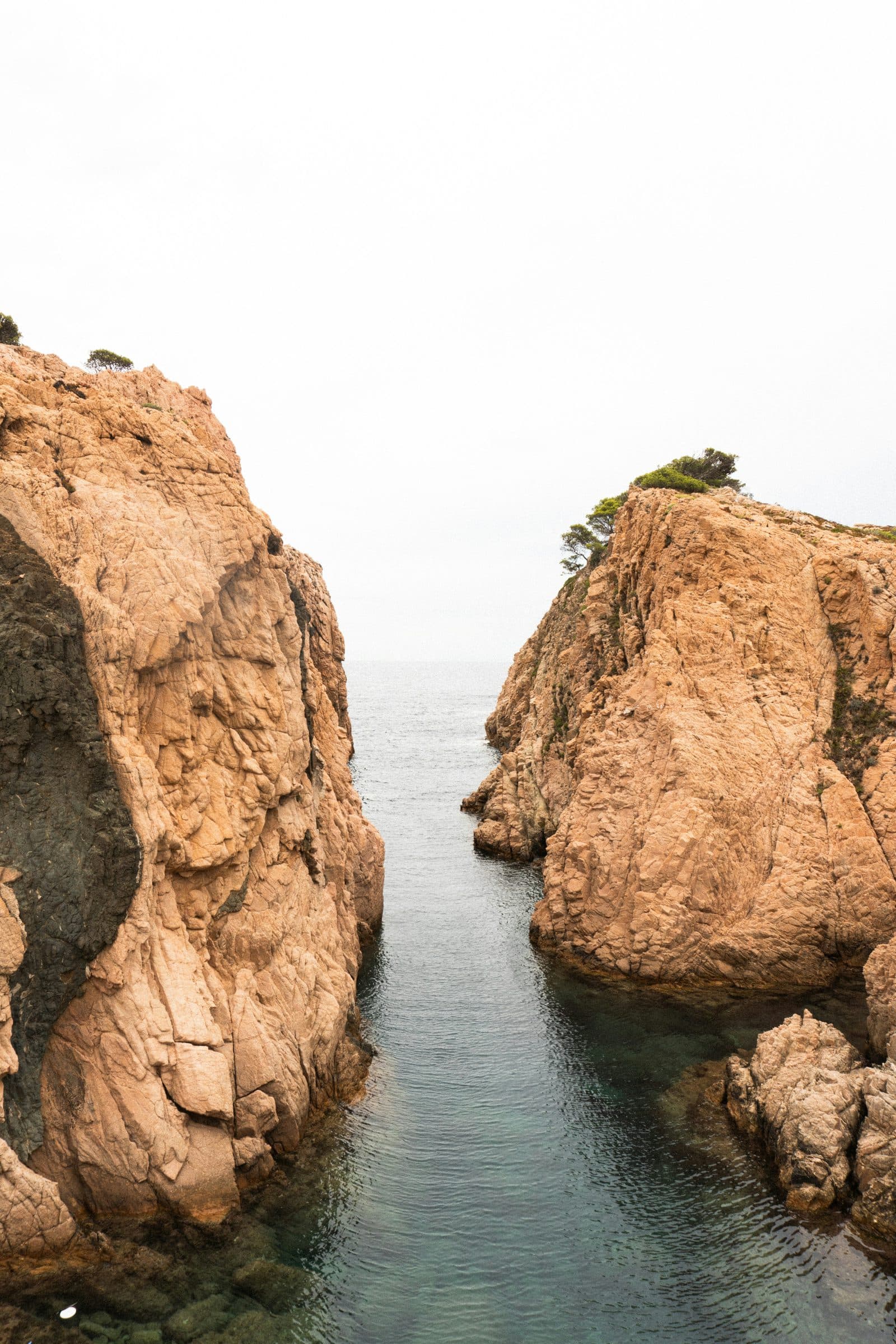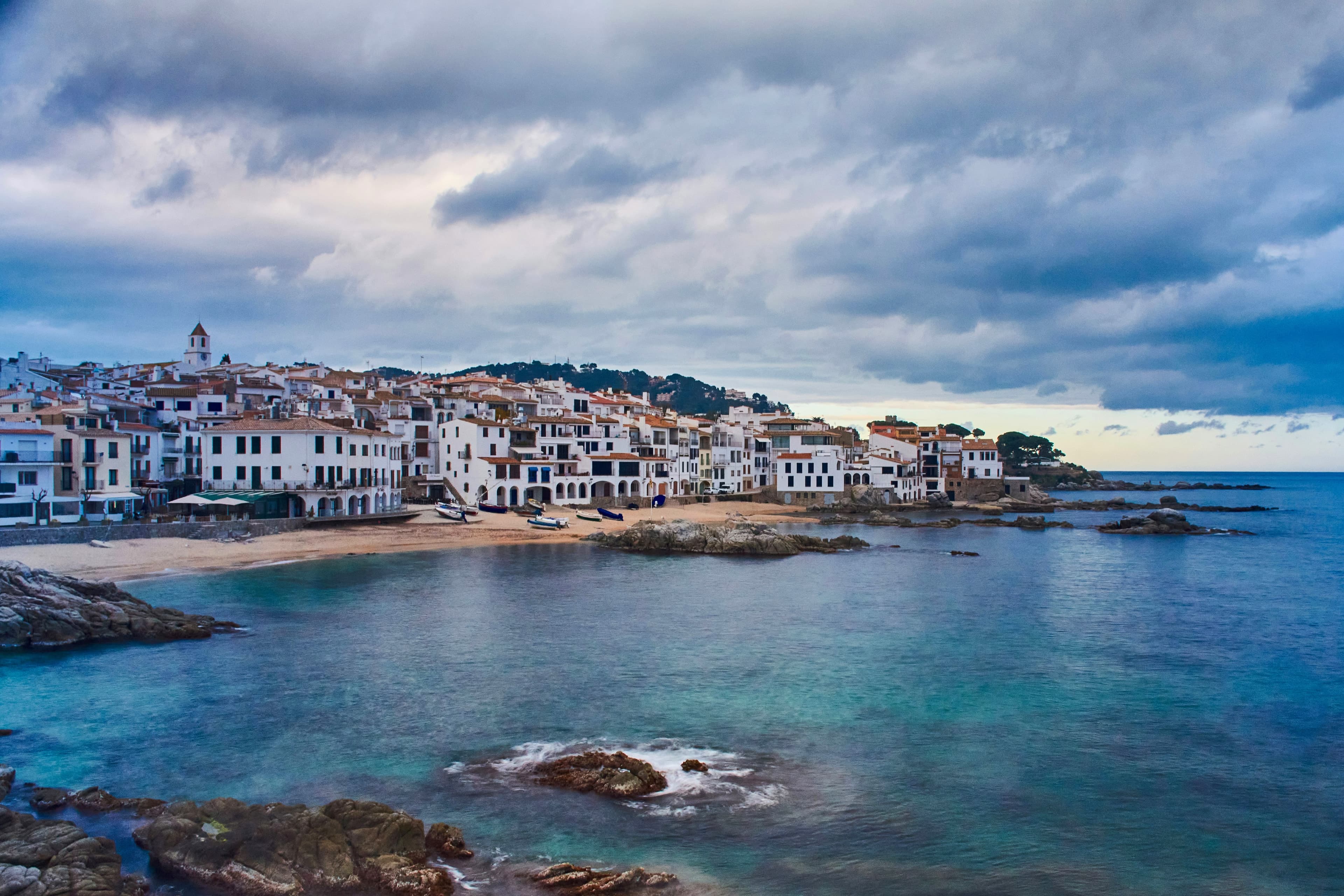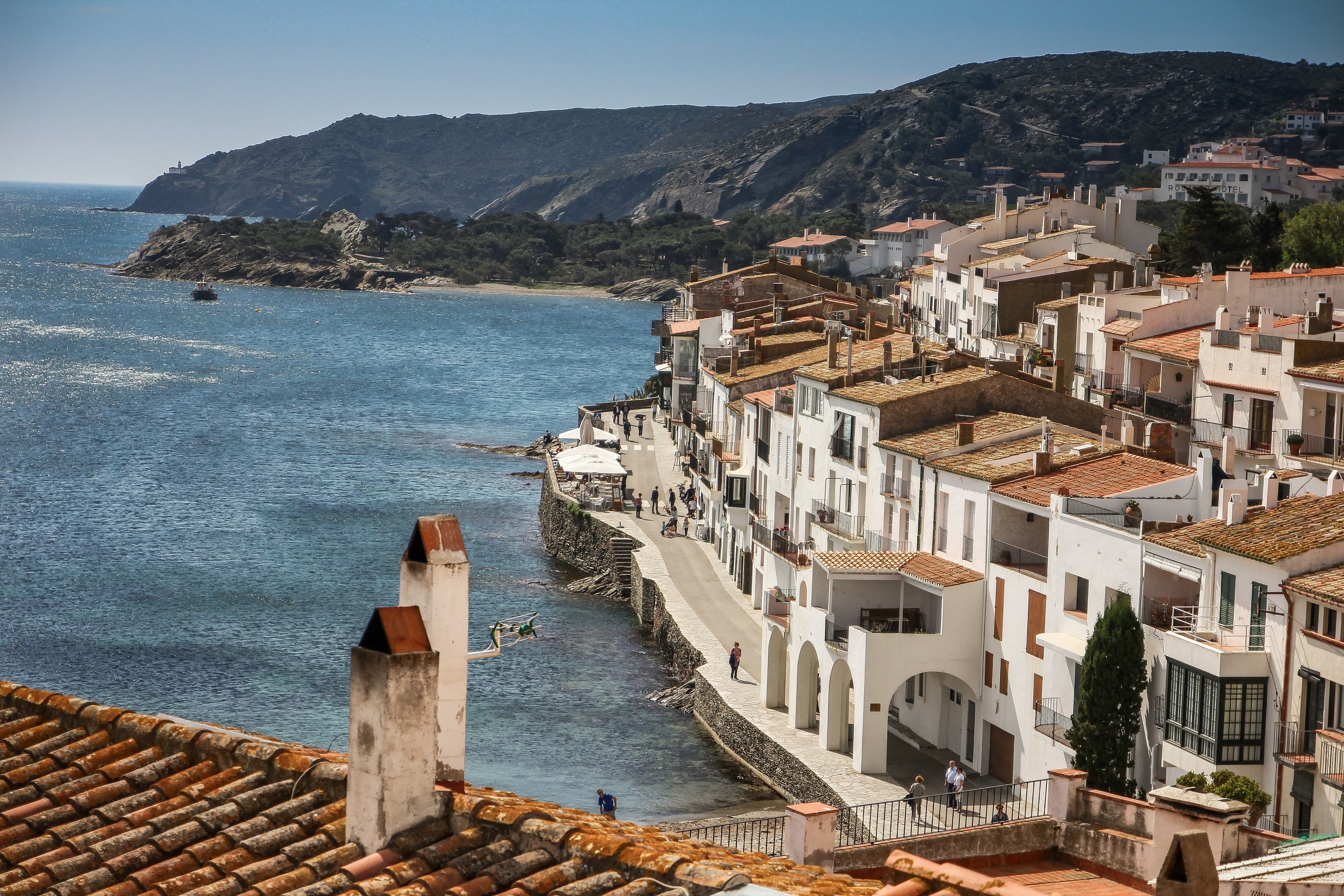
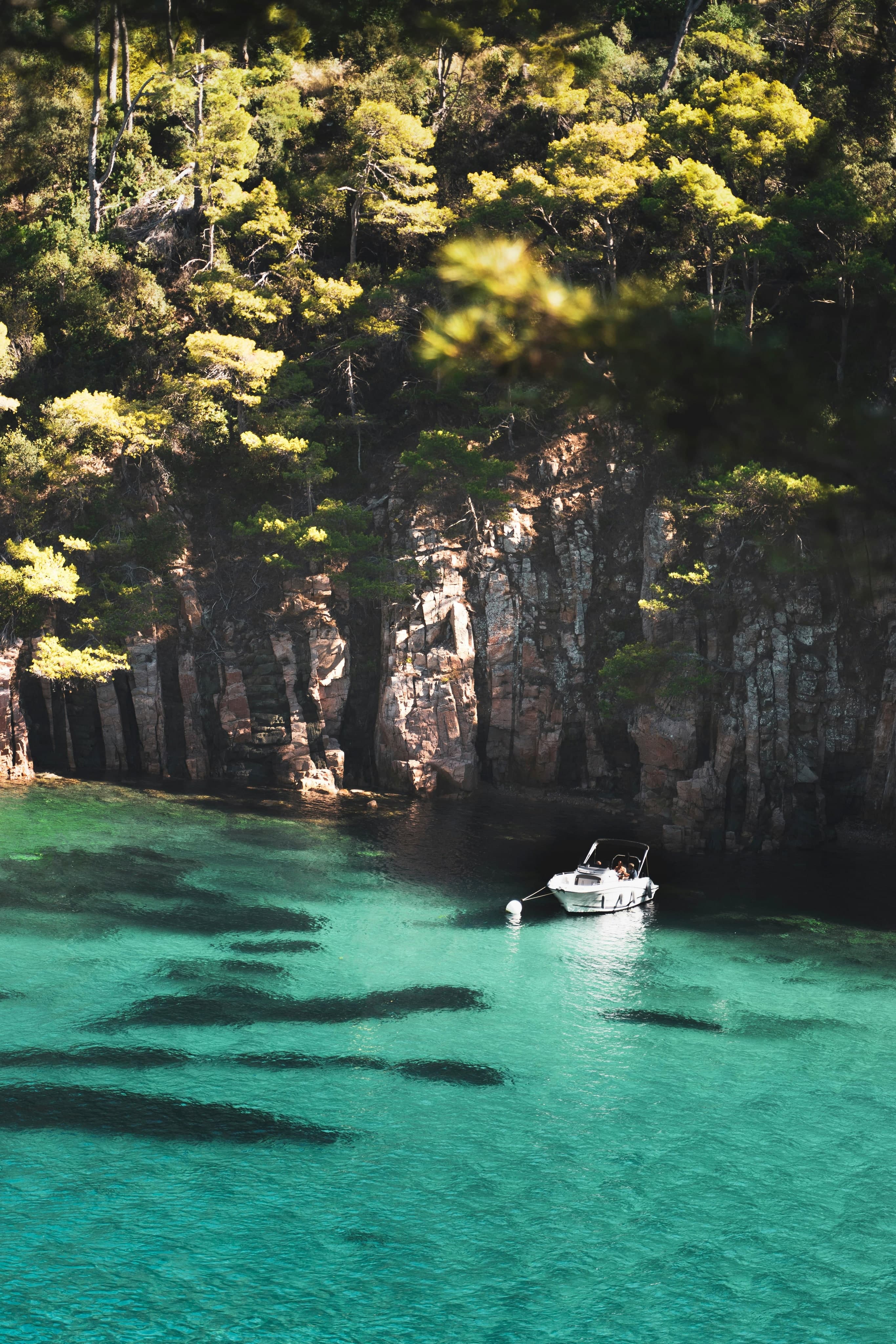
Begur sits a little inland, and that one fact explains almost everything else. It isn't a town built beside the water but on a hill above it, with the Mediterranean laid out below: while other Costa Brava towns grew up around a harbor, Begur grew up around a castle, and the calas came later. So nobody here asks which is the beach — they ask which cala you're going down to today. Sa Tuna, Sa Riera, Aiguablava, Platja Fonda, Fornells, Aiguafreda, Illa Roja: a string of small bays linked by the Camí de Ronda, the coastal footpath, each with its own temperament. And behind all of them sits an old quarter of Indiano mansions, quiet squares and cobbled streets that remember something easy to forget now — before it became one of the most coveted places on the Costa Brava, Begur looked west toward Cuba more than east toward Barcelona.
The town the Indianos built
You can read Begur's history straight off its façades. Through the nineteenth century, many of the town's men sailed for Cuba to seek their fortune, and some came home rich enough to build houses in the style of the colonies they'd left: glassed-in galleries, palm trees, pastel colors and Caribbean flourishes standing next to the plain stone houses of the medieval core, as though two different centuries had agreed to share a street.
Every first weekend of September, the Fira d'Indians turns back the clock — music, habaneras, market stalls, the whole town given over for a weekend to the memory of that traffic between Begur and the Americas.
The castle and the watchtowers
The castle ruins have crowned the hill for nearly a thousand years. Little more than a few walls survives today, but the climb earns its keep: the Illes Medes, the Empordà plain, most of the Costa Brava, and on a clear day, when the tramuntana — the north wind that scours this coast for days at a stretch — has swept the haze away, even the Pyrenees.
Scattered through the old quarter are seven more watchtowers, built between the sixteenth and seventeenth centuries against pirate raids. They aren't stage dressing. They're what's left of a Begur that spent centuries with one eye permanently on the horizon.
Seven ways down to the sea
There's no single beach here — each cala has its own character. Sa Tuna keeps the feel of an old fishing quarter; the white houses run almost to the waterline, and even in August it holds on to a charm that's hard to find elsewhere on this coast. Sa Riera is the biggest and most village-like, old fishermen's shacks standing shoulder to shoulder with restaurants and every service you'd want for a full day at the beach.
Aiguafreda has almost no sand, but it has a stillness that invites you to read or snorkel rather than spread out a towel. Fornells and Platja Fonda are two entirely different faces of this coast: the first a small natural harbor of clear water, the second a dark stretch of sand wedged between high cliffs where silence is still possible even at the height of summer. Then there's Illa Roja, probably the best-known naturist beach on the Costa Brava, and Aiguablava, Begur's great icon.
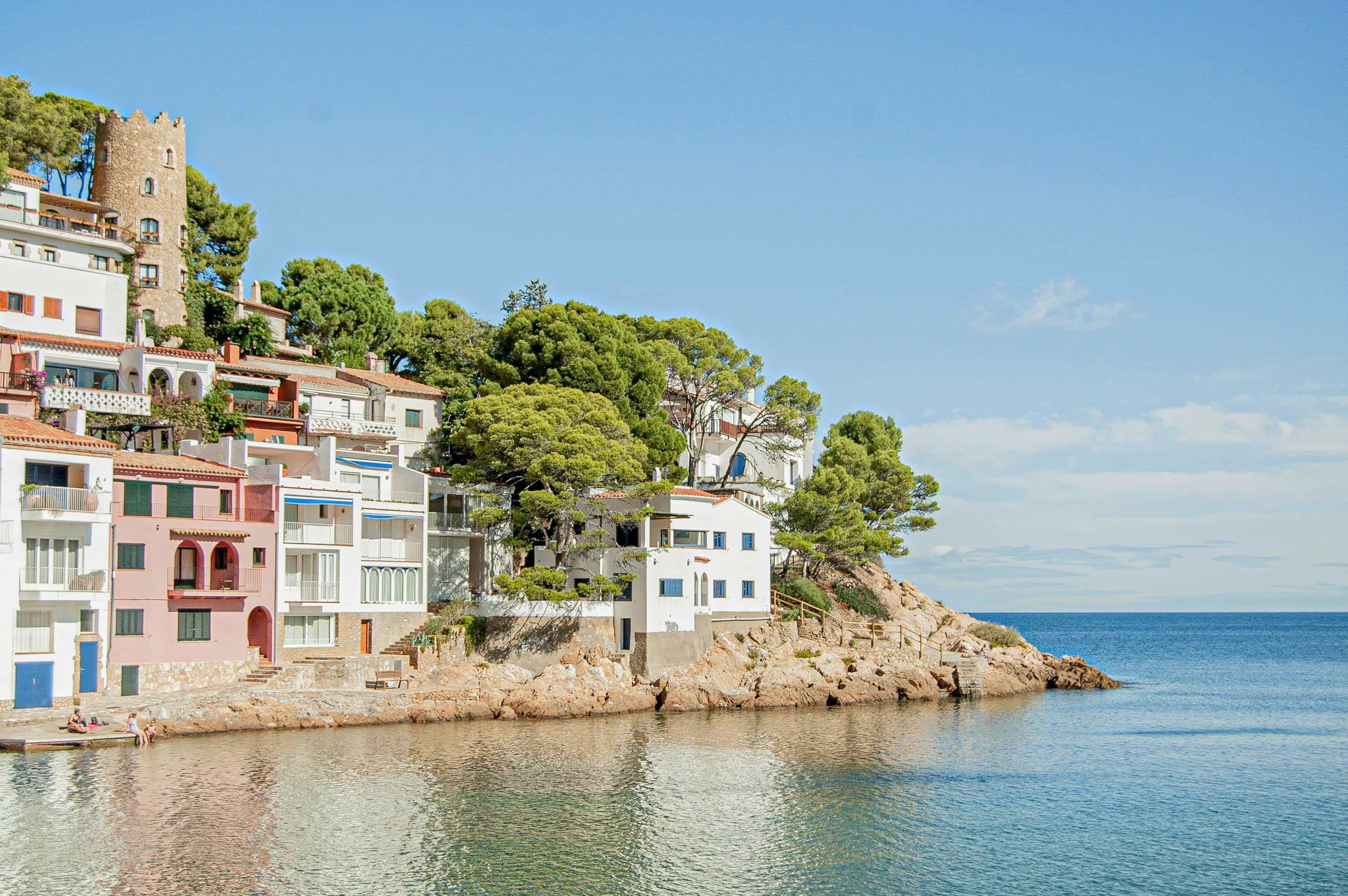
Aiguablava
Some places live up to their own name. Aiguablava means, literally, blue water, and you only need to get close to understand why: turquoise water, pine woods running down to the sea, and pale rock that together make this one of the most recognizable images of the whole Mediterranean.
Our advice is to go late in the afternoon. Once most visitors have drifted off, the water changes tone and the cala settles into a calm that seems impossible to imagine at midday.
Corners that rarely make the guidebooks
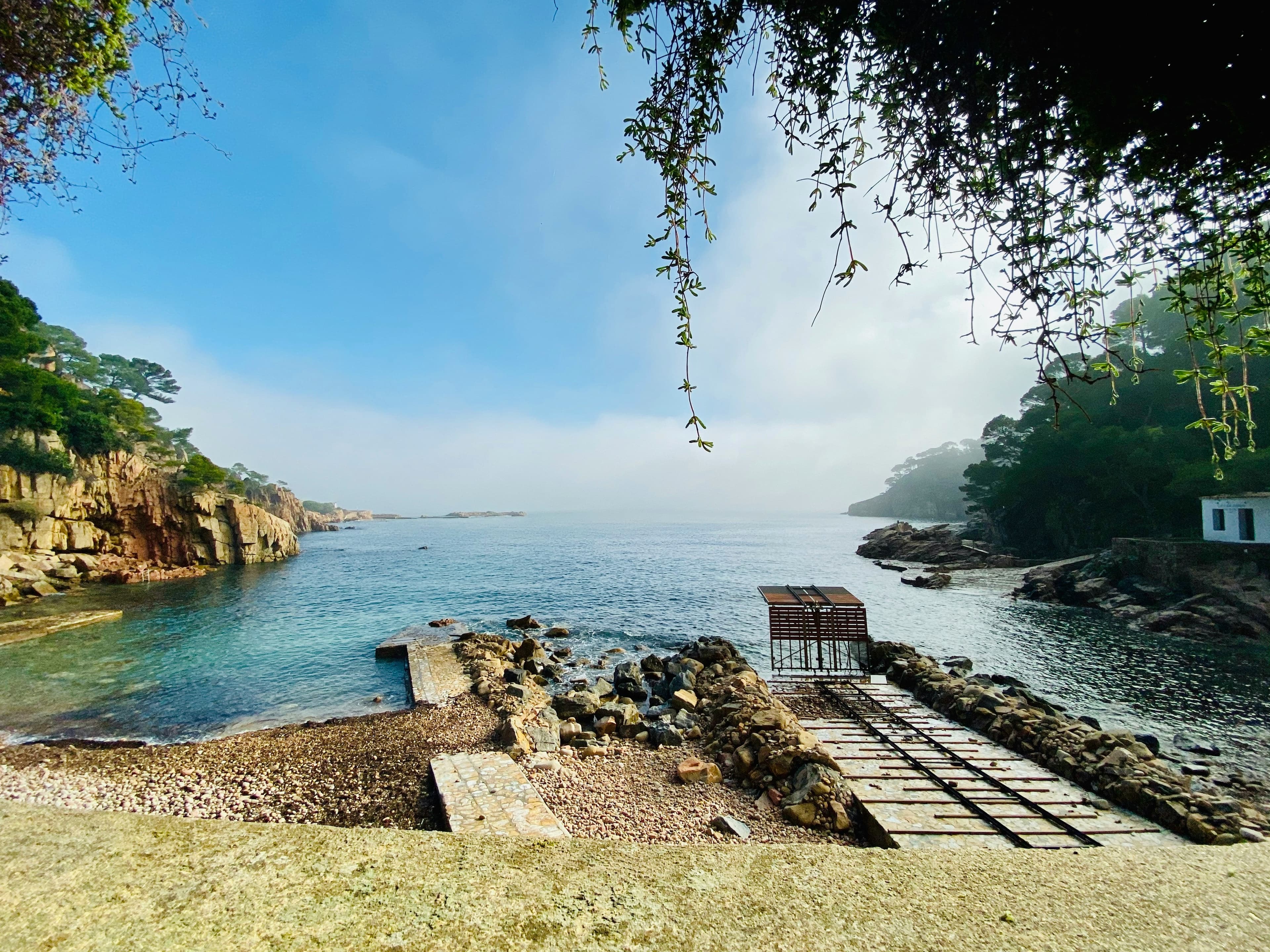
Barely ten minutes separate Sa Tuna from one of the least-known calas in the municipality. Cala S'Eixugador is reachable only on foot, along the Camí de Ronda — no facilities, no easy access, and that alone is usually enough to keep it quiet even in summer. If you've brought snorkel gear, this is one of the best places to use it.
Off Aiguafreda lies one of Catalonia's most important marine reserves, Ses Negres. Under the surface: posidonia meadows, shoals of fish, rocky seabeds — making it one of the best spots on the coast to snorkel straight from shore, no boat required.
Beside the church runs a long stone bench, worn smooth by centuries of conversation: the Pedrís Llarg, one of the places where neighbors have traditionally gathered as the evening cools. No great view, no monument nearby — but it probably explains everyday life in Begur better than any museum could.
Most visitors spend the day working their way down from cala to cala. We'd do the opposite: stay a night in the town itself. Once the cars disappear and the terraces start to empty out, Begur settles into a stillness that has nothing to do with its beaches, and walking among the lit-up Indiano houses feels like discovering an entirely different town.