PuraCostaBrava
ES
Navigable canals of Empuriabrava, Costa Brava

Alt Empordà

Empuriabrava

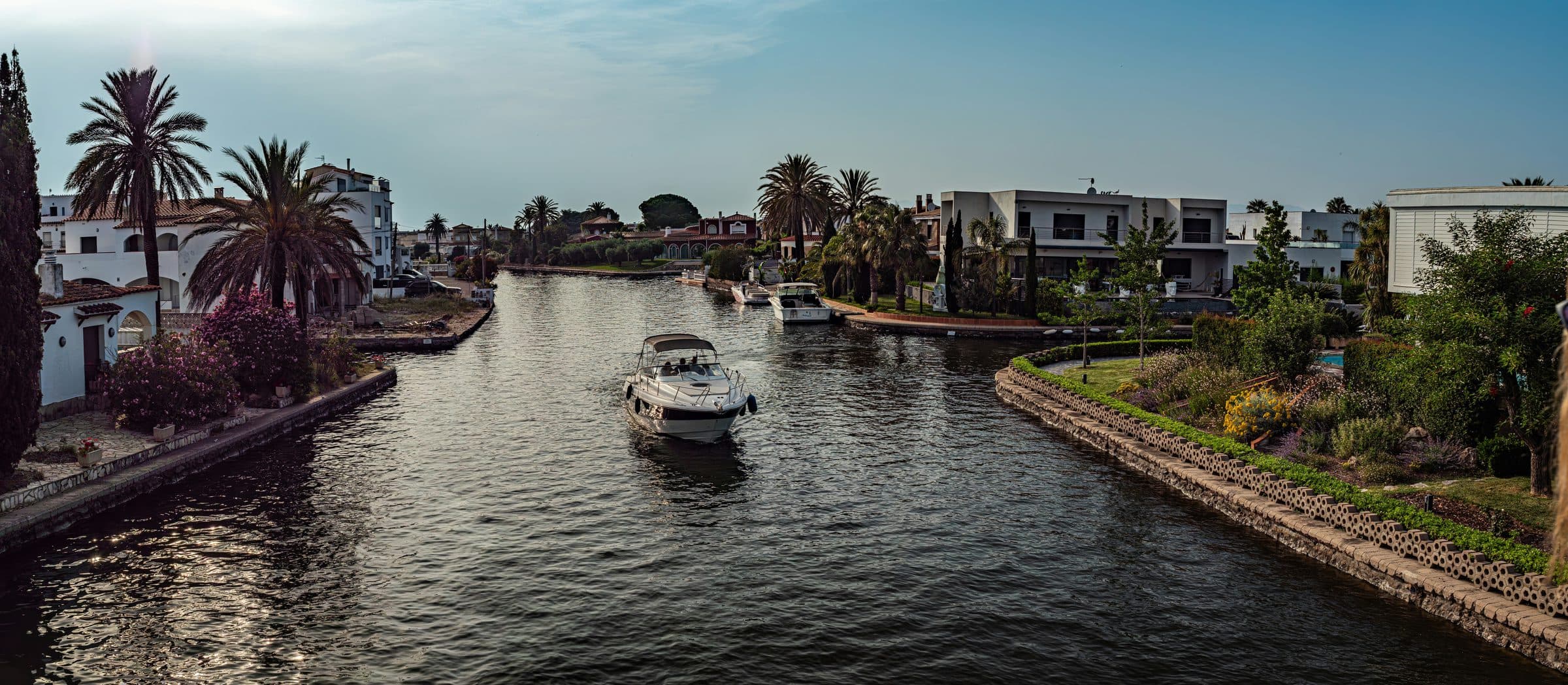
Empuriabrava doesn't look like anywhere else on the Costa Brava, and it isn't trying to. While every other town here grew slowly around a fishing harbor, this one started on a drawing board: in the late 1960s, the old marshland at the mouth of the Muga river was turned into a town built entirely around water, with more than 24 kilometers of navigable canals, thousands of private moorings, and the largest residential marina in Europe. It could easily read as artificial, but spend a day here and the appeal becomes obvious: where other towns park the car, this one moors the boat. And while one half of the town lives with its eyes on the canals, a few meters away begin the Aiguamolls de l'Empordà, a wetland landscape where flamingos, herons and storks take to the air. Engineering and nature rarely sit together this comfortably.

The canals: Empuriabrava's real heart

The best way to get to know Empuriabrava isn't on foot — it's by water. Small boats can be rented with no license required, and you can drift through the canals at your own pace. From the water you pass villas with private jetties, gardens that run down to a pontoon, and bridges connecting neighborhoods where the boat is simply part of daily life.

Our advice is to go early. At that hour there's almost no boat traffic, the water mirrors the houses like glass, and Empuriabrava shows its quietest side. Even without a boat, it's worth getting lost among the inner bridges. Most visitors stay on the seafront, but the town's real character lives further off, along silent canals where almost nobody but the neighbors walks.
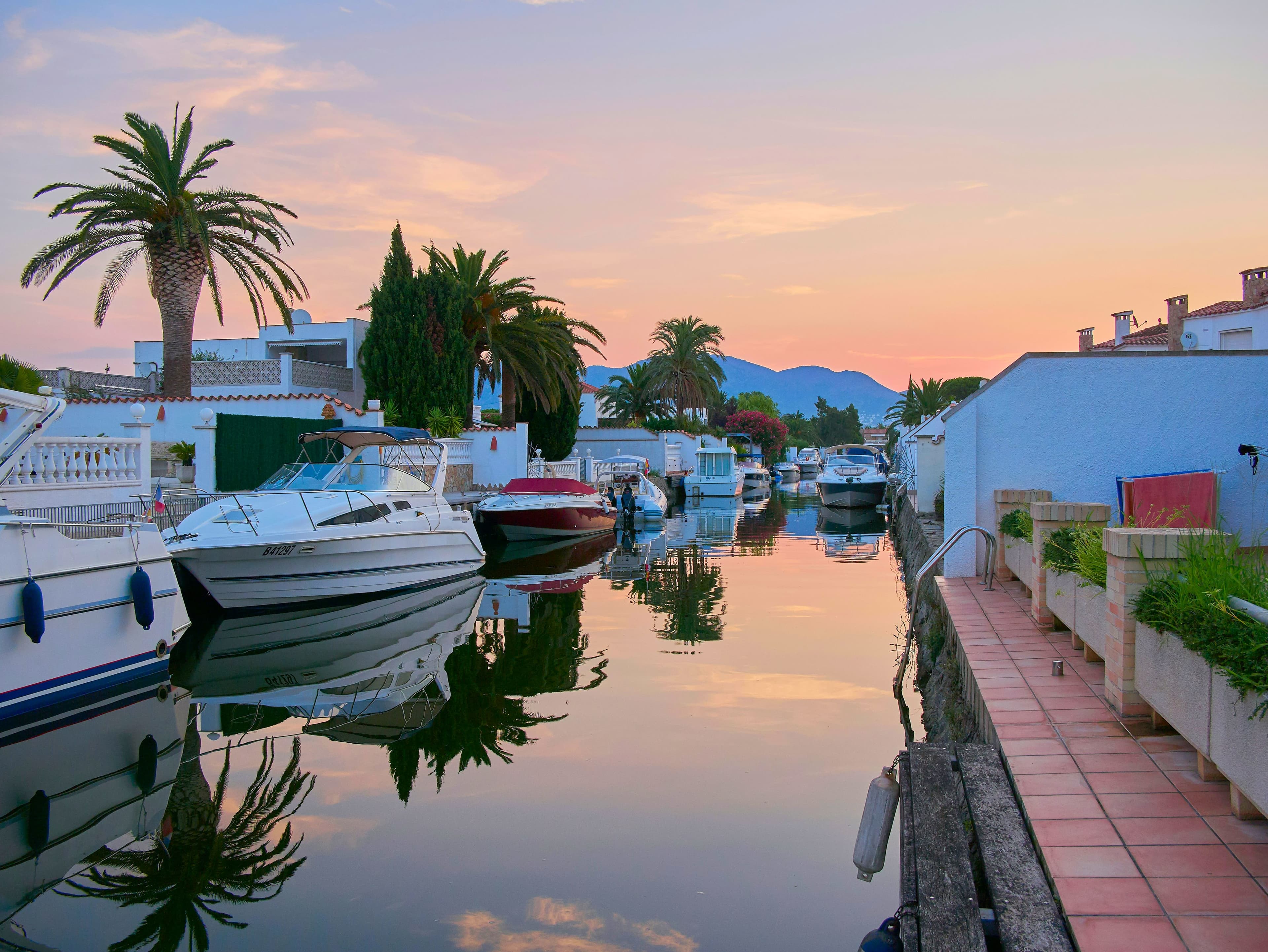
An Empuriabrava canal at sunset, boats moored at the doorstep of houses, palm trees and a pink sky reflected in still water
Houses with a mooring at the front door, along one of the canals.

Empuriabrava's sky

Empuriabrava is also worth looking up for. It's home to one of Europe's most important skydiving centers. Every day, dozens of small planes take off, and minutes later the sky fills with colored parachutes drifting down over the Bay of Roses.

You don't have to jump to enjoy the spectacle. One of our favorite habits is breakfast near the airfield while the first flights of the day take off. It's a simple plan, and one that surprisingly never seems to make the guidebooks.
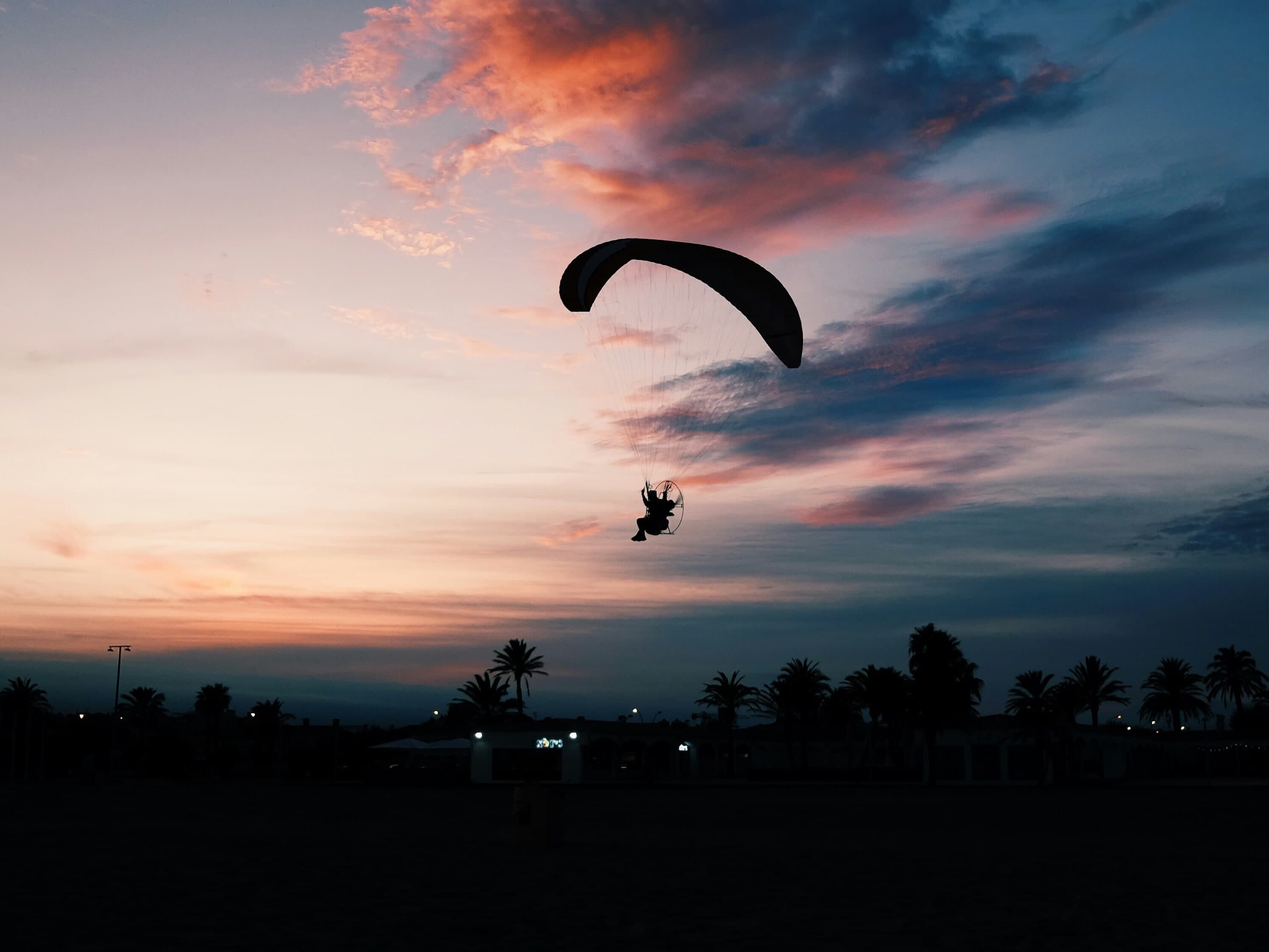
A paramotor flies over Empuriabrava's beach, silhouetted against a sky of pink clouds at sunset
Empuriabrava, one of Europe's great centers of flight, at dusk.

The beach and La Rubina

Empuriabrava's town beach is wide, comfortable, and perfect for anyone happy to spend the day by the sea. With over a kilometer of fine sand, it runs straight into the promenade and the marina. But we tend to keep walking a little further.

To the north lies Platja de la Rubina, probably Empuriabrava's wildest corner. No buildings face the sea here — only dunes, vegetation, and the open landscape of the Parc Natural dels Aiguamolls de l'Empordà. It's also one of the best spots in the bay for kitesurfing and windsurfing when the tramuntana blows. At dusk it changes completely: the wind usually drops, the beach empties, and the sun disappears behind the Cap de Creus.

The Aiguamolls de l'Empordà

A few minutes away, the canals vanish and another world begins. The Parc Natural dels Aiguamolls de l'Empordà protects one of the most important wetlands in the western Mediterranean. More than 300 bird species live here or pass through on migration, and trails wind past lagoons, hides and wooden walkways through the reed beds.

Most people rush through the park. We'd recommend the opposite: bring binoculars, sit in one of the hides, and wait a few minutes in silence. A heron always turns up eventually, or a stork, a kingfisher, or — with a little luck — a flock of flamingos.
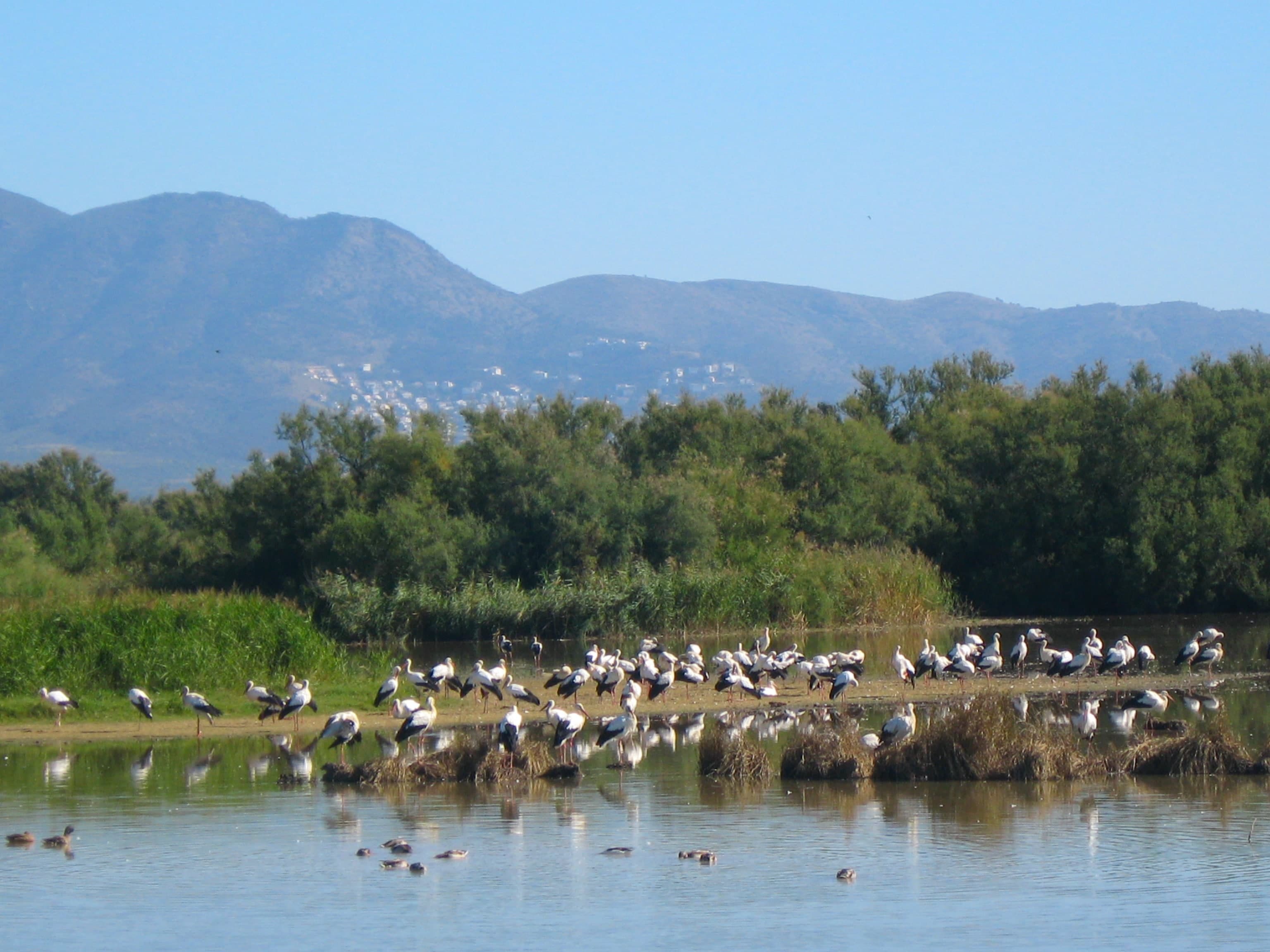
A flock of white storks in the wetlands of the Parc Natural dels Aiguamolls de l'Empordà, mountains in the distance
Storks at the Aiguamolls de l'Empordà, home to more than 300 bird species.Photo: Gordito1869 (Michael Pfeiffer) / Wikimedia Commons (CC BY 3.0)

Places that rarely make the guidebooks

Renting a boat early in the morning changes the whole experience. The canals are still empty, and Empuriabrava feels like a different town altogether.

A largely flat route runs through the Aiguamolls all the way to the mouth of the Muga river and Platja de la Rubina. It's a route locals use often, on foot or by bike.

You don't need to be an adrenaline junkie for this one. Sitting by the airfield while dozens of skydivers land over the marina is one of those small spectacles that make Empuriabrava what it is.

The quieter canals barely see a visitor. Getting lost among the inner bridges is the real way to understand what it means to actually live in a town designed to move by water.
The Empuriabrava notebook

Where we go

Empuriabrava has plenty on offer, but we like to range a little further too, toward Roses, where some of the best tables in the Alt Empordà are waiting. Here's the short list of where to eat and what not to put off for another day.

Approximate positions · Empuriabrava · Cartography © OpenStreetMap contributors, tiles by OpenFreeMap

Tap a pin or a place in the list to zoom in

Where to eat

  • Contemporary Mediterranean cooking facing the sea, in Roses. One of the best terraces in the bay.

  • A must for anyone who enjoys sharing plates and discovering a superb wine list.

  • Restaurant M Bistro

    Grilled dishes, good produce, and a kitchen with real character — one of the more interesting openings in Roses.

    No fixed pin
  • A Michelin-starred experience suspended over the Mediterranean. Both the food and the views justify the trip.

Coves & swimming

  • At the far end of the nature park trails, by the mouth of the Muga. Dunes, vegetation and quiet, well away from the marina's bustle.

What to do

  • One of the reference centers in Europe. Book ahead, especially in summer.

  • You don't have to jump: sitting by the airfield to watch the marina fill with parachutes is one of Empuriabrava's small spectacles.

  • Boat the canals

    In your own boat, a rental, or a guided tour. The most honest way to understand the town — best done early.

    No fixed pin
  • Cycle to the mouth of the Muga

    A largely flat route through the Aiguamolls to the river mouth and Platja de la Rubina. The locals' route.

    No fixed pin
  • Marked trails through the wetlands, with flamingos if you catch the migration season. Bring binoculars and sit at one of the hides.

Good to know

Frequently asked questions

Why is Empuriabrava called the Venice of the Costa Brava?

Because it's home to the largest residential marina in Europe, with more than 24 kilometers of navigable canals and thousands of homes with private moorings.

Do you need a license to navigate the canals?

No. Several companies rent small boats that can be driven without any qualification — one of the more original ways to see Empuriabrava.

Where's the prettiest beach?

If you want facilities, Empuriabrava's main beach is the most comfortable choice. If you'd rather have nature, walk to Platja de la Rubina, a long protected stretch of sand inside the Parc Natural dels Aiguamolls de l'Empordà.

Is Empuriabrava worth visiting without a boat?

Yes. Empuriabrava is just as much about walking the canals, exploring the wetlands, watching birds, watching skydivers take off, or simply discovering a place that looks like nowhere else on the Costa Brava.

Other villages to discover

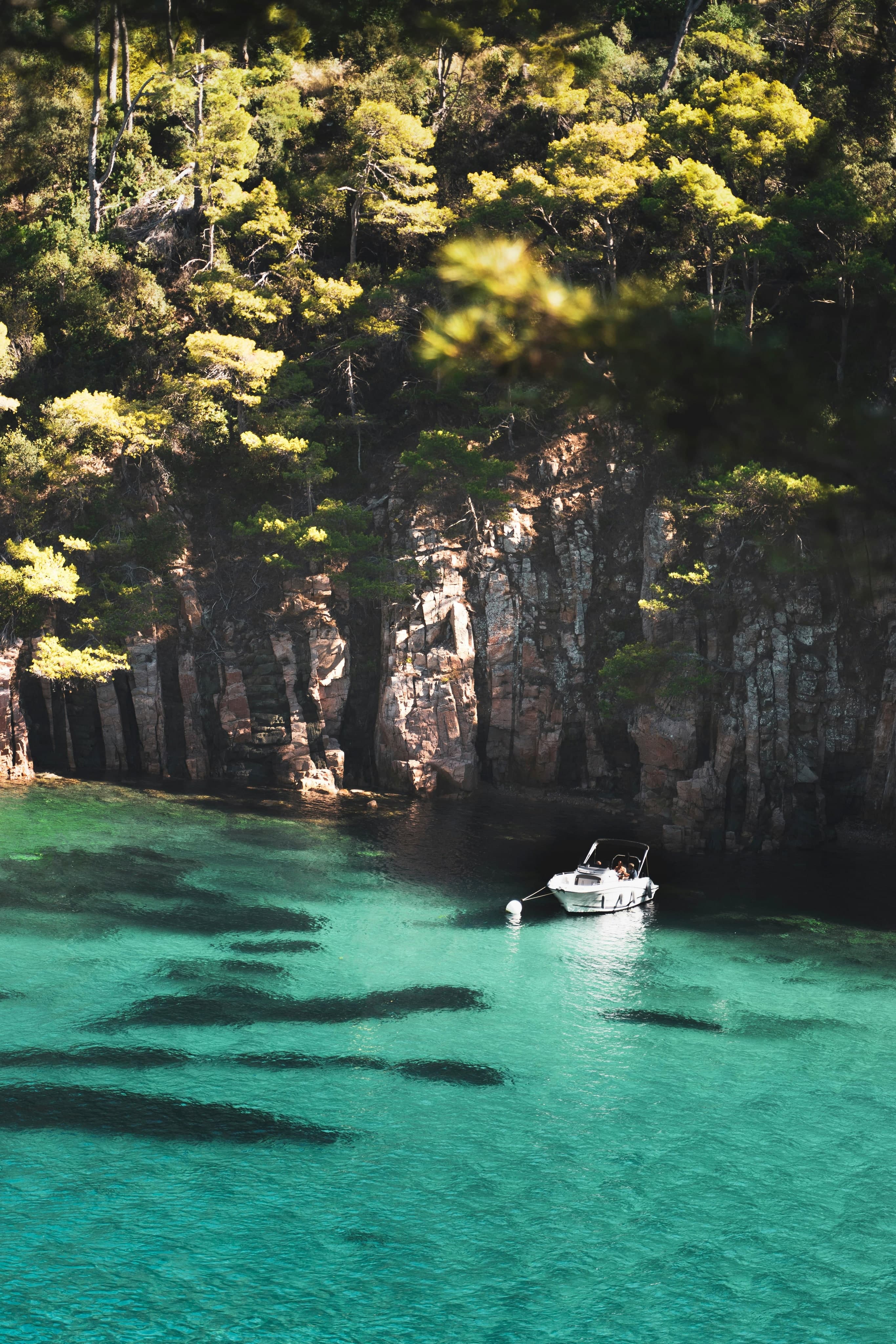
A turquoise-water cala in Begur, between reddish rock cliffs and pines, with a boat at anchor

Baix Empordà

Begur

Begur sits a little inland, and that one fact explains almost everything else. It isn't a town built beside the water but on a hill above it, with the Mediterranean laid out below: while other Costa Brava towns grew up around a harbor, Begur grew up around a castle, and the calas came later. So nobody here asks which is the beach — they ask which cala you're going down to today. Sa Tuna, Sa Riera, Aiguablava, Platja Fonda, Fornells, Aiguafreda, Illa Roja: a string of small bays linked by the Camí de Ronda, the coastal footpath, each with its own temperament. And behind all of them sits an old quarter of Indiano mansions, quiet squares and cobbled streets that remember something easy to forget now — before it became one of the most coveted places on the Costa Brava, Begur looked west toward Cuba more than east toward Barcelona.

The seafront of Cadaqués beside the water, with the white houses and tiled roofs of the old town and the Cap de Creus coastline behind

Alt Empordà

Cadaqués

Cadaqués is the most photographed town on the Costa Brava, and the hardest to actually get to know. White houses, green shutters, boats drawn up facing the sea, the light that undid Dalí — it's all over every postcard, and none of it explains why people keep coming back. Maybe it has to do with the winding road that kept the town cut off from the rest of the Empordà for centuries, or with that light, which changes by the hour and makes the place feel like somewhere new each morning, noon and evening. You don't come here for wide sandy beaches or a promenade lined with shops. You come to walk slowly, to lose yourself in slate-paved streets, to watch the sea from the rocks, and to understand why this corner of the coast ended up gathering some of the twentieth century's most important artists.

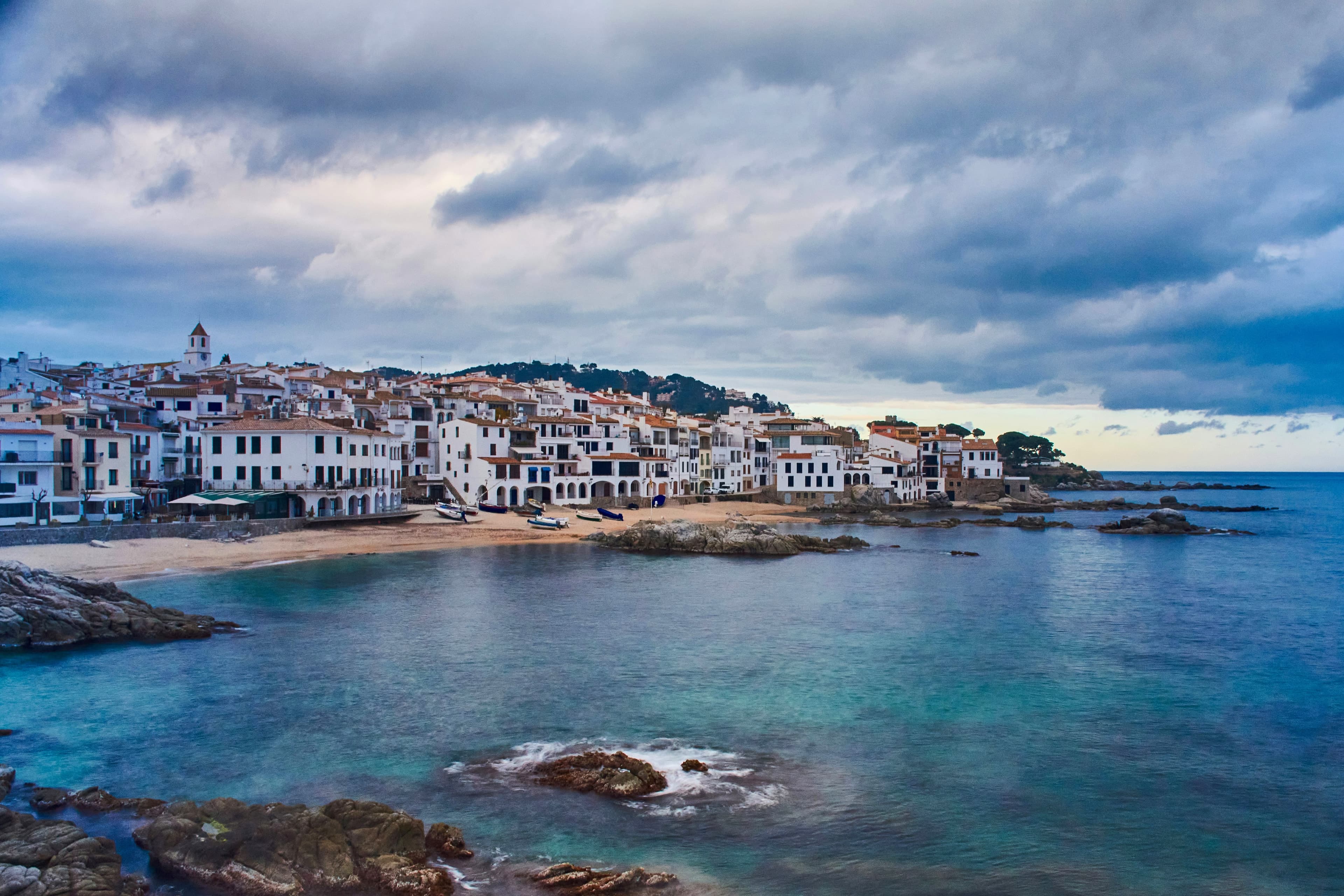
The white town of Calella de Palafrugell and its cala under an overcast sky at dusk, turquoise sea and rocks in the foreground

Baix Empordà

Calella de Palafrugell

Calella de Palafrugell is probably the most recognizable image of the whole Costa Brava. White houses, les Voltes of Port Bo, boats drawn up on the sand, the Mediterranean woven into the town's daily life — it turns up in thousands of photographs every summer. And yet that postcard only tells part of the story: the real Calella shows itself once you step a few meters off the main promenade, walk the Camí de Ronda without hurrying, or come back at dusk, when the terraces start to empty and the town settles back into the unhurried pace it always kept. Because before it became one of the great icons of the Mediterranean, Calella was — and still is — a fishing village.