PuraCostaBrava
ES
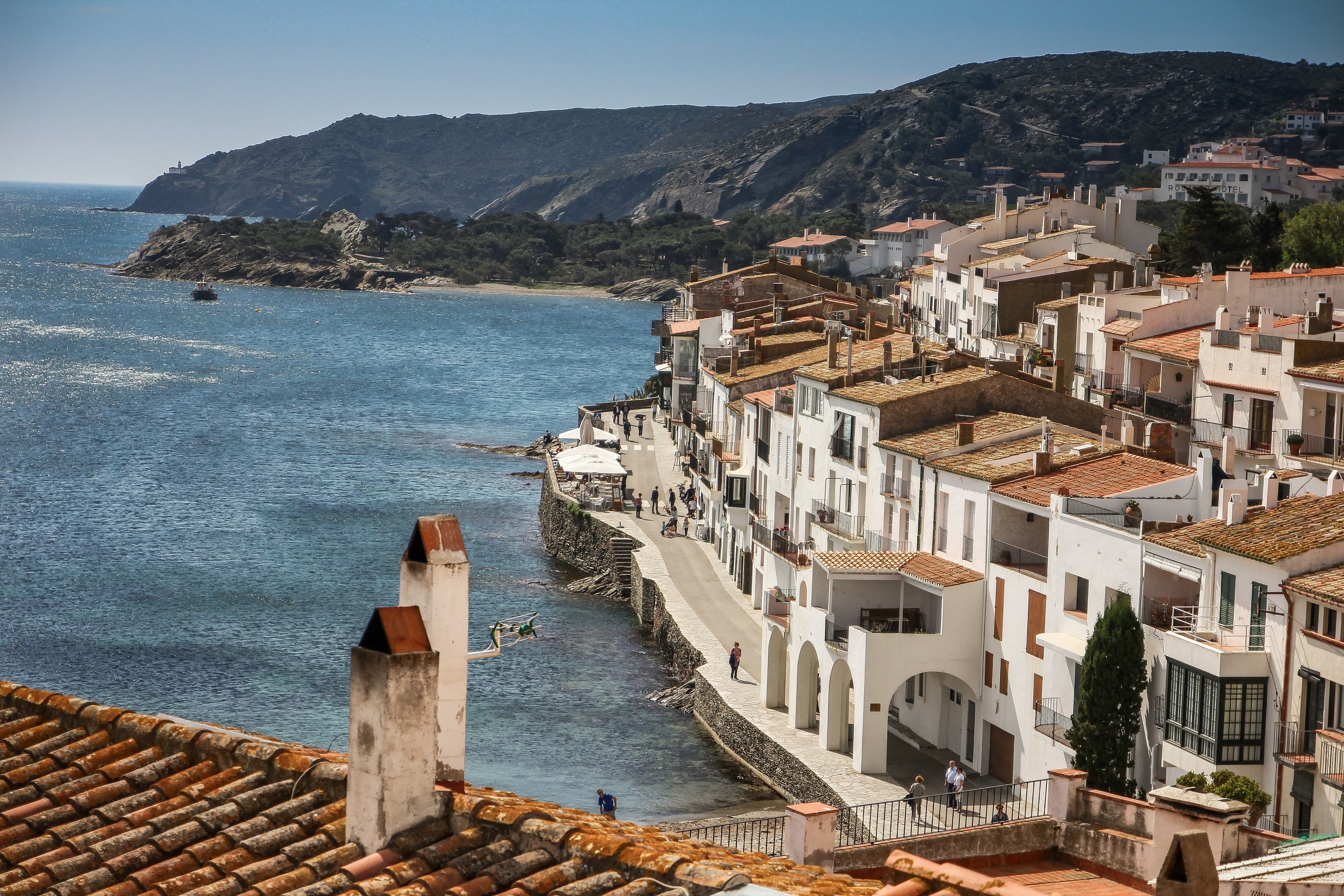
The seafront of Cadaqués beside the water, with the white houses and tiled roofs of the old town and the Cap de Creus coastline behind

Alt Empordà

Cadaqués

Photo: joaquinaranoa / Pixabay

Cadaqués is the most photographed town on the Costa Brava, and the hardest to actually get to know. White houses, green shutters, boats drawn up facing the sea, the light that undid Dalí — it's all over every postcard, and none of it explains why people keep coming back. Maybe it has to do with the winding road that kept the town cut off from the rest of the Empordà for centuries, or with that light, which changes by the hour and makes the place feel like somewhere new each morning, noon and evening. You don't come here for wide sandy beaches or a promenade lined with shops. You come to walk slowly, to lose yourself in slate-paved streets, to watch the sea from the rocks, and to understand why this corner of the coast ended up gathering some of the twentieth century's most important artists.

The white town and the church of Santa Maria

The whole old quarter climbs toward the church of Santa Maria. The best approach is to forget the map and wander up narrow streets where workshops, galleries and near-untouched fishermen's houses still cling on. At the top waits one of Cadaqués's great surprises: behind a plain façade sits a spectacular gilded baroque altarpiece by Pau Costa, one of the finest in Catalonia.

After that, just head back down toward the harbor. The boats still rest on the round pebbles the way they have for generations, and the seafront keeps a rhythm that vanishes the moment the day-trippers arrive. If you can choose, come before nine in the morning or after seven in the evening — that's when the town belongs again to the people who actually live here.
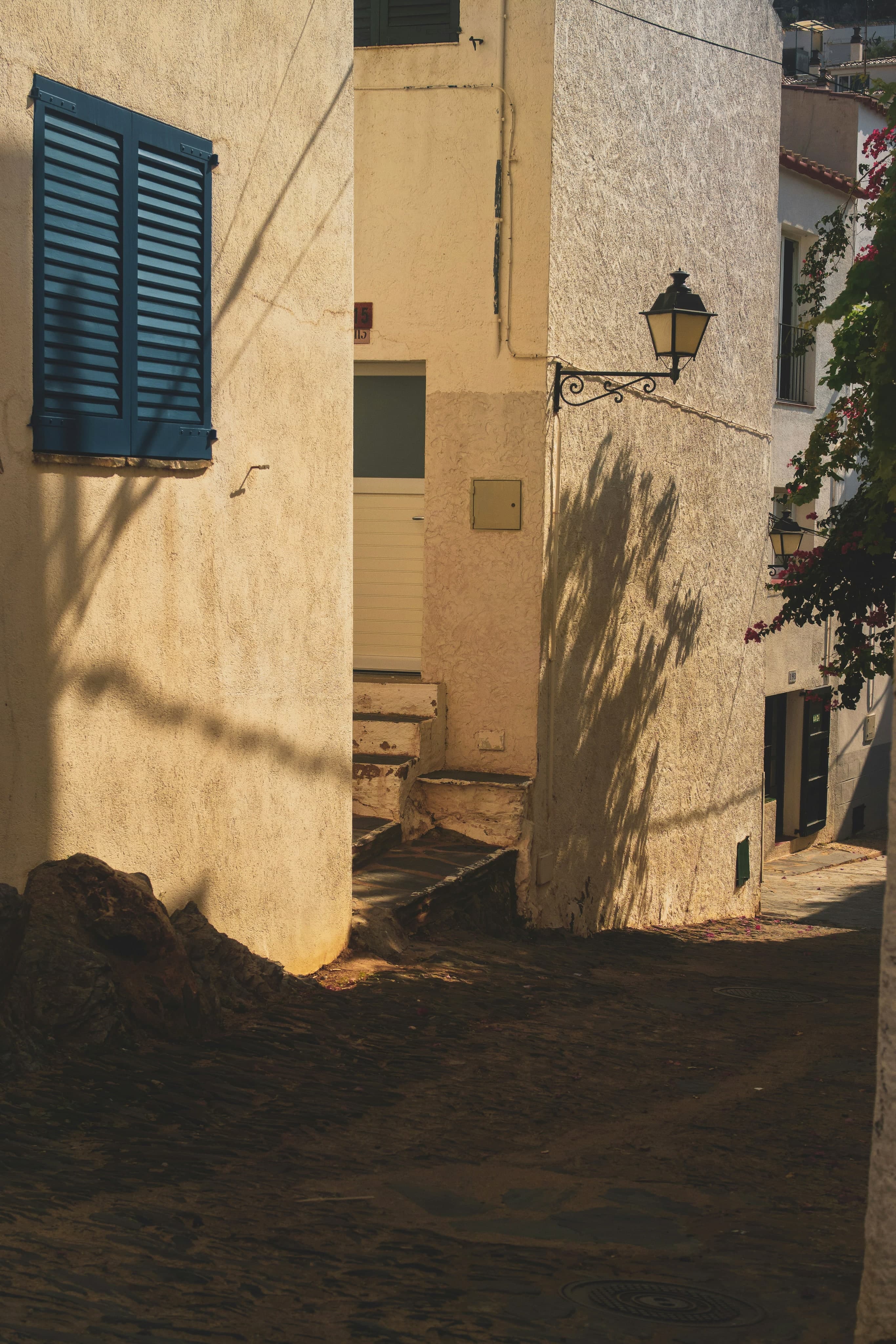
A whitewashed corner of Cadaqués in the late light, with a wrought-iron lamp, blue shutters and warm light on the wall
White houses and that light — you don't describe it, you just sit with it.

Dalí, Port Lligat and the artists' town

Barely fifteen minutes' walk away is Port Lligat, the small bay where Salvador Dalí spent forty years turning a cluster of old fishermen's huts into an impossible house. Today it's one of the essential visits on the Costa Brava, but book well ahead — the tickets are limited and go early.

Dalí made Cadaqués an icon, though he was never alone here. Federico García Lorca spent some of his happiest summers in this town; Marcel Duchamp played chess in the village square; Man Ray, Richard Hamilton and Paul Éluard all found in this corner of the coast a place to work far from the noise.

That artistic inheritance is still alive today. Beyond the well-known Galeria Cadaqués, it's worth ducking into the small workshops of the old quarter — many artists work with the door open, and it's easy to end up talking with them for a few minutes.

Cap de Creus, where the land runs out

Beyond Port Lligat, the landscape changes completely. The Cap de Creus is the easternmost point of the Iberian Peninsula and one of the wildest stretches of the whole Mediterranean. The tramuntana — the wind that has scoured this coast for thousands of years — has carved the rock into a catalogue of impossible shapes, shapes that fed straight into many of Dalí's paintings.

Everyone makes it to the lighthouse; few keep going past it. One of the most striking spots is Pla de Tudela, a landscape of bare rock that feels almost lunar, sculpted by the wind into forms that suggest animals, faces, giants. Walking through here does more to explain Dalí's imagination than any museum room could.

If you want something special, come early. Sunrise at Cap de Creus is still one of the great spectacles of the Costa Brava.
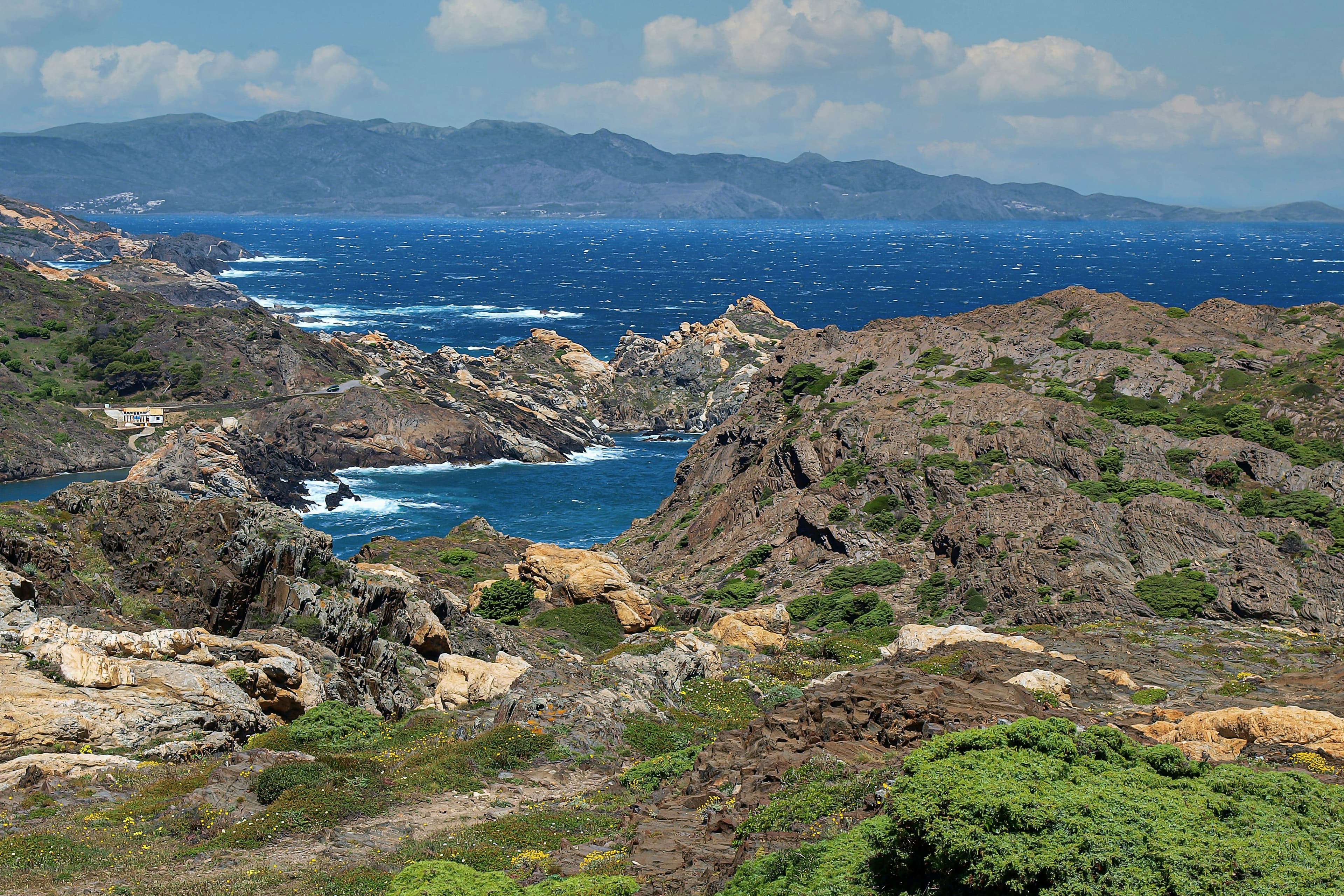
The sculpted rock landscape of Cap de Creus falling to the blue sea, with the mountains behind
Cap de Creus, where the Pyrenees walk into the Mediterranean.

Stone calas and small secrets

Cadaqués has never been a town of easy beaches. Here it's almost all rock, round pebbles and clear water.

Port Lligat invites you to look more than to swim. Sa Conca is one of the best options near the old quarter, and S'Alqueria tends to fill up early thanks to its easy access. Further out lie Cala Bona and Jóncols, already inside the nature park, where the landscape turns wild again.

Locals, though, usually point you toward a lesser-known corner: Es Caials. Small rock platforms where the water stays crystalline even when the tramuntana is blowing, and where you'll rarely find the crowds of the famous calas.

Another small secret: sit at the end of the breakwater once night falls. The terraces begin to empty, the town's lights reflect on the water, and Cadaqués settles into the calm that so many writers and painters came here looking for.
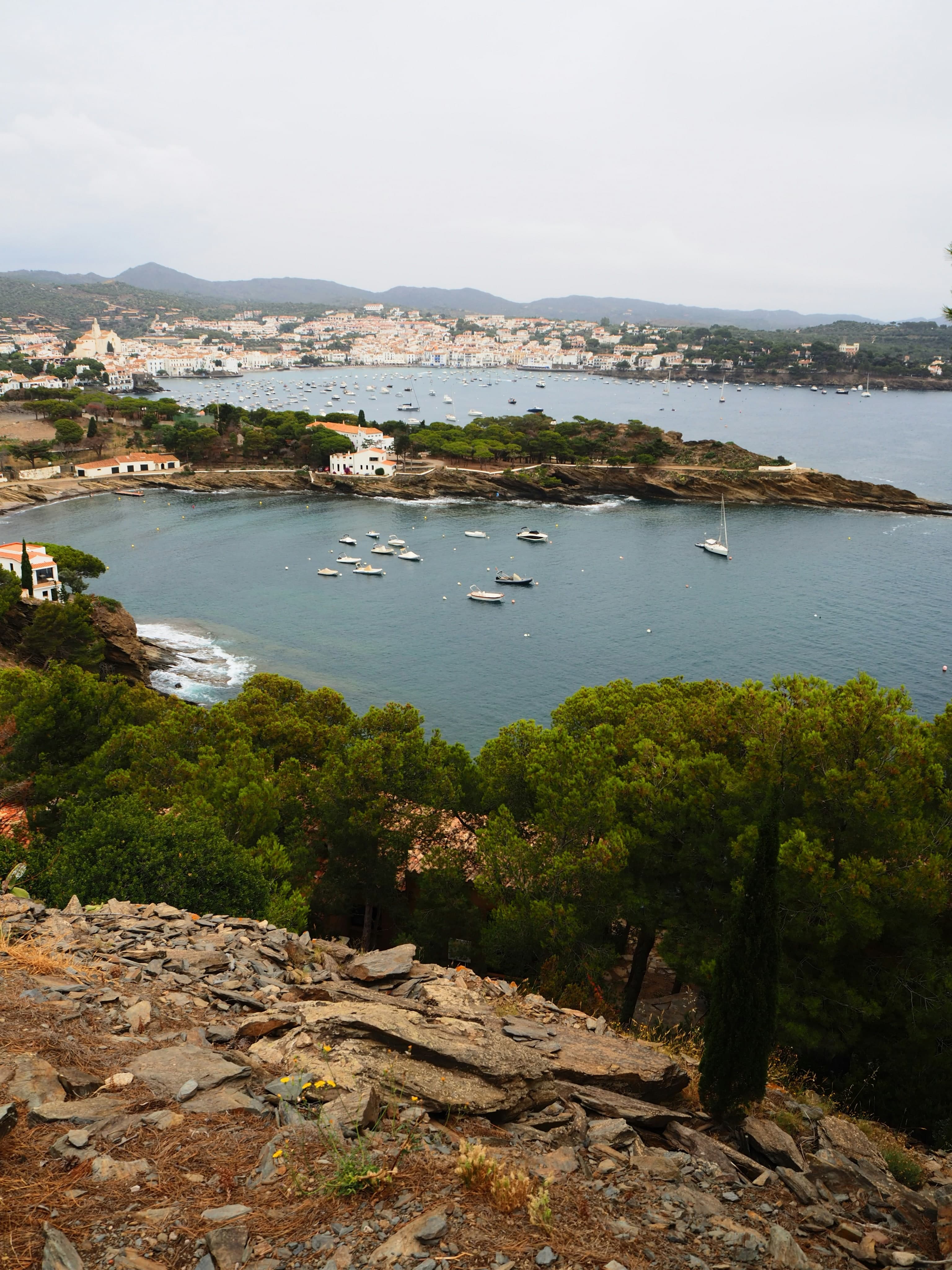
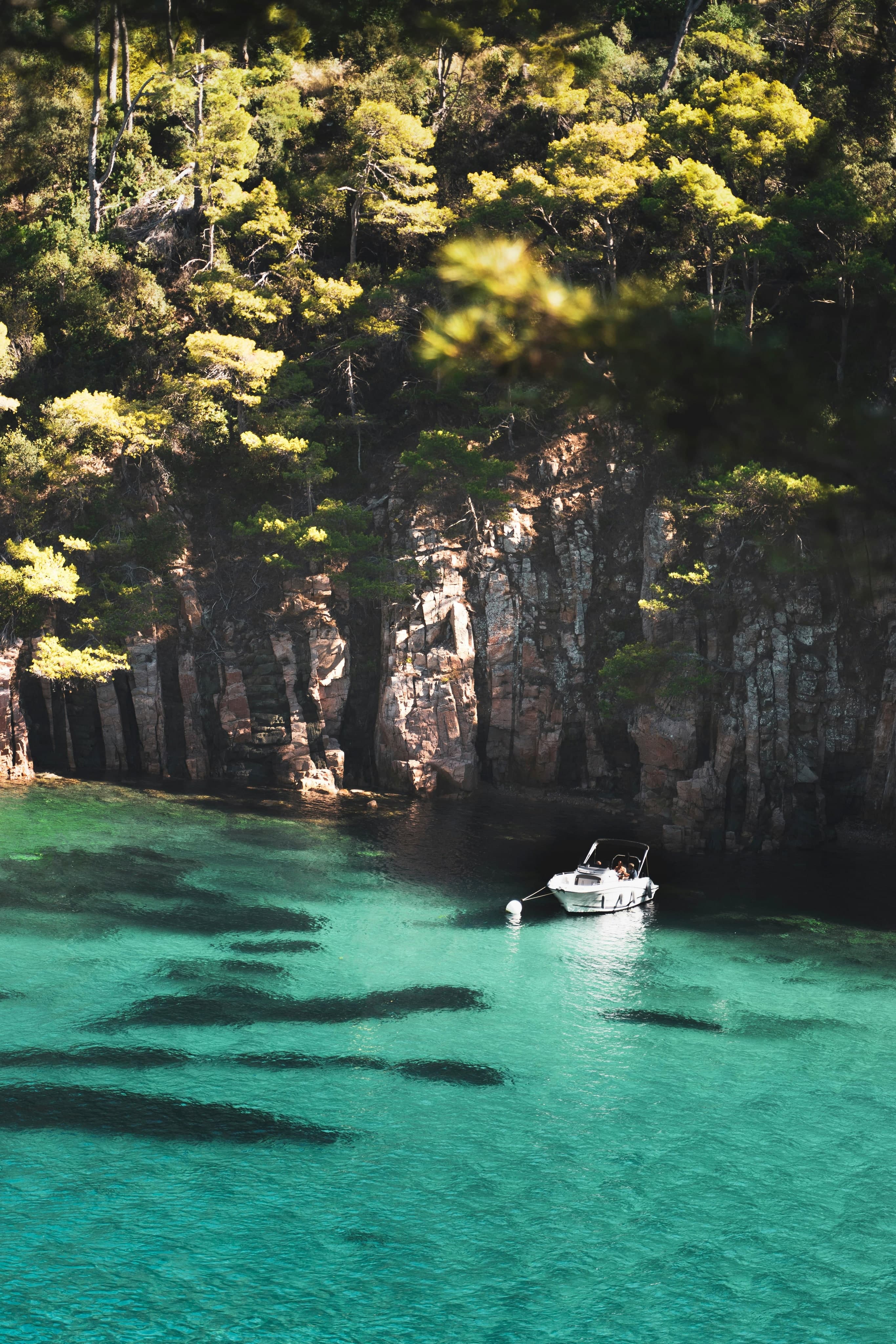
A sheltered cala near Cadaqués with anchored boats and pines, and the white town in the distance under an overcast sky
A quiet cala on the edge of town.

The Cadaqués notebook

Where we go

Cadaqués rewards a short list and a lot of time between stops. Here's ours.

Approximate positions · Cadaqués · Cartography © OpenStreetMap contributors, tiles by OpenFreeMap

Tap a pin or a place in the list to zoom in

Where to eat

  • The cooking of elBulli's former chefs still ranks among the great tables of the Empordà. Dishes built for sharing, a lot of technique, and a beautiful inner courtyard where the meal always seems to want to run long.

  • The town's great classic. Fresh fish, wines made by the family itself, and a kitchen that never tries to dress up the produce. If we could only recommend one restaurant in Cadaqués, this would probably be it.

  • Small, quiet, and considerably more local than the terraces along the seafront. A good natural-wine list, simple dishes, and the feeling of finding somewhere that still belongs to the town.

  • A contemporary offering, elegant and without excess. Good for an unhurried dinner as the old quarter settles into quiet.

  • A seafaring tavern built around the grill: fire, produce, little else. The counterpoint to the more classic fish restaurants.

Where to drink

  • Dalí and Marcel Duchamp used to play chess here. It's still the best place to order a vermouth, take a seat in the square, and let Cadaqués go by.

  • A winery whose vines look out to sea; a glass of wine that tastes of warm stone. Its enoteca in town, beside the Platja des Poal, is the easy way to try it.

Coves & swimming

  • Our favorite close to the center. Rock, clear water, and considerably quieter than Port Lligat.

  • The corner most locals recommend when the tramuntana is blowing. Rock platforms, very few people, and some of the best swimming in town.

  • You'll need to drive a dirt track to get there, but the reward is a cala that still holds on to the wildest side of Cap de Creus.

What to do

  • More than a house — a window into the artist's imagination, at Port Lligat. Always book ahead.

  • The corner of Cap de Creus that almost never makes the guidebooks. Much of Dalí's visual universe was born here.

  • One of those plans locals tend to keep to themselves. From up there, Cap de Creus looks like an island lost between the Mediterranean and the tramuntana.

  • The town's historic gallery, a living memory of the Cadaqués of the artists, open since 1973. Go in and see what's hanging.

  • The easternmost point of the peninsula. Rock sculpted by the tramuntana, and copied by Dalí. Go at sunset.

  • Lose yourself in the slate streets up to the top of town: inside waits Pau Costa's gilded baroque altarpiece.

  • Walk Cadaqués before nine in the morning

    It might sound like a small thing, but it changes the whole experience. It's when the harbor belongs to the fishermen again, and the town recovers the silence that won over so many artists.

    No fixed pin

Good to know

Frequently asked questions

How do you get to Cadaqués?

There's only one road in, crossing the Coll de Perafita from Roses — about thirty kilometers of curves. That isolation is exactly what explains much of the town's character, and its remarkably intact condition.

Do I need to book to visit Dalí's house?

Yes. The Casa-Museu at Port Lligat runs on small group visits, and tickets tend to sell out days — sometimes weeks — ahead during high season.

What shouldn't I miss besides Dalí?

Pla de Tudela, the Pení lookout, the small galleries of the old quarter, a glass of Martí Faixó wine, and a walk along the harbor at sunrise — all show a Cadaqués far less familiar than the one on the postcards.

Does Cadaqués have sandy beaches?

No. Most of the calas are rock or round pebble. In exchange they offer some of the clearest water on the Costa Brava, and scenery that has kept an extraordinarily wild character.

Other villages to discover

A turquoise-water cala in Begur, between reddish rock cliffs and pines, with a boat at anchor

Baix Empordà

Begur

Begur sits a little inland, and that one fact explains almost everything else. It isn't a town built beside the water but on a hill above it, with the Mediterranean laid out below: while other Costa Brava towns grew up around a harbor, Begur grew up around a castle, and the calas came later. So nobody here asks which is the beach — they ask which cala you're going down to today. Sa Tuna, Sa Riera, Aiguablava, Platja Fonda, Fornells, Aiguafreda, Illa Roja: a string of small bays linked by the Camí de Ronda, the coastal footpath, each with its own temperament. And behind all of them sits an old quarter of Indiano mansions, quiet squares and cobbled streets that remember something easy to forget now — before it became one of the most coveted places on the Costa Brava, Begur looked west toward Cuba more than east toward Barcelona.

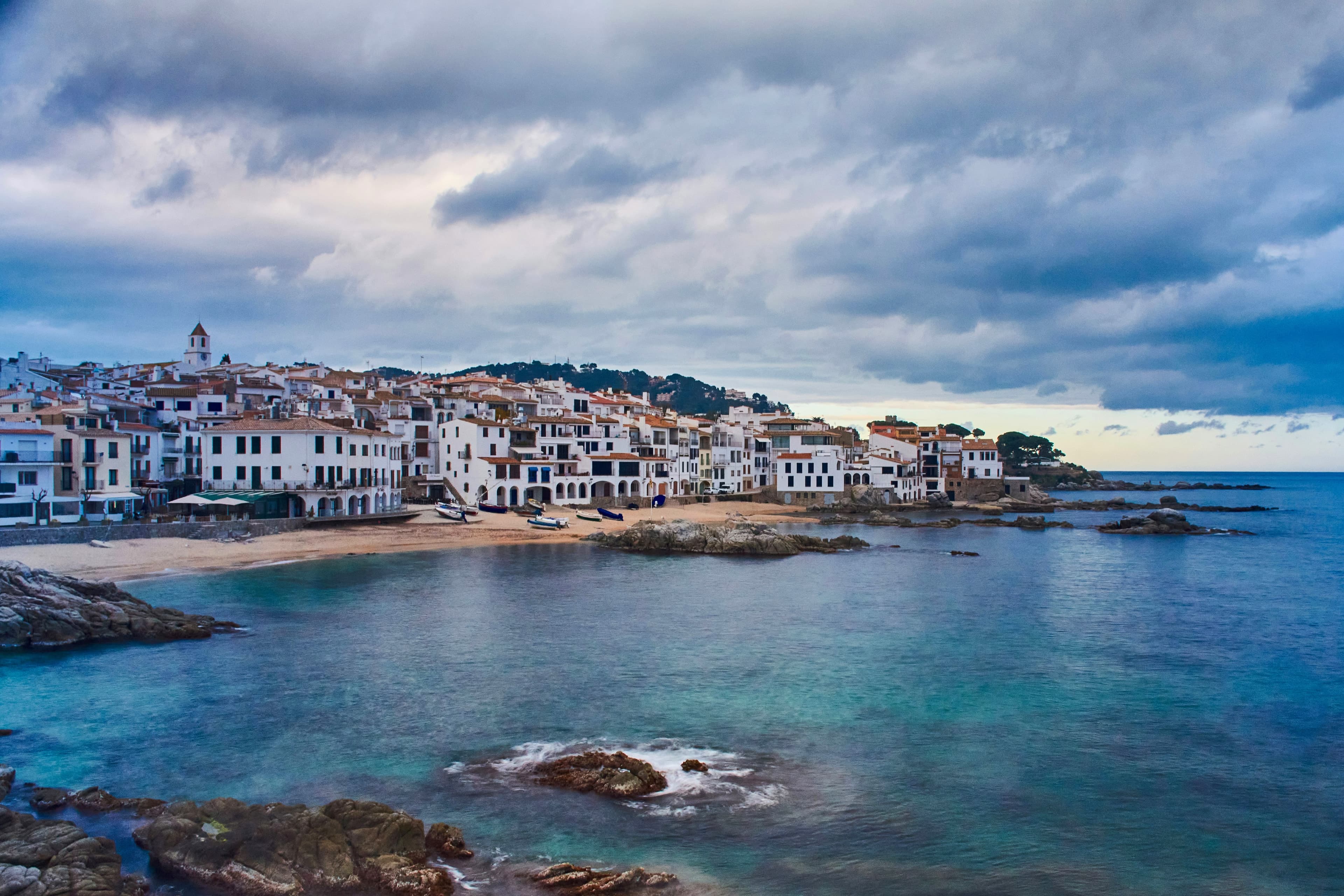
The white town of Calella de Palafrugell and its cala under an overcast sky at dusk, turquoise sea and rocks in the foreground

Baix Empordà

Calella de Palafrugell

Calella de Palafrugell is probably the most recognizable image of the whole Costa Brava. White houses, les Voltes of Port Bo, boats drawn up on the sand, the Mediterranean woven into the town's daily life — it turns up in thousands of photographs every summer. And yet that postcard only tells part of the story: the real Calella shows itself once you step a few meters off the main promenade, walk the Camí de Ronda without hurrying, or come back at dusk, when the terraces start to empty and the town settles back into the unhurried pace it always kept. Because before it became one of the great icons of the Mediterranean, Calella was — and still is — a fishing village.

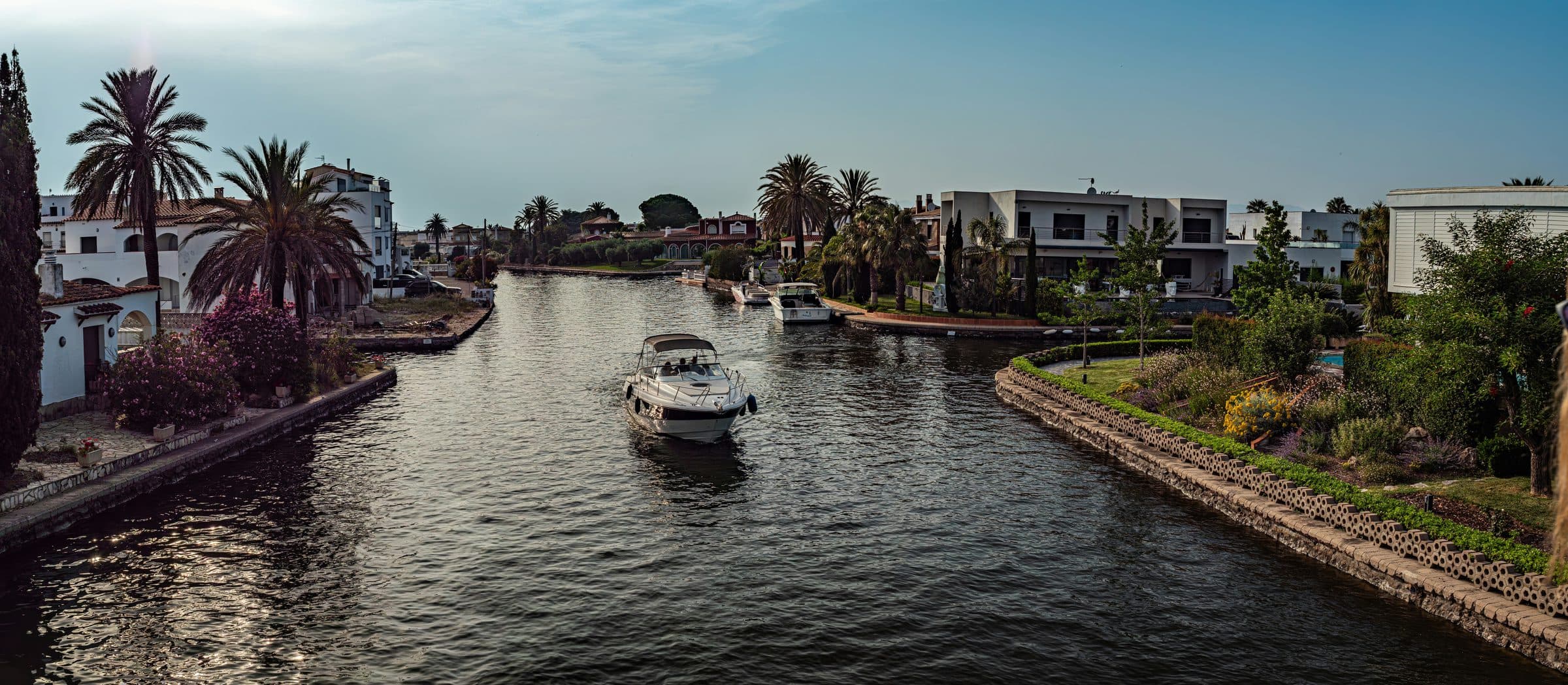
Navigable canals of Empuriabrava, Costa Brava

Alt Empordà

Empuriabrava

Empuriabrava doesn't look like anywhere else on the Costa Brava, and it isn't trying to. While every other town here grew slowly around a fishing harbor, this one started on a drawing board: in the late 1960s, the old marshland at the mouth of the Muga river was turned into a town built entirely around water, with more than 24 kilometers of navigable canals, thousands of private moorings, and the largest residential marina in Europe. It could easily read as artificial, but spend a day here and the appeal becomes obvious: where other towns park the car, this one moors the boat. And while one half of the town lives with its eyes on the canals, a few meters away begin the Aiguamolls de l'Empordà, a wetland landscape where flamingos, herons and storks take to the air. Engineering and nature rarely sit together this comfortably.