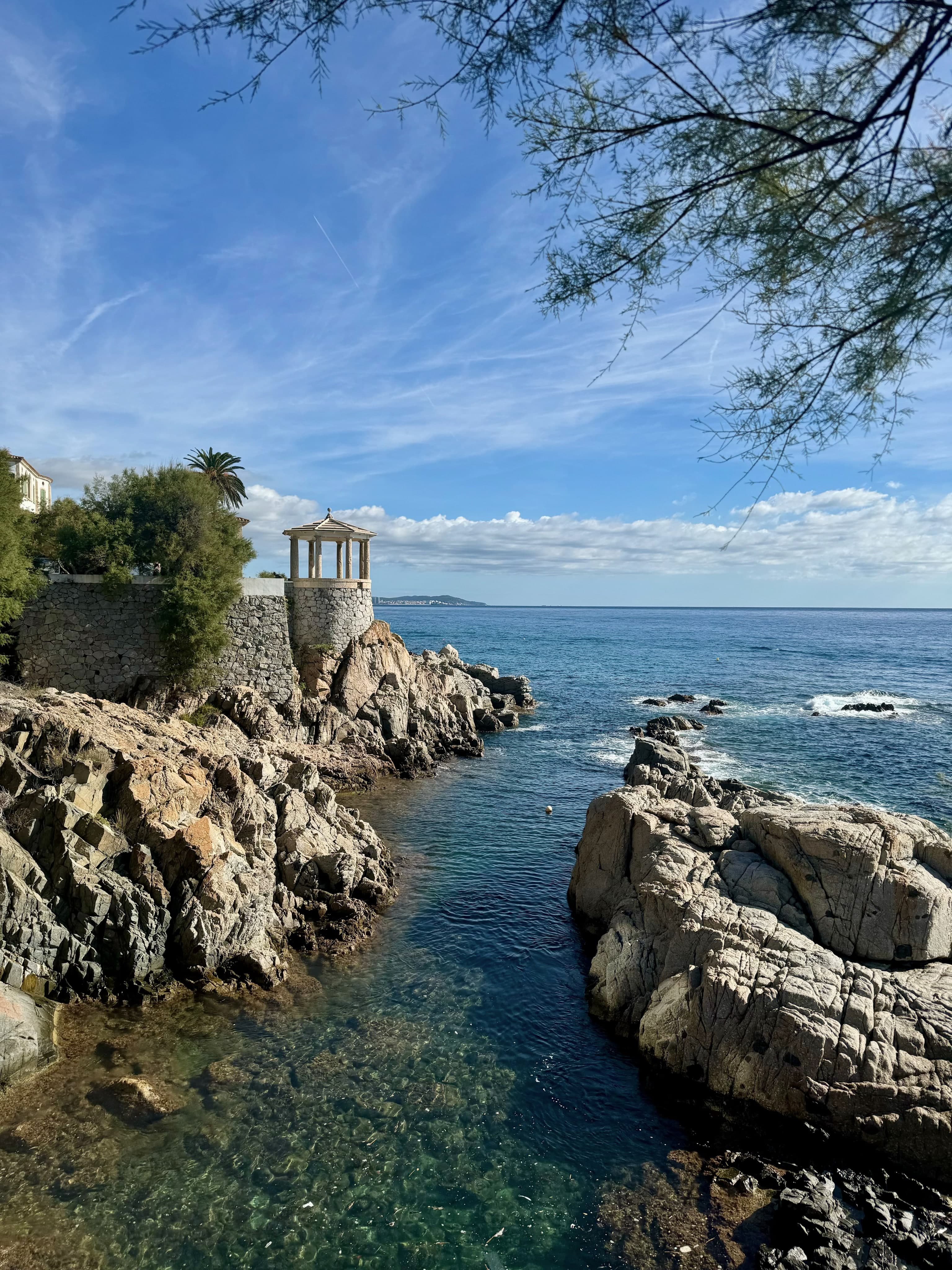
S’Agaró isn't a fishing village that grew up over time, the way almost all its neighbors on this coast did. It's a place someone drew whole: in 1916, the industrialist Josep Ensesa commissioned the noucentista architect Rafael Masó to design a garden town on the cliffside — villas of clean Mediterranean lines, gardens tended down to the last hedge, and a coastal path conceived as a promenade, not a necessity. A century later, it's still exactly that: the most orderly, most photographed stretch of coast in the Baix Empordà, and the only one where the whole landscape answers to a single idea.
A town designed, not inherited
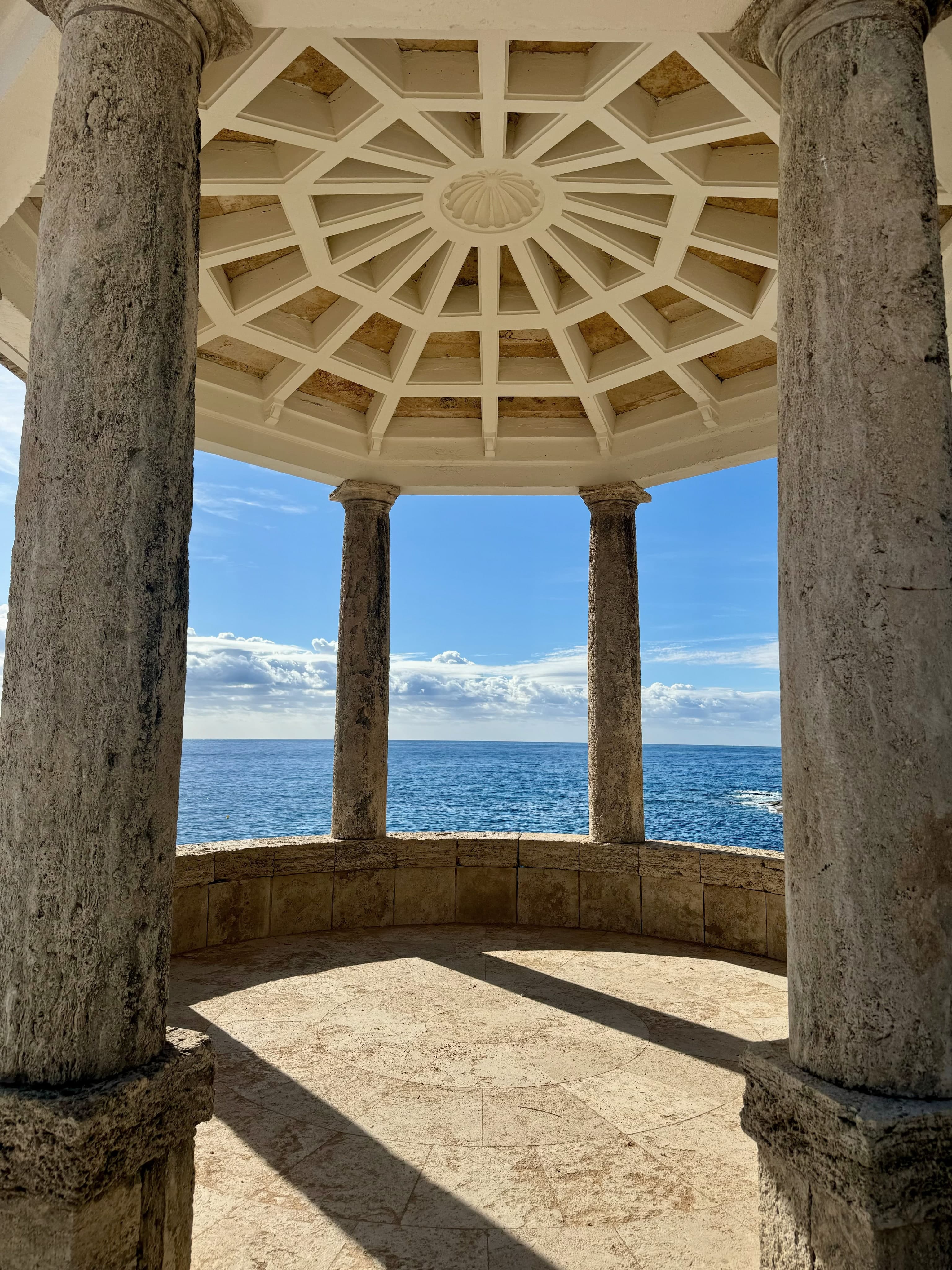
Everything that makes S’Agaró distinctive traces back to that one decision in 1916. Rafael Masó, the central figure of Girona noucentisme, designed not just the villas but the camí de ronda itself: the gallery of stone arches that thousands of visitors now walk was conceived as a piece of landscape architecture, not a coastal watch-path inherited from another century. That's why S’Agaró feels different the moment you walk in — there are no houses layered on by generations here, just a plan carried through to the end.
The camí de ronda: from Sant Pol to Sa Conca
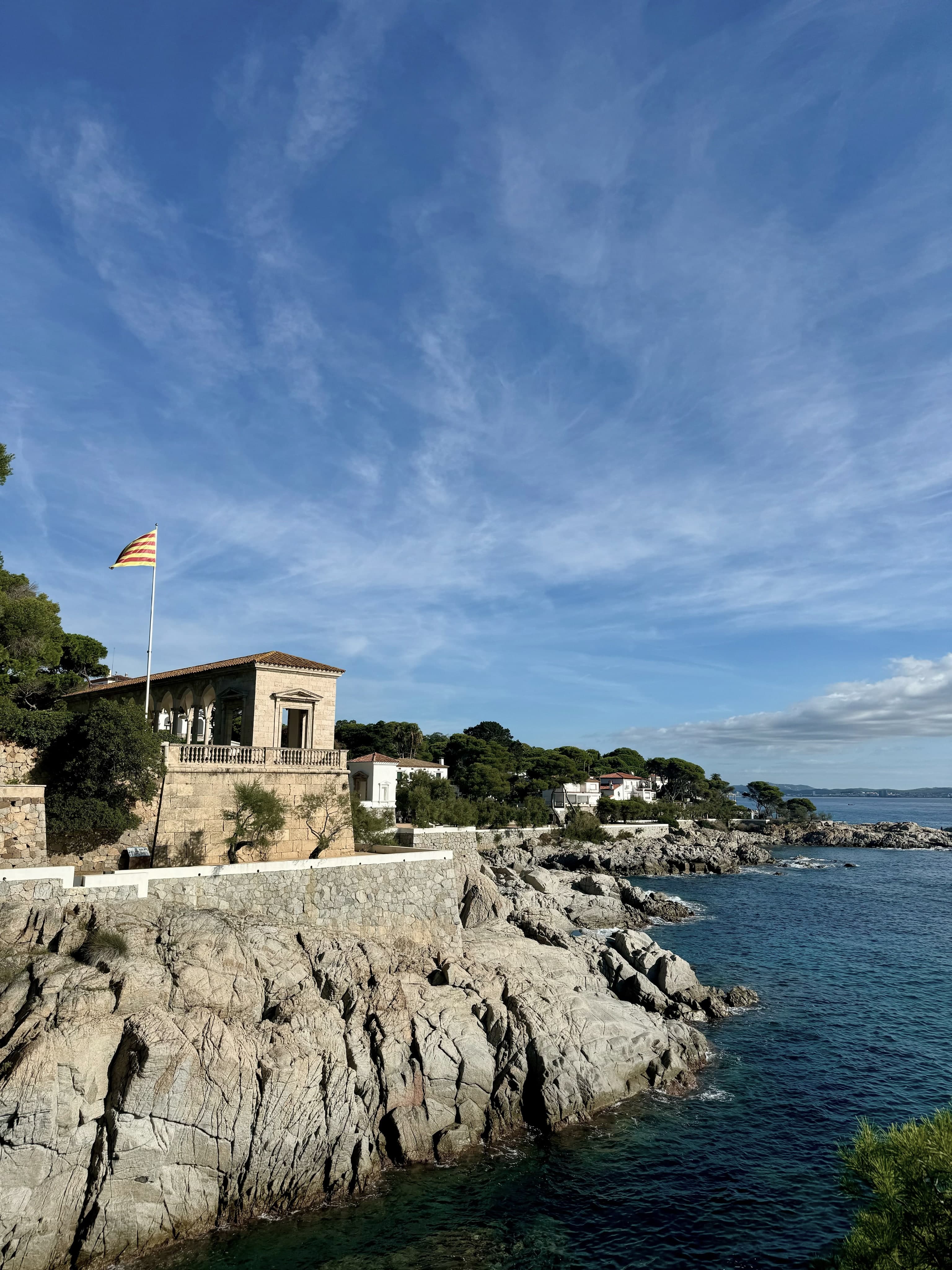
The stretch between Platja de Sant Pol and Platja de Sa Conca is the most walked in S’Agaró: barely two kilometers, well kept, with no climb demanding enough to notice, and lookouts where the path pauses on purpose so the walker does too. Halfway along, the Mirador del Cap de Mort offers the widest view on the whole route, and a little further on, tucked among rocks and pines, appears Cala Pedrosa.
It's a walk you can do with children, or with your hands in your pockets, and in fifteen minutes it completely changes the landscape: from the manicured beach at Sant Pol to bare rock facing the open sea.
Cala Pedrosa and the other calas
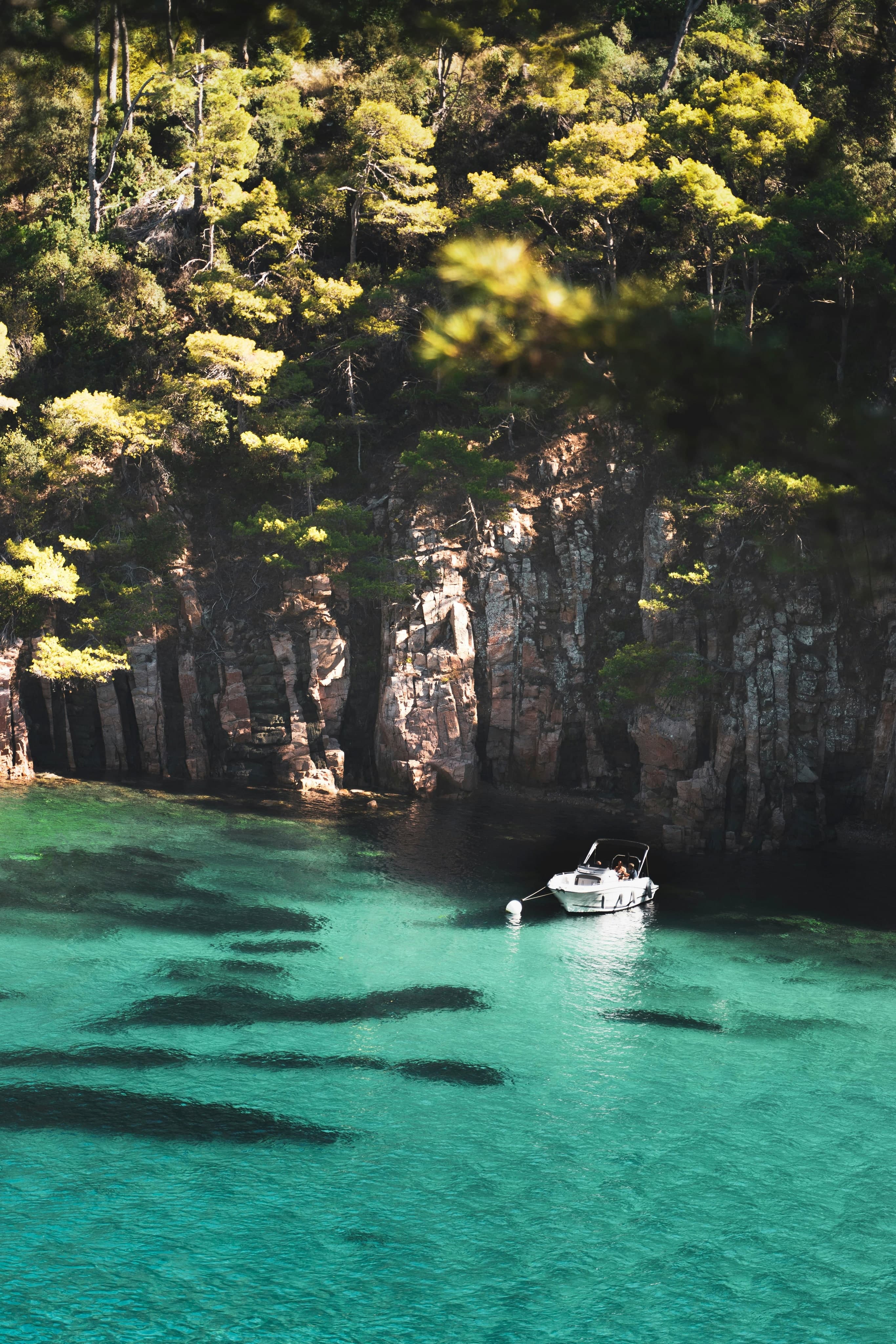
Cala Pedrosa is the best known and the smallest: clear water, good for snorkeling, and a granite menhir — of prehistoric origin, though its exact dating is disputed — that reminds you this coast was inhabited long before anyone thought to build a garden town on it. Anyone after a little more solitude can try Cala Maset, Cala del Niu, Cala Jonca or Sa Caleta, all small and with barely any facilities.
For anyone after a long stretch of beach, though, the answer is Platja de Sa Conca: wide sand, easy entry into the water, and plenty of room even in August, right at the other end of the camí de ronda.
The beach huts
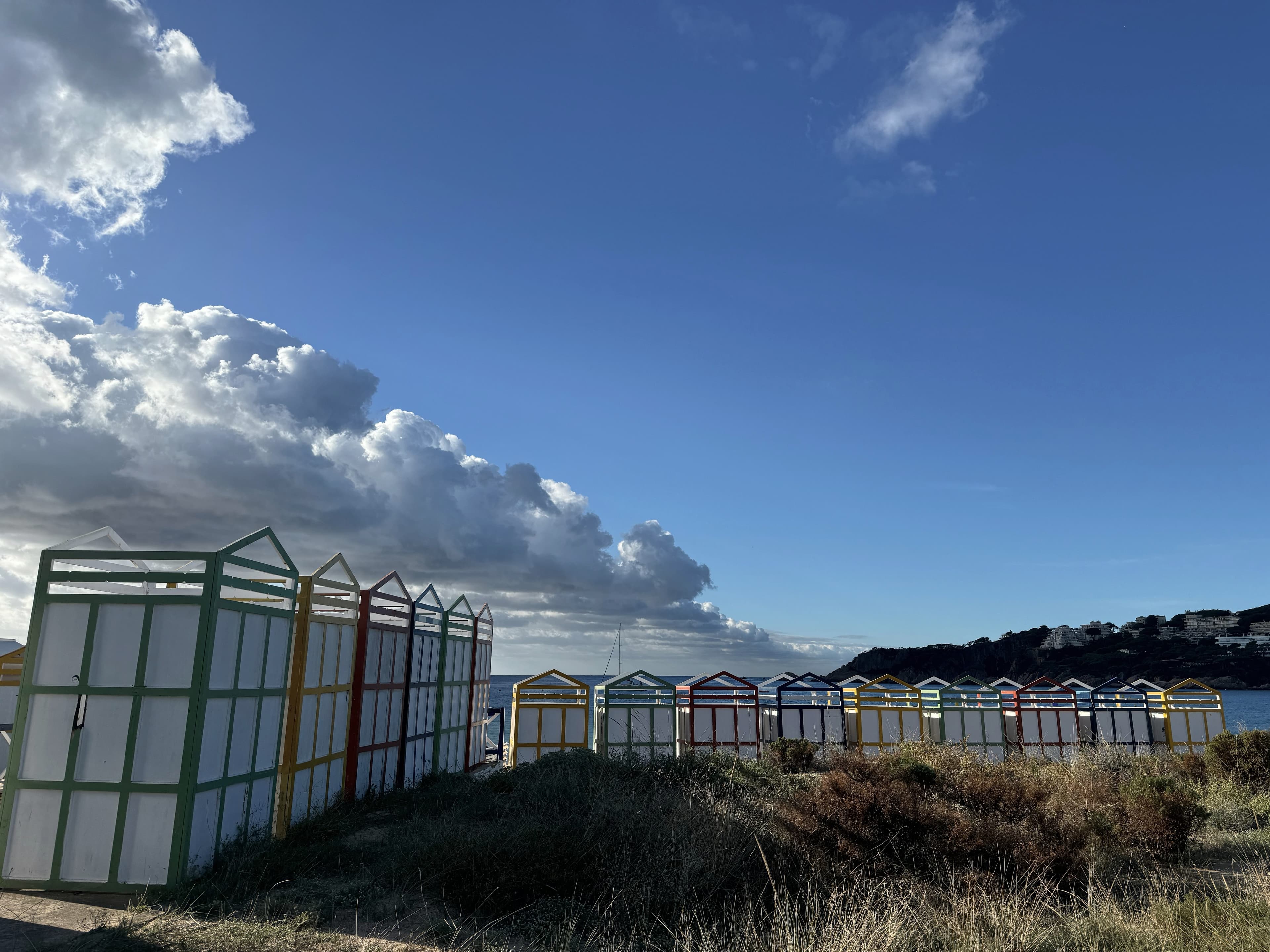
A symbol as recognizable in S’Agaró as the camí de ronda itself: 45 wooden huts painted in bright colors, lined up facing the sea, that in summer become the social hub of the whole beach. They're not for sale and can't be rented individually — they've belonged to the same local families for generations — but photographing them at sunset is practically a rite of passage for anyone visiting S’Agaró for the first time.
The Hostal La Gavina
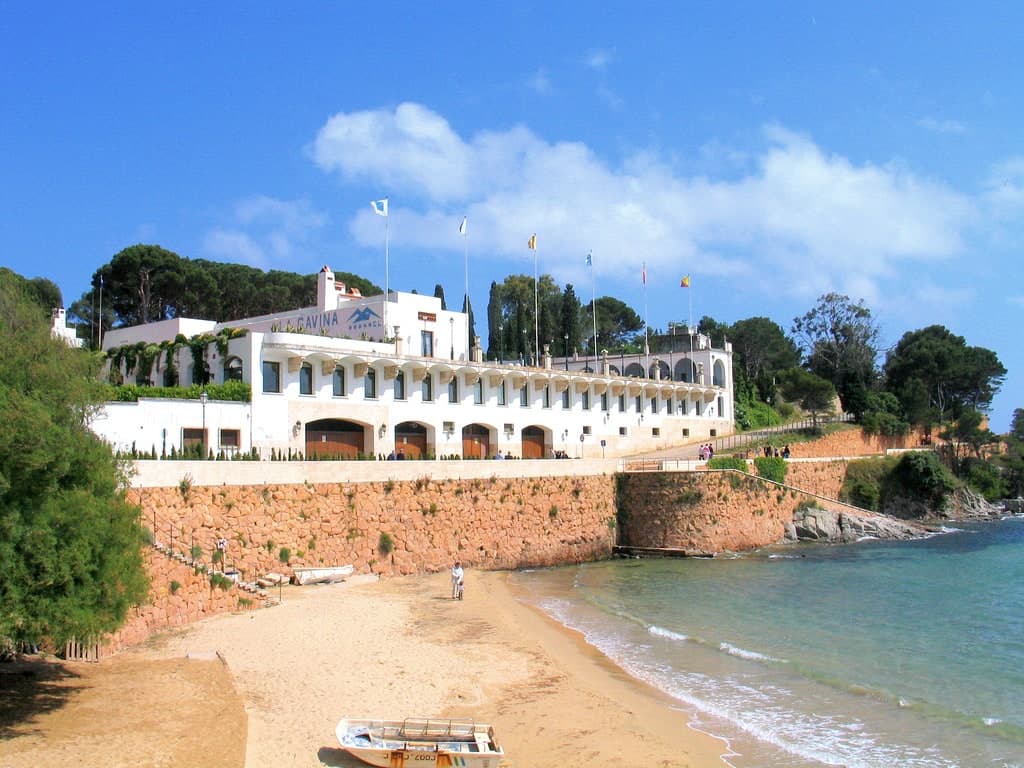
The Hostal La Gavina opened in 1932, backed by the same Ensesa family that had built the town, and it's been S’Agaró's anchor of luxury ever since: rooms that mix classic elegance with the air of a family house, gardens sloping down to the pool, and a guest book that, over the course of the twentieth century, picked up more than one Hollywood star passing through during shoots on the Costa Brava. Its restaurant, Candlelight, led by chef Romain Fornell, offers cooking that matches the setting.