PuraCostaBrava
ES
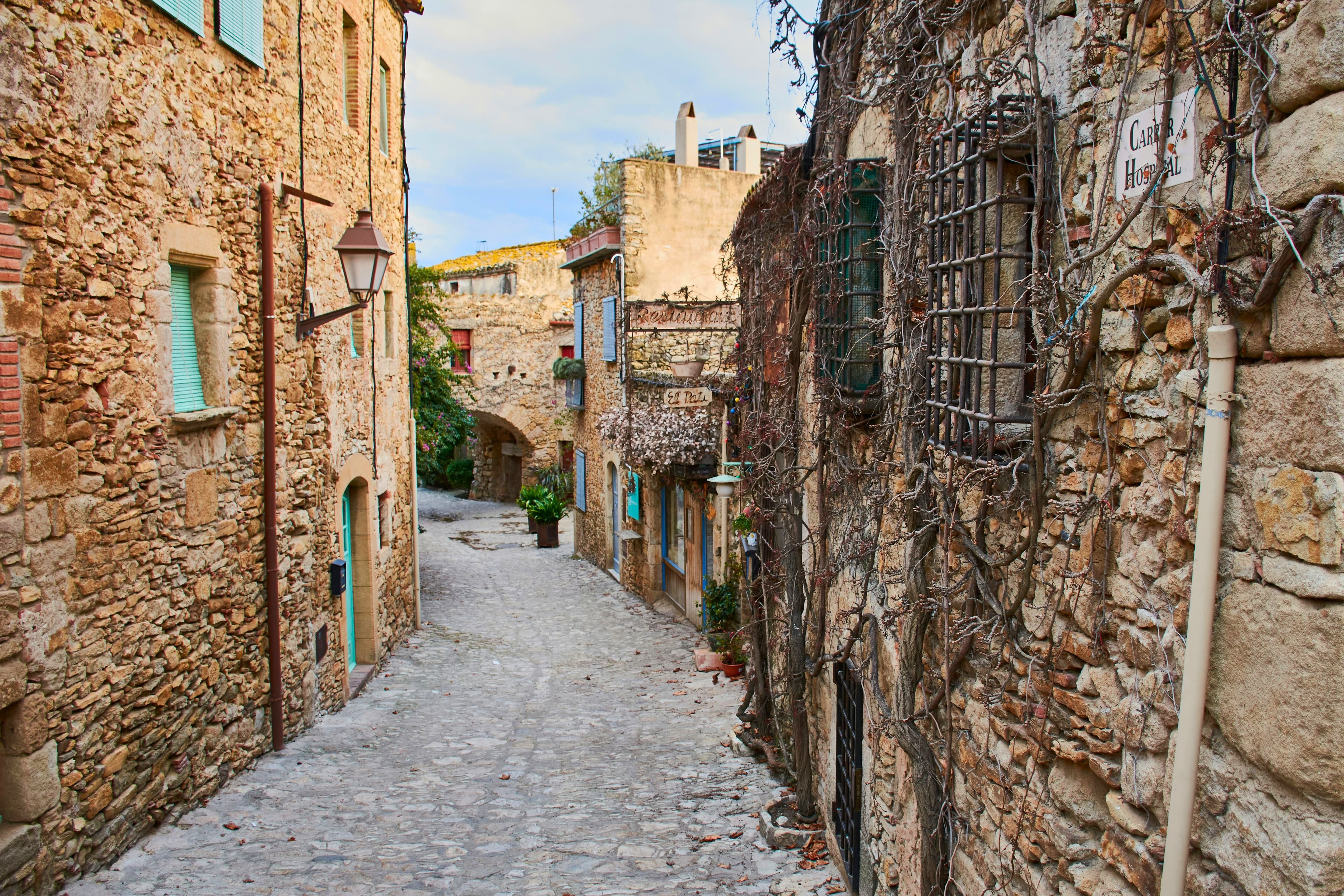
A cobbled street in Peratallada between medieval stone houses, a wrought-iron lamp and vines climbing the walls

Baix Empordà

Peratallada

Some places are made of time, and some are made of stone. Peratallada is both at once, because here the stone is the time: it's written in the moat cut by hand into the rock, in walls that haven't changed in eight hundred years, in archways worn smooth by hands long gone. The name says it all before you've even stepped inside. Pedra tallada. Cut stone. A town named for what it is, and one that turns out to be exactly what its name promises.

Pedra tallada: a name that's also a description

Peratallada means, in Catalan, cut stone — and the name isn't decoration, it's a record. The place-name Petra Tallada has been documented since the tenth century, and it comes from the moat that rings the town, carved straight into the sandstone bedrock it sits on. The same cut stone went on to build the houses. The town was built, quite literally, out of itself.

That moat is what makes Peratallada unique. It's one of the very few places in the region whose defensive structure — walls, moat and towers — has survived almost intact since the Middle Ages, not rebuilt but simply kept. You walk in through what was once a guarded gate, and all at once you're inside another century, no cars, no noise, stone underfoot and stone on the walls with the light falling in between. There's nothing to look for. Just walk slowly and let the town do the rest.
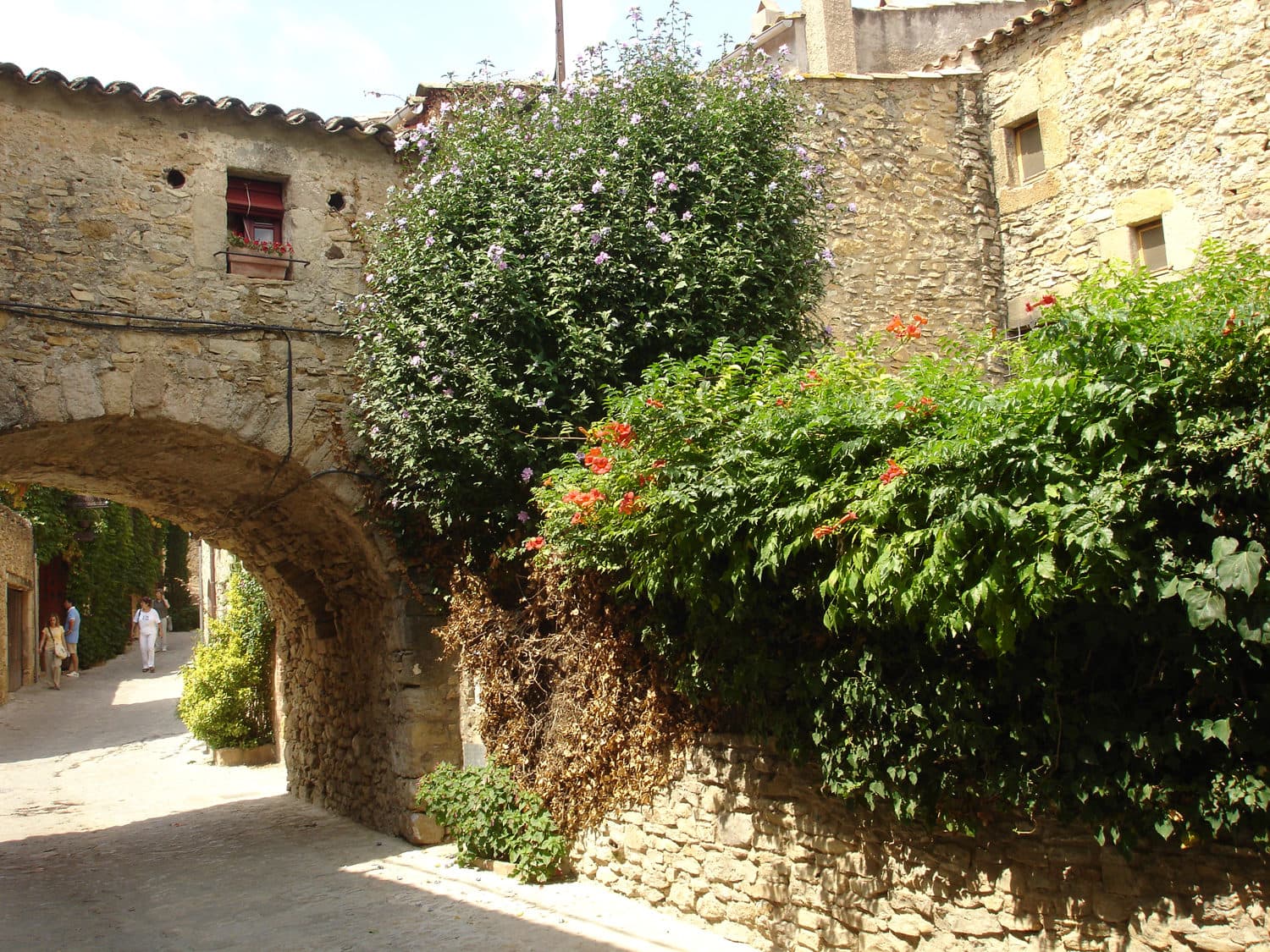
A stone archway at the entrance to a street in Peratallada, bougainvillea and other flowers climbing the wall
The entrance to another century, under one of the town's archways.Photo: Mutari / Wikimedia Commons (public domain)

The castle and the plaça de les Voltes

The heart of Peratallada is its castle, one of the oldest in Catalonia: the keep, the palace and the walls all date between the eleventh and fourteenth centuries, a feudal ensemble that has simply stayed still in time. Around it winds a maze of narrow lanes where it's easy — and worthwhile — to get lost.

The center of life is the plaça de les Voltes, the square of the arches: medieval stone porticoes that today shelter terraces, and from which the carrer Major runs off, the town's loveliest street, lined with craft shops and quiet corners. Everything here is small, and that's the charm of it. Peratallada isn't something you look at — it's something you walk through. And you walk through it twice, because the second time round you notice what the first time, too dazzled, you missed.
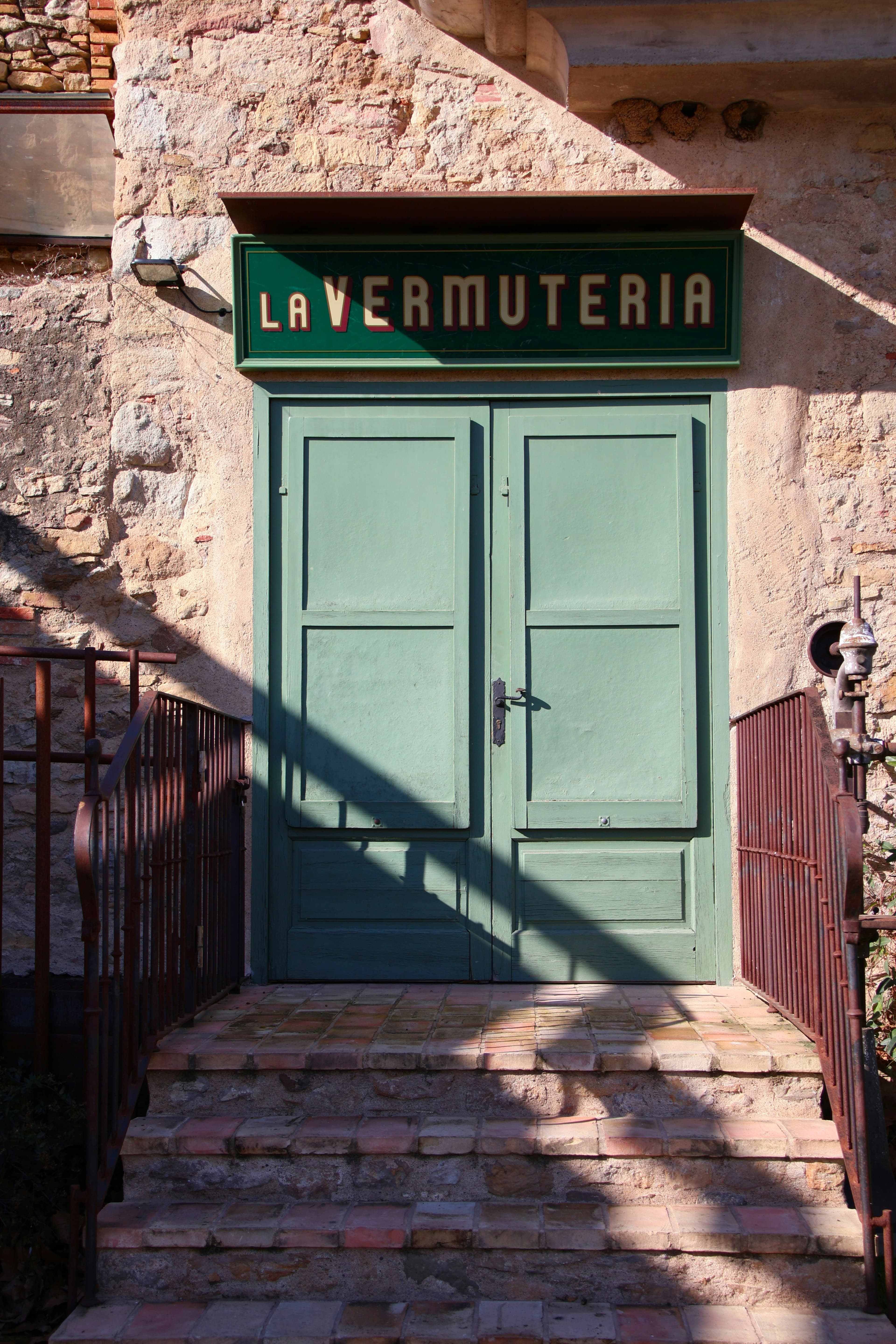
The green door of a vermouth bar on a Peratallada street, under a hand-painted sign and above brick steps
A vermouth bar tucked into the streets of the medieval quarter.

Sant Esteve and the quiet outside

Just outside the walls stands the church of Sant Esteve, Romanesque and Gothic, with its cemetery and a calm set apart from the bustle of the terraces. The walk out is worth it: from there you see the whole town for what it is, a single stone on the plain, and understand its scale properly.

Peratallada is one of the few places where the cliché actually holds true: time really does seem to stop. Partly because no cars come in, partly because the stone itself won't let anyone hurry. Come on a weekday, or early, or late in the afternoon, once the coach tours have left and the town belongs again to whoever stays. That's when what's supposed to happen, happens — which is nothing. Just the stone, the light, and you.
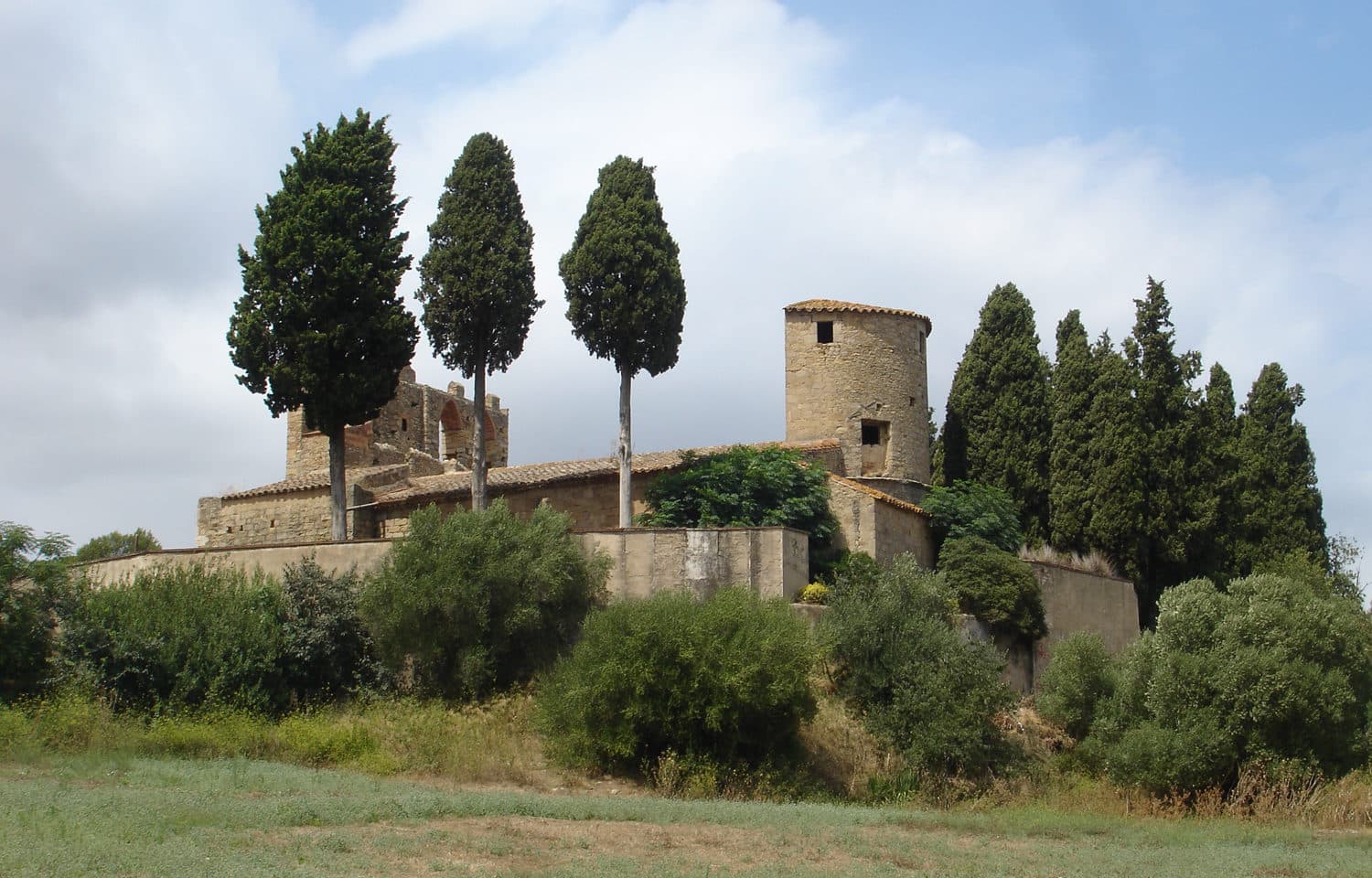
The Romanesque church of Sant Esteve in Peratallada, its tower and three cypresses, above the Empordà plain
The church of Sant Esteve, outside the walls.Photo: Mutari / Wikimedia Commons (public domain)

The medieval triangle of the Empordà

Peratallada belongs to the municipality of Forallac, formed in 1977 by merging three villages — Peratallada itself, Vulpellac and Fonteta — and it's part of a cluster of medieval inland towns in the Baix Empordà that together make up one of the Costa Brava's most understated treasures.

A few minutes away lie Pals, on its hill of rice fields; Ullastret, with the best-preserved Iberian settlement in Catalonia; Palau-sator and Sant Julià de Boada, almost secrets in themselves. You can string them together on a short day's drive, stopping to eat wherever you happen to land and to drink at the first shaded terrace you find. This is the inland Costa Brava: no sea in sight, but all the light of the Empordà, and none of the shoreline's hurry.
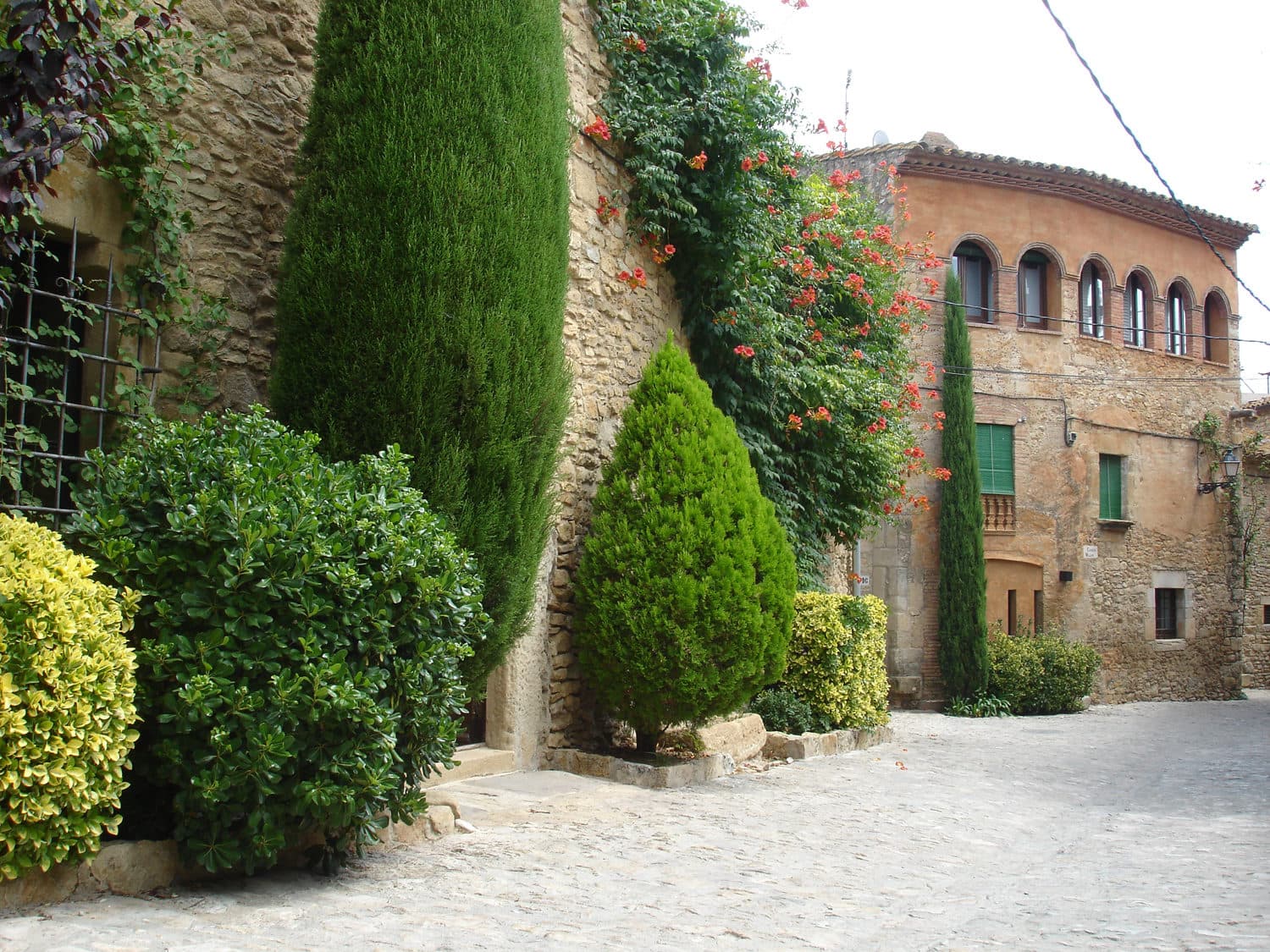
A stone street in Peratallada with tall cypresses beside a medieval house, under a clear sky
Peratallada, the starting point of the medieval triangle.Photo: Mutari / Wikimedia Commons (public domain)

The Peratallada notebook

Where we go

Peratallada is eaten slowly, in the shade of the stone, almost always under an archway or in a square. Here's the short list: where we send people to eat, what's worth stopping for inside the walls, and which neighboring towns to string together. Come early or late, once the coach tours have gone — that's when the town is real.

Approximate positions · Peratallada · Cartography © OpenStreetMap contributors, tiles by OpenFreeMap

Tap a pin or a place in the list to zoom in

Where to eat

  • A classic reference point in town, old-school Empordà cooking. The oca amb naps — goose with turnips — and the game dishes are well known here; the place for tradition without a modern gloss.

  • Right on the plaça de les Voltes, in a twelfth-century building that folds in stretches of the old wall. You eat surrounded by the very stone you came to see.

  • Chef-driven cooking on a traditional base, with a modern touch. The table for when you want something more considered inside the walls.

  • On the carrer del Forn, warm and unpretentious, home-style cooking. The classic no-fuss spot inside the walls.

Where to drink

  • On the carrer Major. Ice cream with sweet and savory ideas out of the ordinary. The perfect gesture for a mid-afternoon walk through town.

What to do

  • The center of everything: the medieval arches and the town's loveliest street, lined with craft shops. Walk it twice — you see it better the second time.

  • Walk the outside of the town, following the moat cut into the rock. It's what makes Peratallada unique, and it costs nothing to see — almost nobody looks at it.

  • Romanesque and Gothic, outside the walls and away from the bustle. The walk out is worth it: from there you understand the scale of the whole town.

  • Ullastret and Pals

    A few minutes away, the Iberian settlement of Ullastret and medieval Pals on its hill of rice fields. The triangle fits into a short day's drive.

    No fixed pin

Where to shop

  • The shops along the main street, for taking home something handmade instead of a fridge magnet. Take your time — the good stuff isn't in the biggest window.

Good to know

Frequently asked questions

What does Peratallada mean?

Peratallada means 'cut stone' in Catalan (pedra tallada). The place-name Petra Tallada has been documented since the tenth century and refers to the defensive moat carved directly into the sandstone bedrock the town sits on. That same cut stone was later used to build the houses, so the name literally describes how the place was built.

Which municipality does Peratallada belong to?

Peratallada belongs to the municipality of Forallac, in the comarca of Baix Empordà (Girona province). Forallac was formed in 1977 by merging three villages: Peratallada, Vulpellac and Fonteta. Peratallada is the most visited of the three, thanks to its medieval quarter.

What should you see in Peratallada?

The essential is the medieval quarter itself, one of the best-preserved in Catalonia: the castle with its keep, palace and walls, dating between the eleventh and fourteenth centuries; the moat carved into the rock around the town; the plaça de les Voltes, with its medieval arches; the carrer Major, lined with craft shops; and the Romanesque and Gothic church of Sant Esteve, just outside the walls. The whole ensemble is a protected Historic-Artistic Site.

Can you drive into Peratallada?

No. The historic quarter is pedestrian-only, so you'll need to leave the car in one of the car parks outside the walls and walk in. It's part of what keeps the town so quiet. It's best visited early or late in the afternoon, once the tour buses have gone and the town recovers its silence.

How long does it take to reach Peratallada from Barcelona or Girona?

From Barcelona, Peratallada is about 130 km away, roughly 1 h 40 min by car via the AP-7. From Girona it's about 35 km, around 35 minutes. There's no train station, so driving is the practical option — and it also lets you link up the neighboring medieval towns.

What towns can you visit near Peratallada?

Peratallada sits at the heart of a cluster of medieval inland towns in the Baix Empordà that can be covered in a single day. A few minutes away lie Pals, on its hill of rice paddies; Ullastret, with the best-preserved Iberian settlement in Catalonia; and the tiny Palau-sator, Sant Julià de Boada and Vulpellac. This is the inland Costa Brava — no sea in sight, but all the light of the Empordà.

Other villages to discover

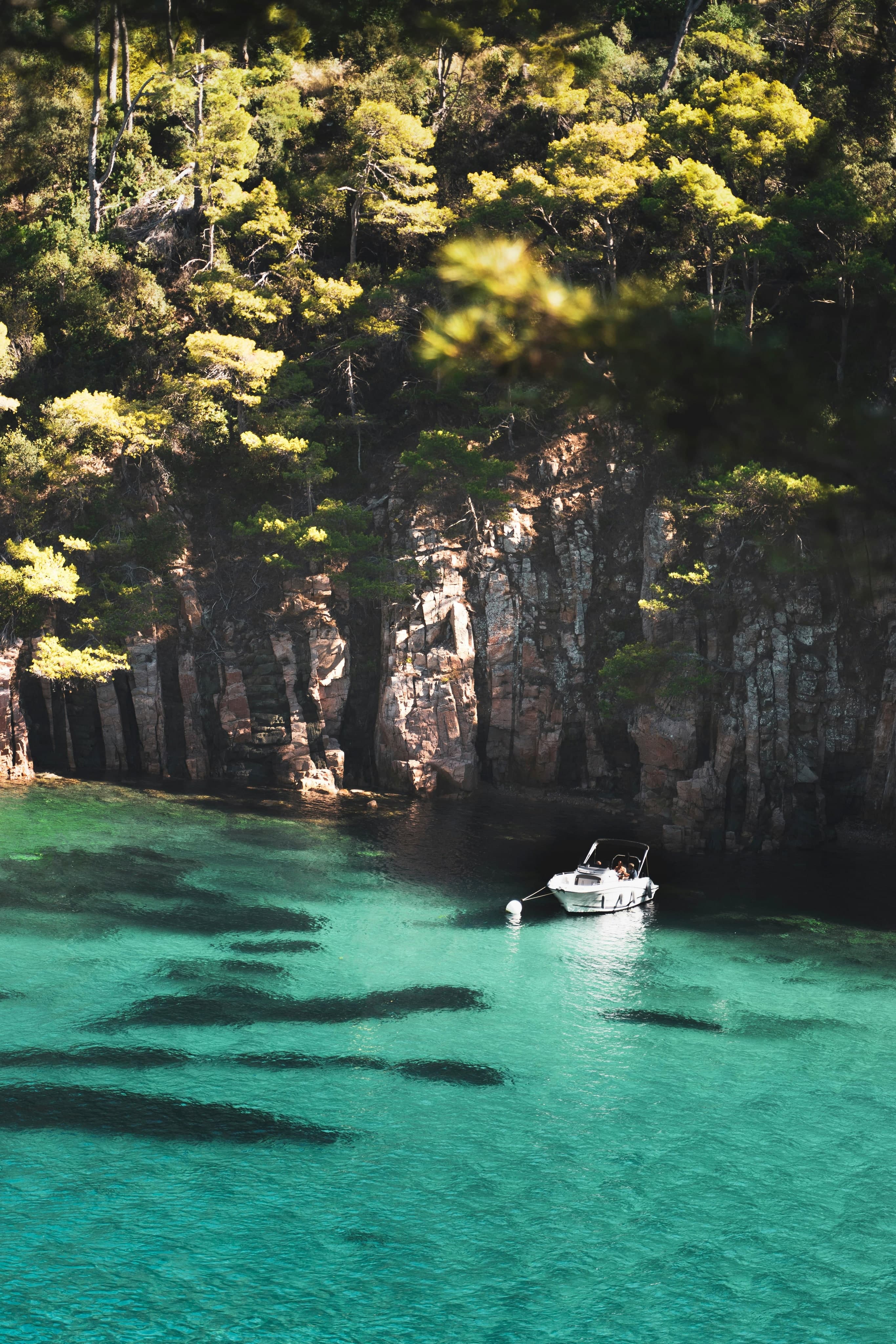
A turquoise-water cala in Begur, between reddish rock cliffs and pines, with a boat at anchor

Baix Empordà

Begur

Begur sits a little inland, and that one fact explains almost everything else. It isn't a town built beside the water but on a hill above it, with the Mediterranean laid out below: while other Costa Brava towns grew up around a harbor, Begur grew up around a castle, and the calas came later. So nobody here asks which is the beach — they ask which cala you're going down to today. Sa Tuna, Sa Riera, Aiguablava, Platja Fonda, Fornells, Aiguafreda, Illa Roja: a string of small bays linked by the Camí de Ronda, the coastal footpath, each with its own temperament. And behind all of them sits an old quarter of Indiano mansions, quiet squares and cobbled streets that remember something easy to forget now — before it became one of the most coveted places on the Costa Brava, Begur looked west toward Cuba more than east toward Barcelona.

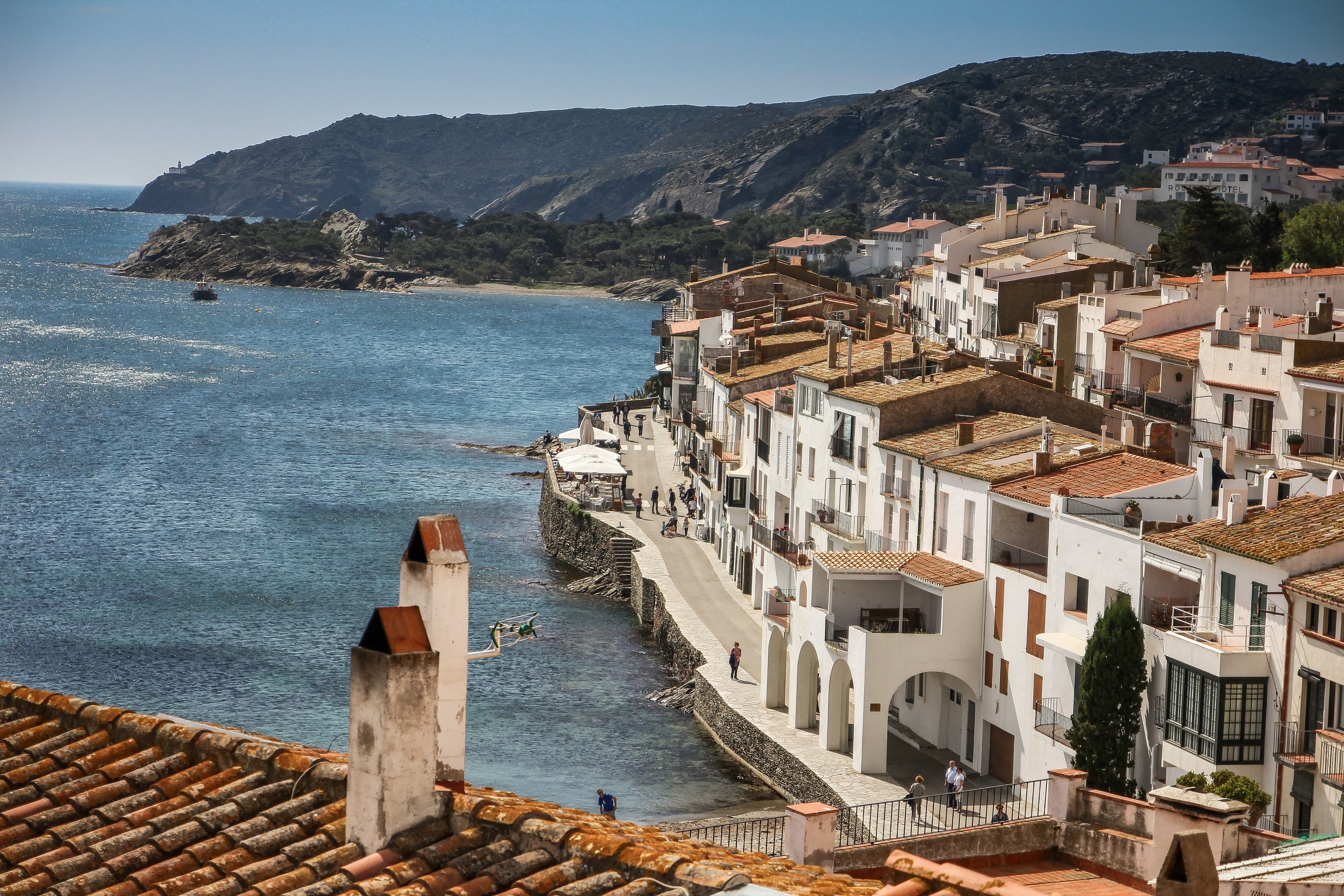
The seafront of Cadaqués beside the water, with the white houses and tiled roofs of the old town and the Cap de Creus coastline behind

Alt Empordà

Cadaqués

Cadaqués is the most photographed town on the Costa Brava, and the hardest to actually get to know. White houses, green shutters, boats drawn up facing the sea, the light that undid Dalí — it's all over every postcard, and none of it explains why people keep coming back. Maybe it has to do with the winding road that kept the town cut off from the rest of the Empordà for centuries, or with that light, which changes by the hour and makes the place feel like somewhere new each morning, noon and evening. You don't come here for wide sandy beaches or a promenade lined with shops. You come to walk slowly, to lose yourself in slate-paved streets, to watch the sea from the rocks, and to understand why this corner of the coast ended up gathering some of the twentieth century's most important artists.

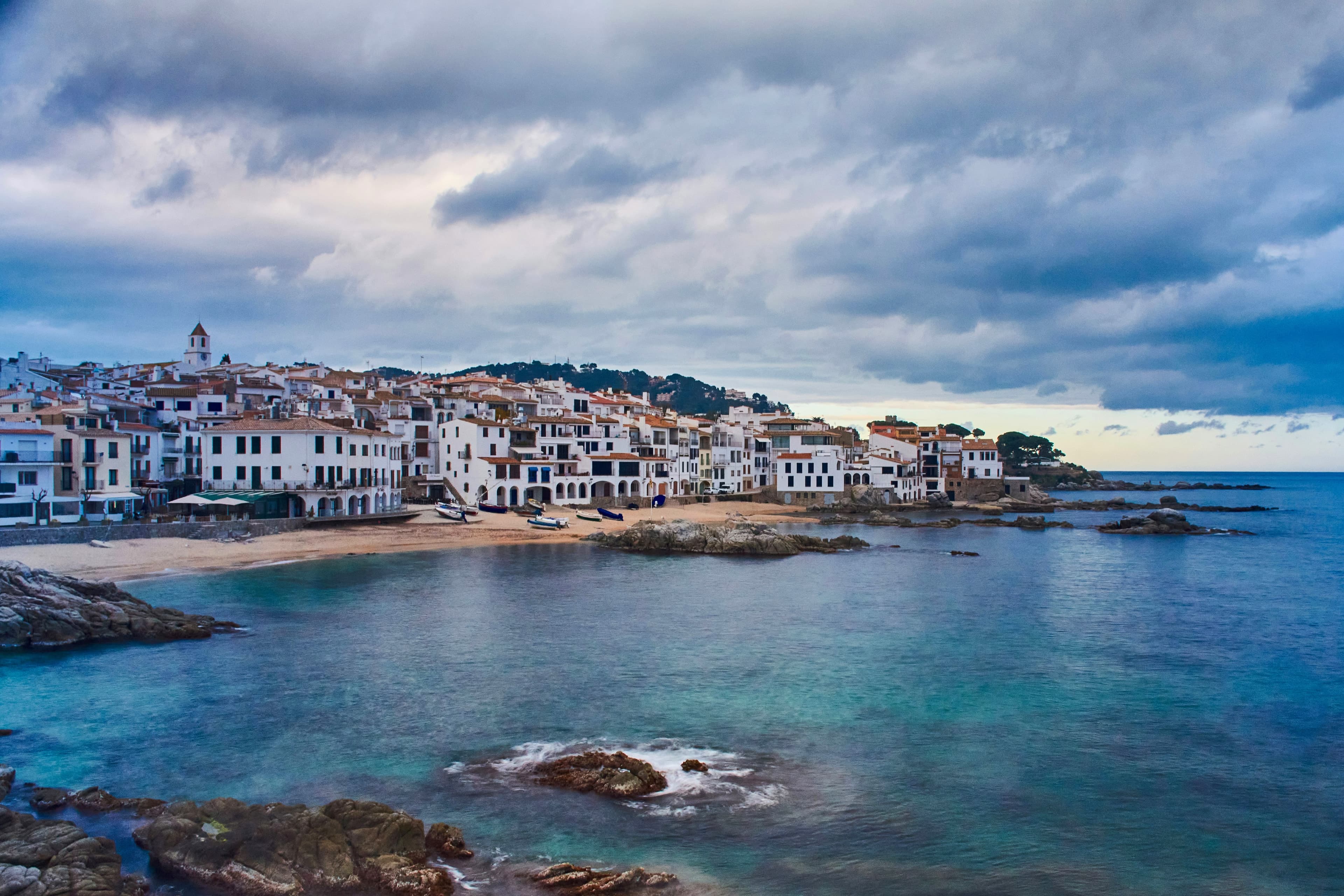
The white town of Calella de Palafrugell and its cala under an overcast sky at dusk, turquoise sea and rocks in the foreground

Baix Empordà

Calella de Palafrugell

Calella de Palafrugell is probably the most recognizable image of the whole Costa Brava. White houses, les Voltes of Port Bo, boats drawn up on the sand, the Mediterranean woven into the town's daily life — it turns up in thousands of photographs every summer. And yet that postcard only tells part of the story: the real Calella shows itself once you step a few meters off the main promenade, walk the Camí de Ronda without hurrying, or come back at dusk, when the terraces start to empty and the town settles back into the unhurried pace it always kept. Because before it became one of the great icons of the Mediterranean, Calella was — and still is — a fishing village.