Some towns are built to be seen, and some are built to see. Pals belongs to the second kind. It went up on top of a hill, its back to nothing and its face toward everything: the rice plain, the sea somewhere out past it, the Medes islands floating on the horizon. Its tower once watched the whole coast. Nothing gets watched from there now, but the habit of looking has stayed in the stone, and anyone who climbs to the top ends up doing exactly what the sentries did — standing still, looking far off, in no hurry at all.
El Pedró: a town the color of honey
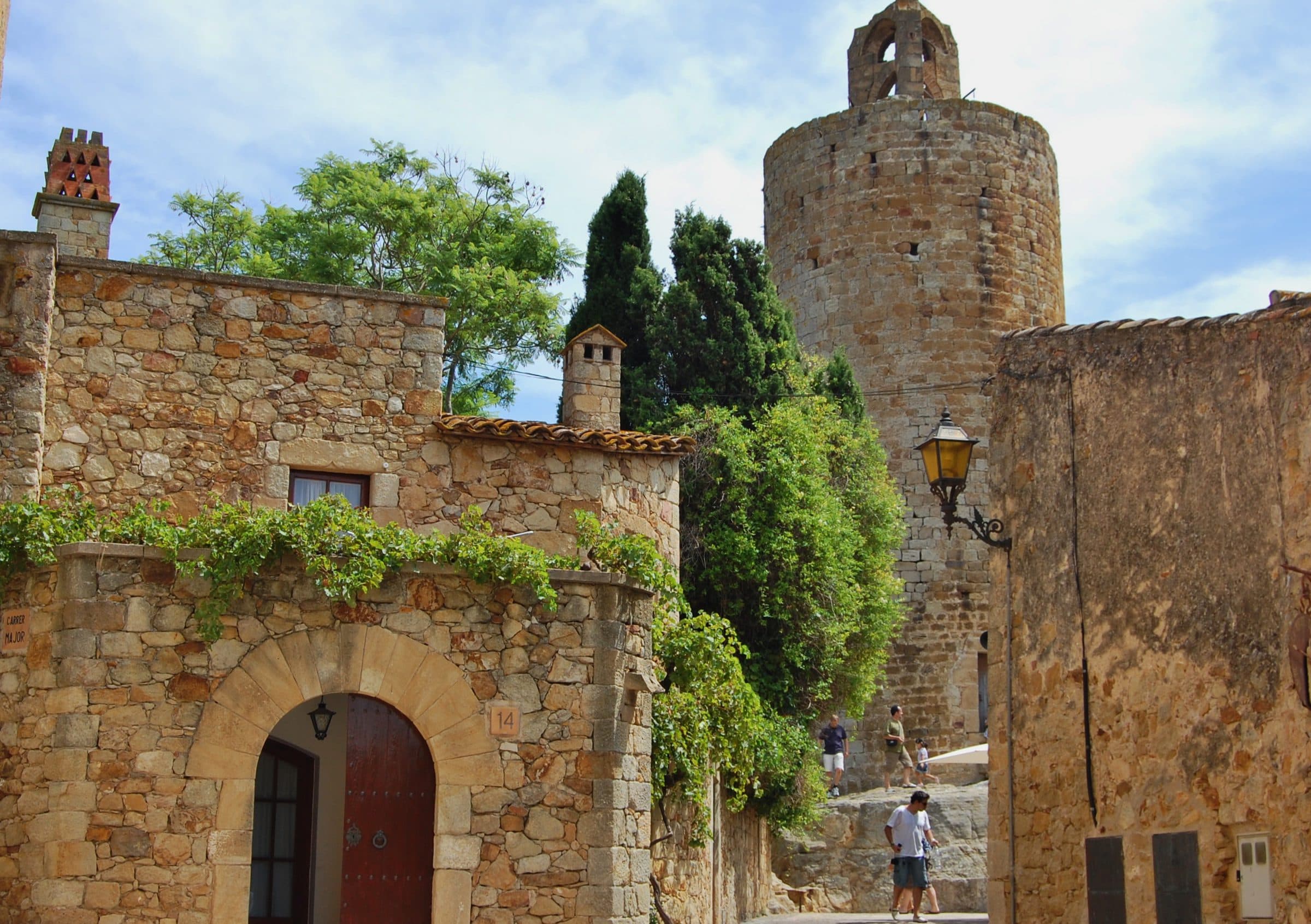
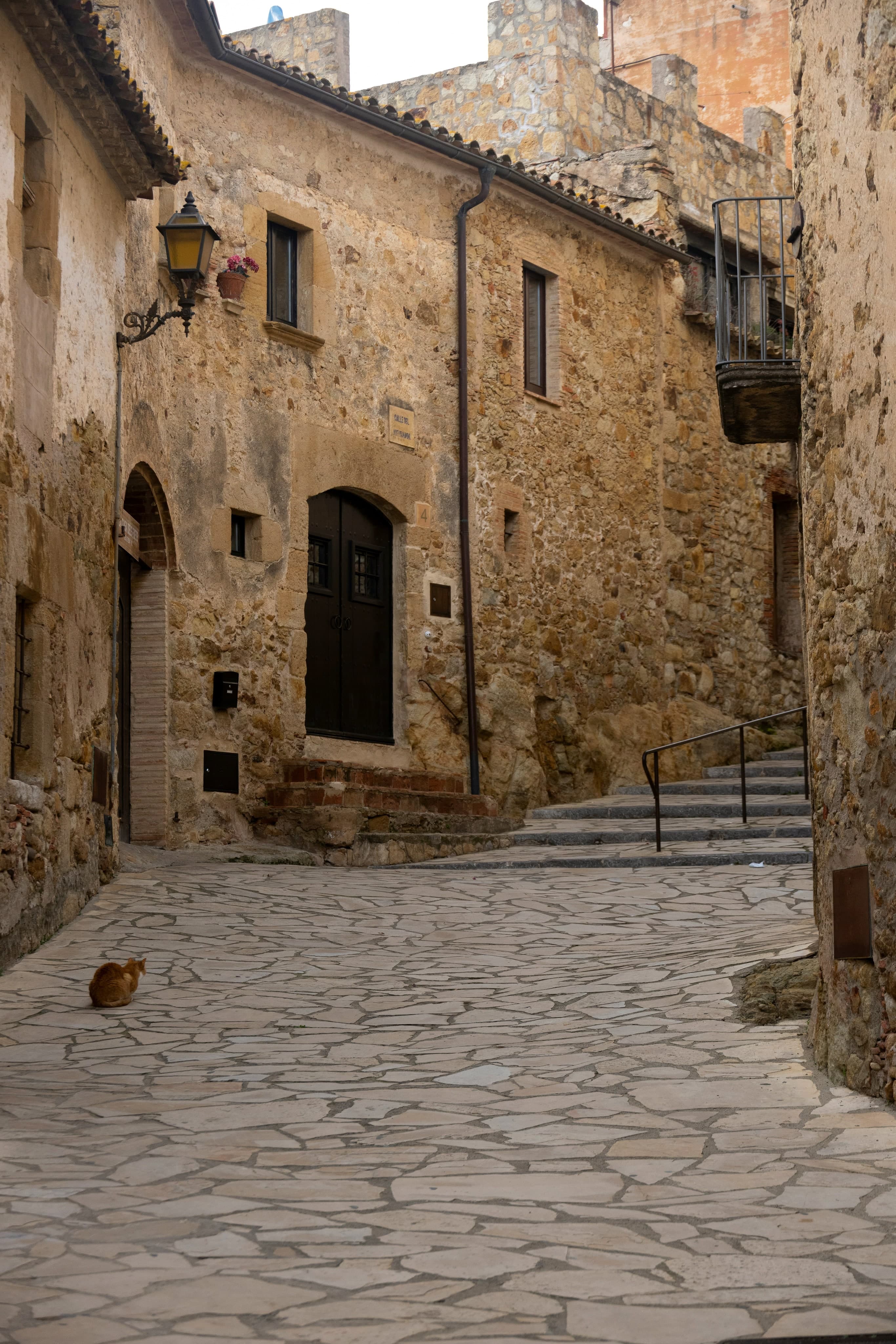
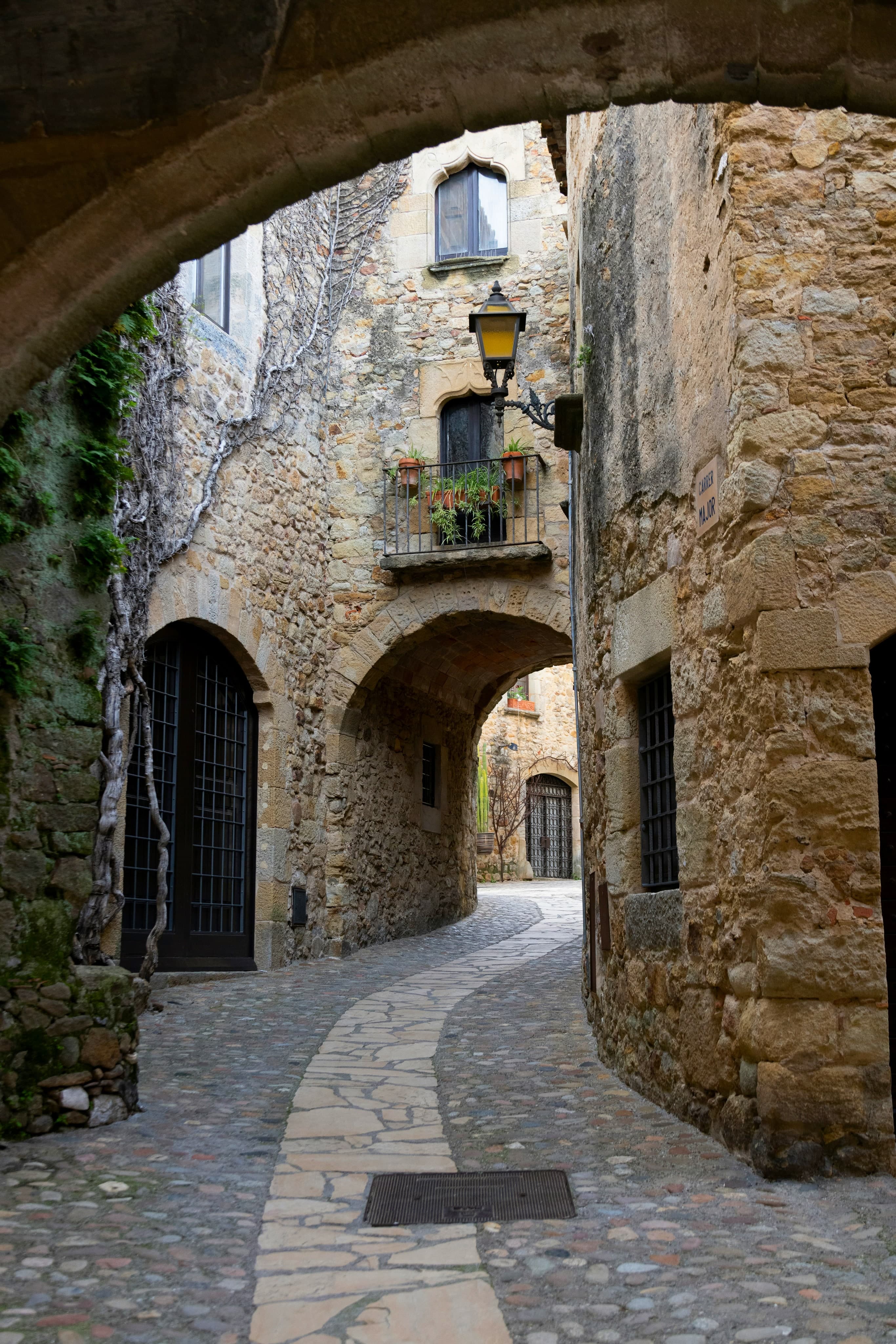
The old quarter of Pals is called El Pedró, and it's one of the best-preserved Gothic ensembles in Catalonia: a handful of cobbled streets climbing between houses of golden stone, arches, pointed windows, courtyards where bougainvillea spills over. It isn't large. You can walk the whole thing in one slow morning, no map, letting yourself get a little lost — which is the only sensible way to move through it anyway. Every stretch of old stone you see here came close to not existing at all: the quarter was left badly wounded after the Civil War, and it was the stubbornness of a handful of neighbors that raised it back up, house by house, over the following decades.
At the very top stands the Torre de les Hores, round, fifteen meters tall, the only piece of the medieval castle still standing. At its foot, the Josep Pla lookout throws the whole plain open at once: rice fields laid out in a grid, the bell tower of the church of Sant Pere, the sea closing the frame. Climb at sunset, when the stone catches fire and the color of honey stops being a figure of speech. There's nothing else to do up there. You're already doing it.
Rice, the other heritage
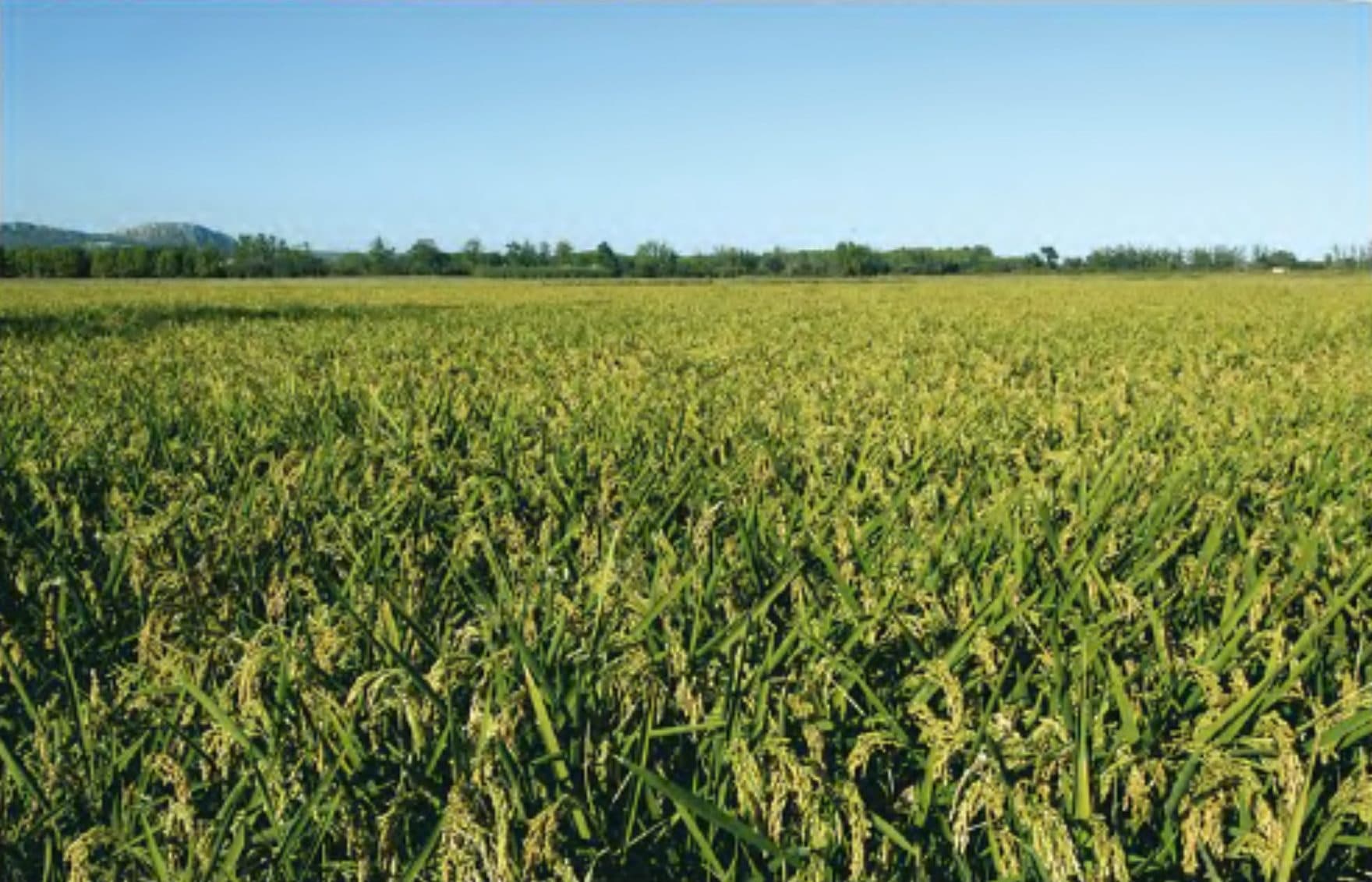
Before it was a pretty town, Pals was a rice town. From the fifteenth century on, the flooded plain between the town and the sea was sown with rice paddies, and for centuries that was the engine behind everything — the wealth, the work, the very shape of the land. Arròs de Pals is still a product with a name of its own today, short-grain and well regarded, and the paddies are still there: green in summer, a mirror for the sky when flooded, changing color by the hour as though the land itself were breathing.
It's a quieter kind of heritage than the stone, but just as much a part of the place. You eat it at the town's tables, in rice dishes that shift with the season, and you can buy it, if you want to take some home, at the old mill. Josep Pla, who came from just up the road, wrote that you can't understand the Empordà landscape without the labor that made it. In Pals you see it plainly: the beauty and the rice are the same thing, seen from two different angles.
The beach, the dunes, and a war you couldn't see
About five kilometers from the old quarter, where the plain finally gives way to the sea, is Platja de Pals: a long beach of fine sand and dunes, open and windswept, the Medes and the Montgrí as backdrop. It has none of the enclosed intimacy of the calas further south; here the plan is the wide horizon, the long walk, a swim with no rock underfoot.
And it holds a Cold War secret. For decades, six giant antennas rose among these dunes — Radio Liberty, a CIA-funded station that broadcast into the Soviet Union and the Eastern Bloc from 1959 onward. This particular beach was chosen for its dunes and low scrub, which didn't interfere with the signal. It broadcast until 25 May 2001, and the antennas came down in 2006. Almost nothing remains today, and it's hard to picture, lying on the sand, that half of Europe was once quietly spoken to from right here. Ask anyone in town — everyone still remembers the towers.
Around Pals: the medieval triangle
Pals isn't meant to be visited alone, and it shouldn't be. It sits at the point of a triangle of medieval inland towns in the Baix Empordà that are, arguably, the most beautiful and least noisy corner of the whole Costa Brava: a short drive away are Peratallada, all cut stone and a moat carved straight into the rock; Ullastret, with its Iberian settlement on the hill; Palau-sator, Vulpellac, Fonteta. You can string them together in a single day, barely touching the car in between, eating wherever the clock happens to catch you.
It's an inland world of fields, cypresses and old farmhouses, the sea always near but never in view, and a light that painters have spent a century trying to steal. There's not much to do. Go from town to town, stop wherever it feels right, let the afternoon run long. The silent Costa Brava is in here, inland, well away from the noise of the shore.