PuraCostaBrava
ES
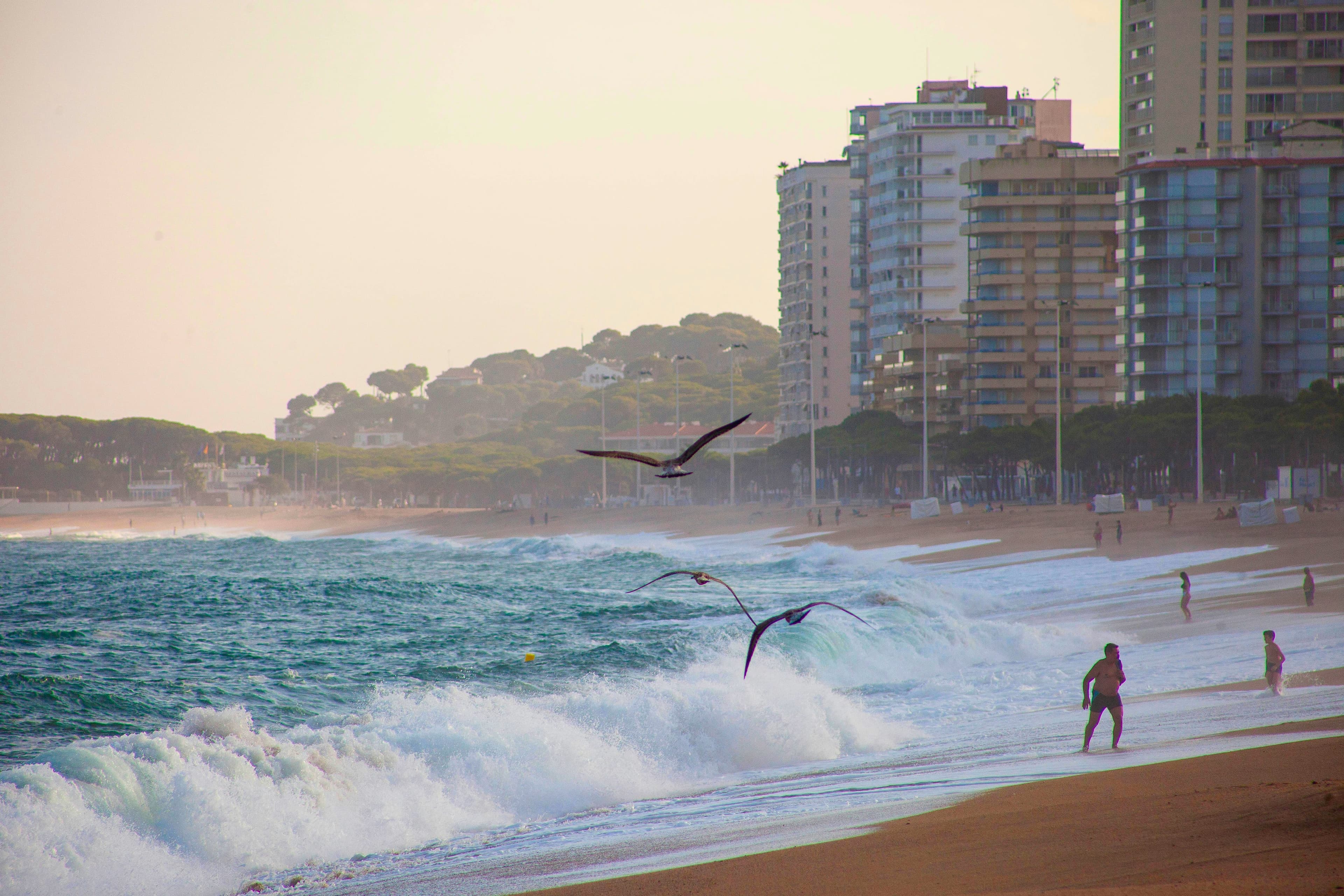
Platja d’Aro beach at dusk, waves breaking, gulls in flight and the seafront buildings behind

Baix Empordà

Platja d’Aro

Platja d’Aro is this coast's practical face: the longest, easiest beach, the liveliest shopping streets, the widest range of things to do with children in tow. It's part of the municipality of Castell-Platja d’Aro, together with S’Agaró and Castell d’Aro itself, and that pairing sums the place up well: a modern beachfront and a village life that, a short way inland, still smells of medieval stone. It isn't the quietest corner of the Costa Brava, but it has its own — a run of calas heading south that get smaller and more secretive the further you walk.

The Platja Gran and the town center

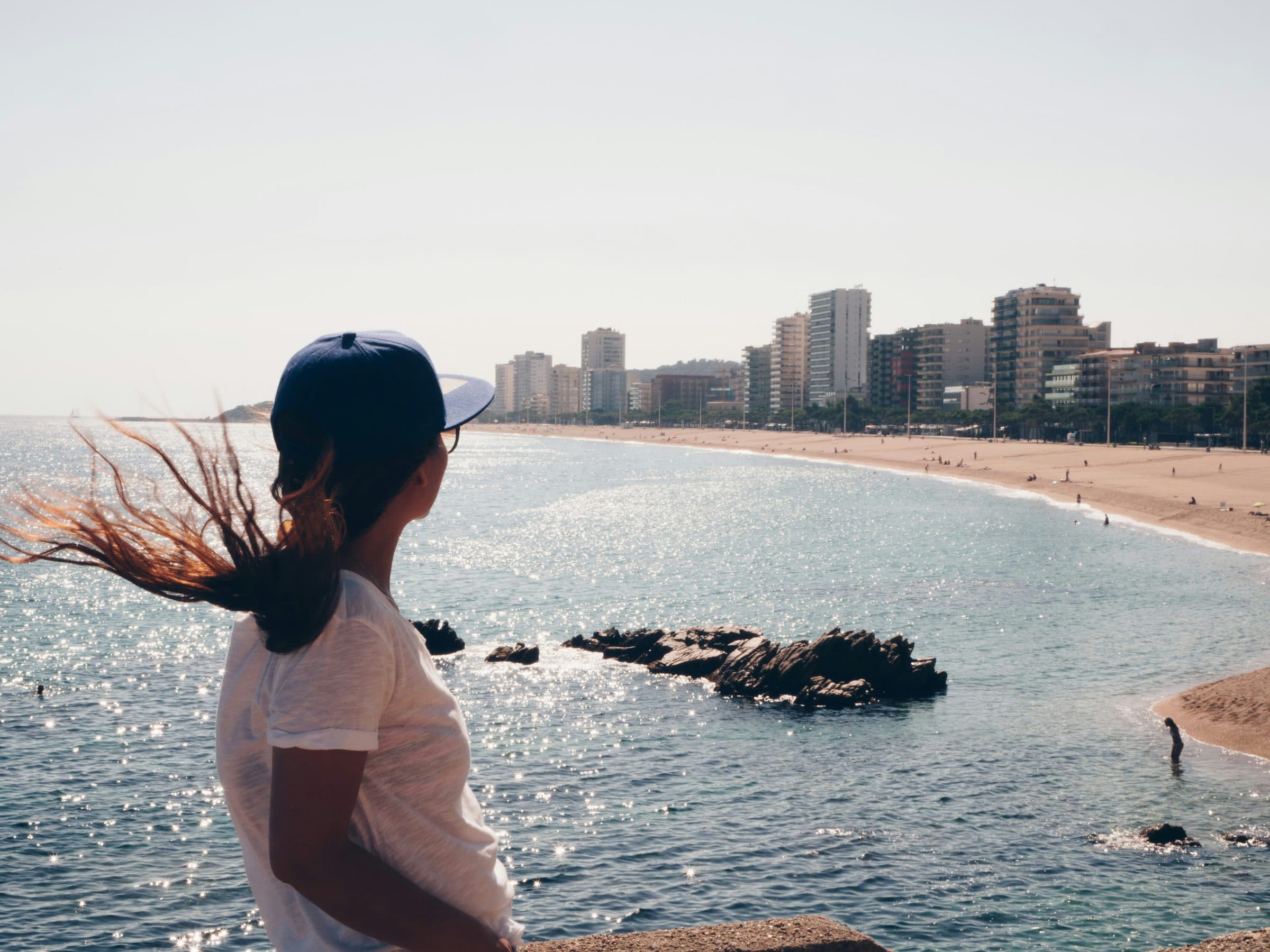
Platja d’Aro's main beach is long, fine-sanded and fully serviced, which makes it the easiest place around to spend a day with no plan at all. Behind it, the center is a run of shops, boutiques and restaurants that never really shuts down, whatever the season. Every Friday morning, the municipal market — in the Masia Bas car park — fills dozens of stalls with fruit, clothing and crafts, and it's one of the few places where the town feels as much like a neighborhood as a destination.
The Platja Gran at Platja d’Aro at dusk, the seafront skyline in the distance
The Platja Gran and the Platja d’Aro skyline.

With children: parks and adventure

Few towns on the Costa Brava are as well set up for a family trip. The Parc dels Estanys, with its ponds and paths along the coast, is the quiet breather between one beach and the next. Parc Aventura offers rope courses and zip lines strung through the trees, and PP's Park adds more classic rides — carousels, small roller coasters — for the youngest visitors. And for a different pace entirely, the Club Golf d’Aro – Mas Nou has 18 holes in the hills above the sea, with views that justify the round even if your scorecard doesn't.

The calas to the south

South of the main beach, the coastline breaks into smaller calas: Cala Rovira, Cala del Pi and Cap Roig, short stretches of sand between rock and pine, a world away from the mood of the center. Following the coast further, right at the edge of S’Agaró, the camí de ronda begins toward Platja de Sa Conca — that stretch already belongs to the route we describe in the S’Agaró profile.
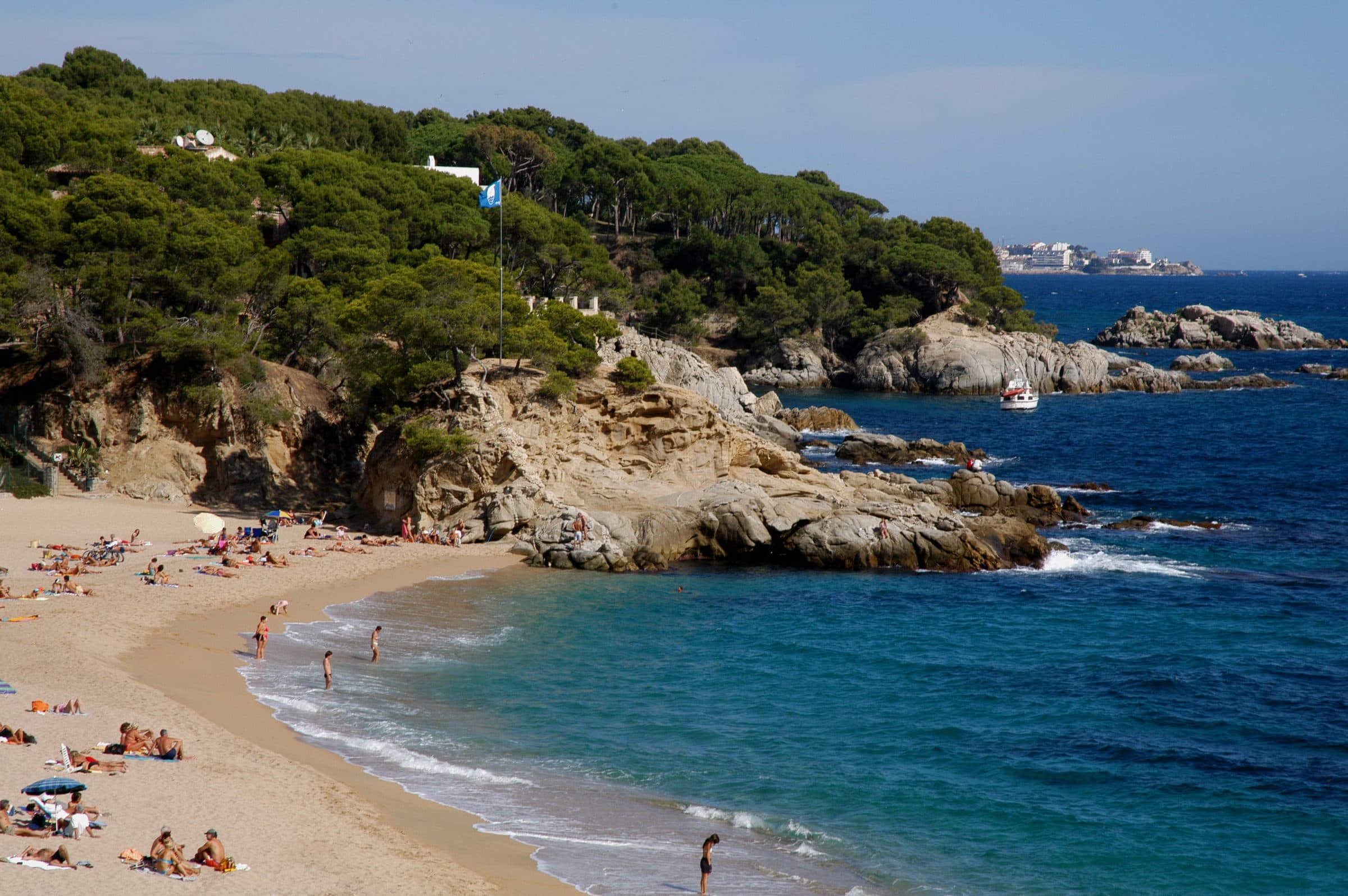
Cala Rovira, a golden-sand beach between pale rock and pines, swimmers and a sailboat at anchor
Cala Rovira, the first of the calas to the south.Photo: Patronat de Turisme Costa Brava Pirineu de Girona / Wikimedia Commons (CC BY-SA 3.0)

Cala del Paller, the best-kept secret

Close to the boundary with Sant Antoni de Calonge, the camí de ronda hides the Cala del Paller: a small, rocky cala, the kind that barely shows up in the guidebooks, with the clean, transparent water typical of this stretch of coast.

It has none of the Platja Gran's facilities and none of Cala Rovira's name recognition — and that's exactly its charm. You reach it on foot, not by car, and that alone is enough to keep most people away.
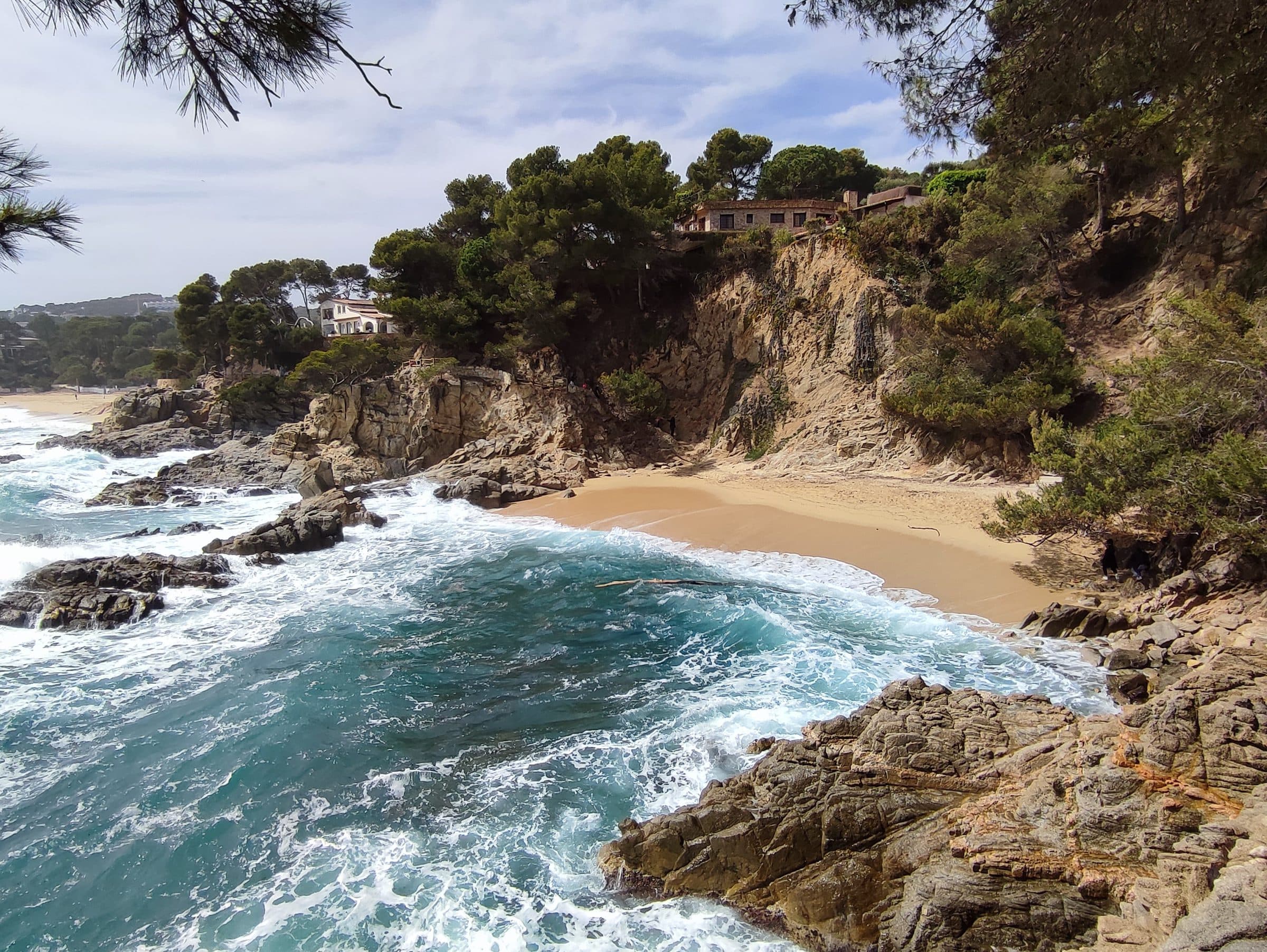
The Cala del Paller, a small rocky cala with turquoise water between cliffs
The Cala del Paller, one of the least-known corners of the coastline.Photo: Joandrés / Wikimedia Commons (CC BY-SA 4.0)

Castell d’Aro: the past, close by

Inland, just minutes from the seafront, Castell d’Aro is the historic heart of the municipality: a medieval castle and stone streets that offer exactly the contrast the beach's pace calls for. In a single day you can go from the sand to the medieval Empordà without more than ten minutes in the car.

For anyone who'd rather have a hotel than a villa, the area has plenty on offer, from the Hotel Aromar and the Hotel Spa La Terrassa by the sea to the more secluded Hotel Cala del Pi.
The Platja d’Aro notebook

Where we go

Platja d’Aro serves up a bit of everything, and does it well, if you know where to look beyond the promenade. Here's the short list: where to eat without the fuss, which cala to escape to, and what to do if you're traveling with children.

Approximate positions · Platja d’Aro · Cartography © OpenStreetMap contributors, tiles by OpenFreeMap

Tap a pin or a place in the list to zoom in

Where to eat

Where to drink

  • Specialty coffee and healthy bowls, with a biker edge. A good spot for breakfast.

Coves & swimming

  • The most hidden of the lot, and the one that most rewards the detour. Reachable on foot, not by car.

  • Short calas of rock and pine, far quieter than the main beach.

What to do

  • Parc Aventura Platja d’Aro

    Rope courses and zip lines through the trees. The safe bet with children.

    No fixed pin
  • 18 holes above the sea, with views that make the round worthwhile.

  • The Friday market

    Every Friday morning, in the Masia Bas car park.

    No fixed pin

Good to know

Frequently asked questions

Is Platja d’Aro a good destination with children?

It's probably the best-equipped town on the Costa Brava for a family trip. Alongside the long sandy main beach, there's the Parc dels Estanys for walking among lagoons, Parc Aventura for climbing through the trees, and PP's Park. Add a wide range of hotels, apartments and campsites, and it becomes a comfortable base for exploring the area with children.

What calas are there in Platja d’Aro besides the main beach?

The coastline breaks into small calas south of the main beach: Cala del Paller is the most hidden and the one that most rewards the short detour, and closer to the center are Cala Rovira, Cala del Pi and Cap Roig. They're short stretches of sand between rock and pine, a world away from the mood at the center.

What is Castell d’Aro, and is it worth visiting?

Castell d’Aro is the historic heart of the municipality, inland and just minutes from the beach. Its castle and stone streets offer exactly the contrast the seafront's pace calls for: in a single day you can go from the sand to the medieval Empordà. If the bustle of the center wears you out, this is the short escape.

When is the market in Platja d’Aro?

Every Friday morning, in the municipal car park at Masia Bas: fruit and vegetables, clothing, crafts and accessories across several dozen stalls.

Other villages to discover

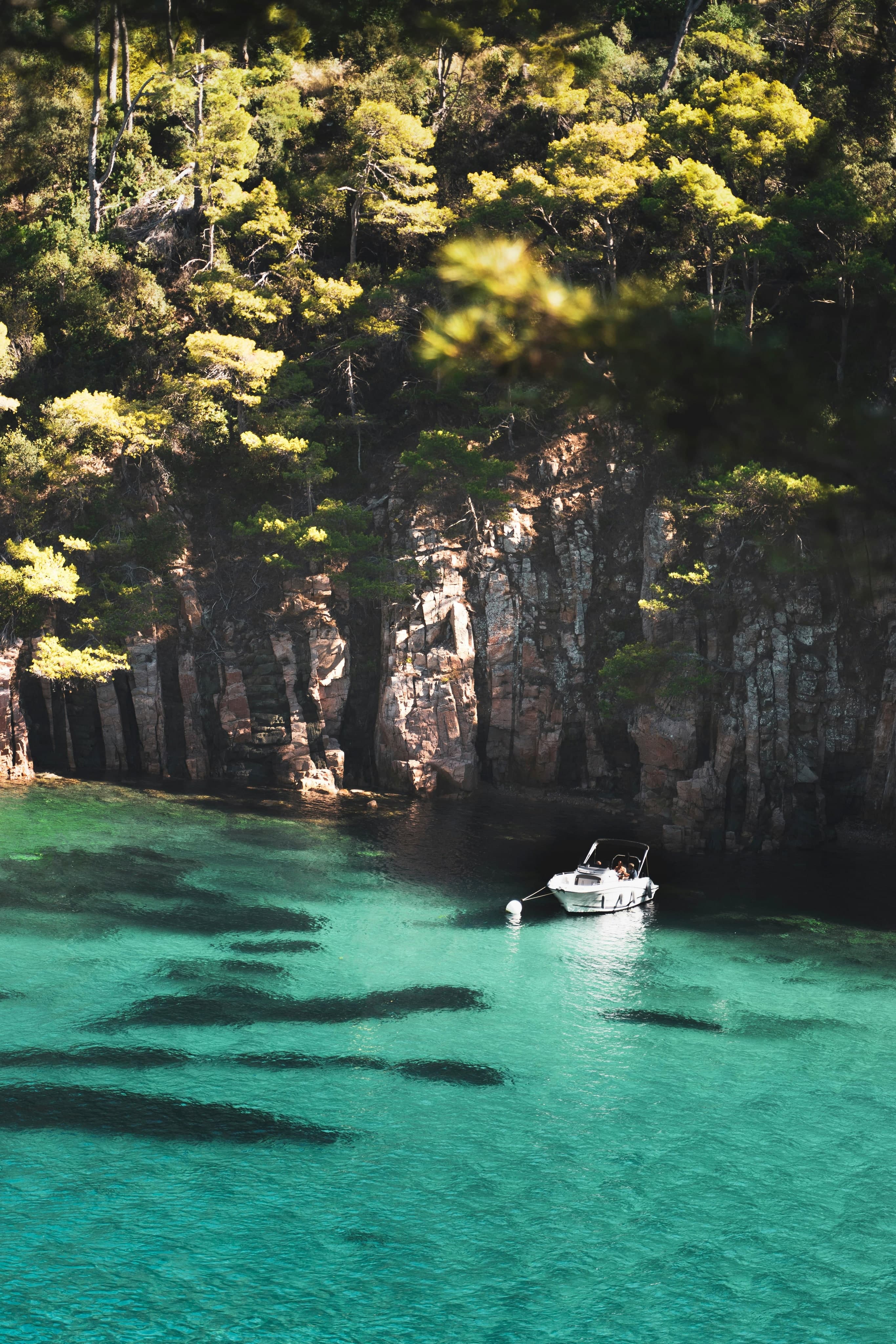
A turquoise-water cala in Begur, between reddish rock cliffs and pines, with a boat at anchor

Baix Empordà

Begur

Begur sits a little inland, and that one fact explains almost everything else. It isn't a town built beside the water but on a hill above it, with the Mediterranean laid out below: while other Costa Brava towns grew up around a harbor, Begur grew up around a castle, and the calas came later. So nobody here asks which is the beach — they ask which cala you're going down to today. Sa Tuna, Sa Riera, Aiguablava, Platja Fonda, Fornells, Aiguafreda, Illa Roja: a string of small bays linked by the Camí de Ronda, the coastal footpath, each with its own temperament. And behind all of them sits an old quarter of Indiano mansions, quiet squares and cobbled streets that remember something easy to forget now — before it became one of the most coveted places on the Costa Brava, Begur looked west toward Cuba more than east toward Barcelona.

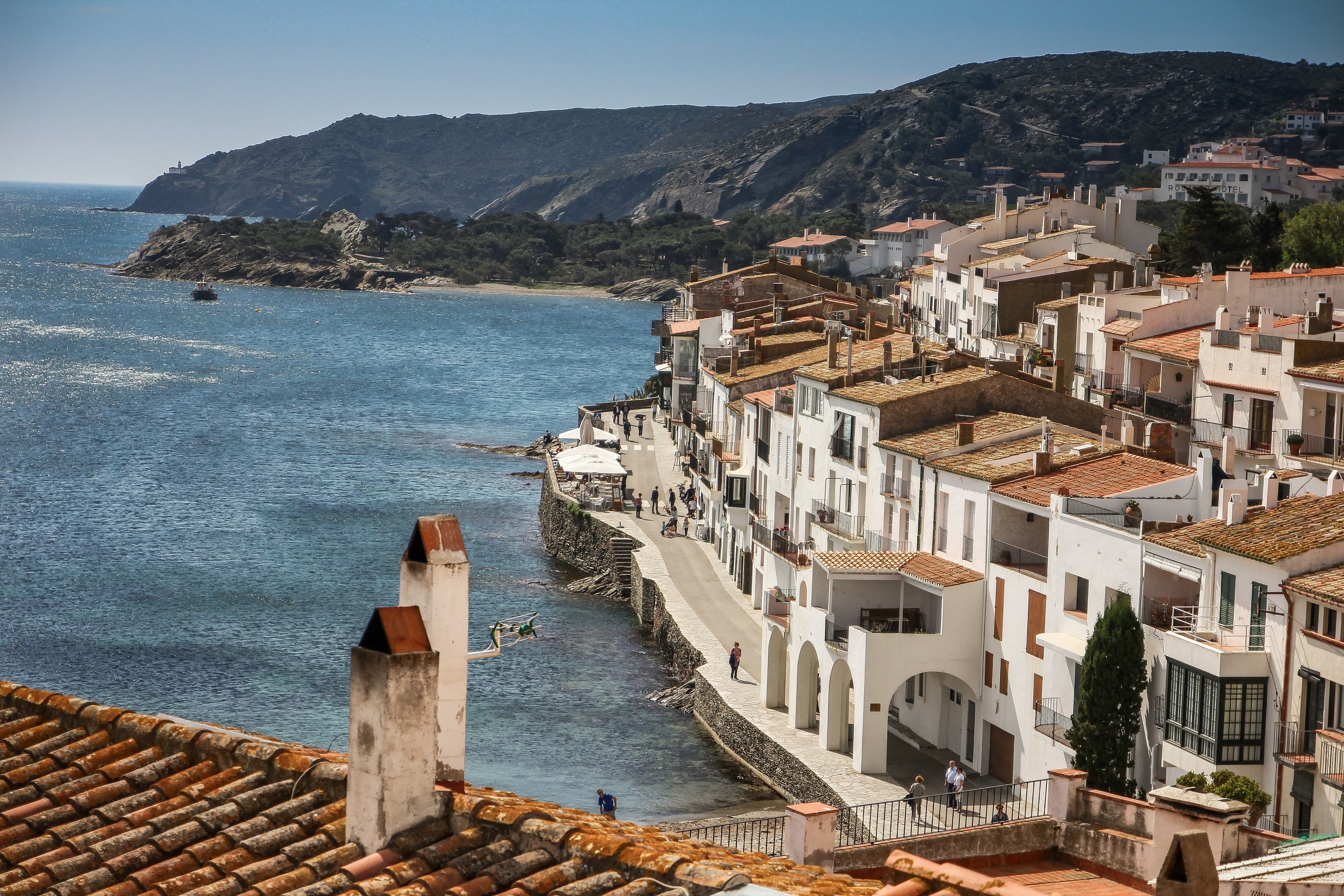
The seafront of Cadaqués beside the water, with the white houses and tiled roofs of the old town and the Cap de Creus coastline behind

Alt Empordà

Cadaqués

Cadaqués is the most photographed town on the Costa Brava, and the hardest to actually get to know. White houses, green shutters, boats drawn up facing the sea, the light that undid Dalí — it's all over every postcard, and none of it explains why people keep coming back. Maybe it has to do with the winding road that kept the town cut off from the rest of the Empordà for centuries, or with that light, which changes by the hour and makes the place feel like somewhere new each morning, noon and evening. You don't come here for wide sandy beaches or a promenade lined with shops. You come to walk slowly, to lose yourself in slate-paved streets, to watch the sea from the rocks, and to understand why this corner of the coast ended up gathering some of the twentieth century's most important artists.

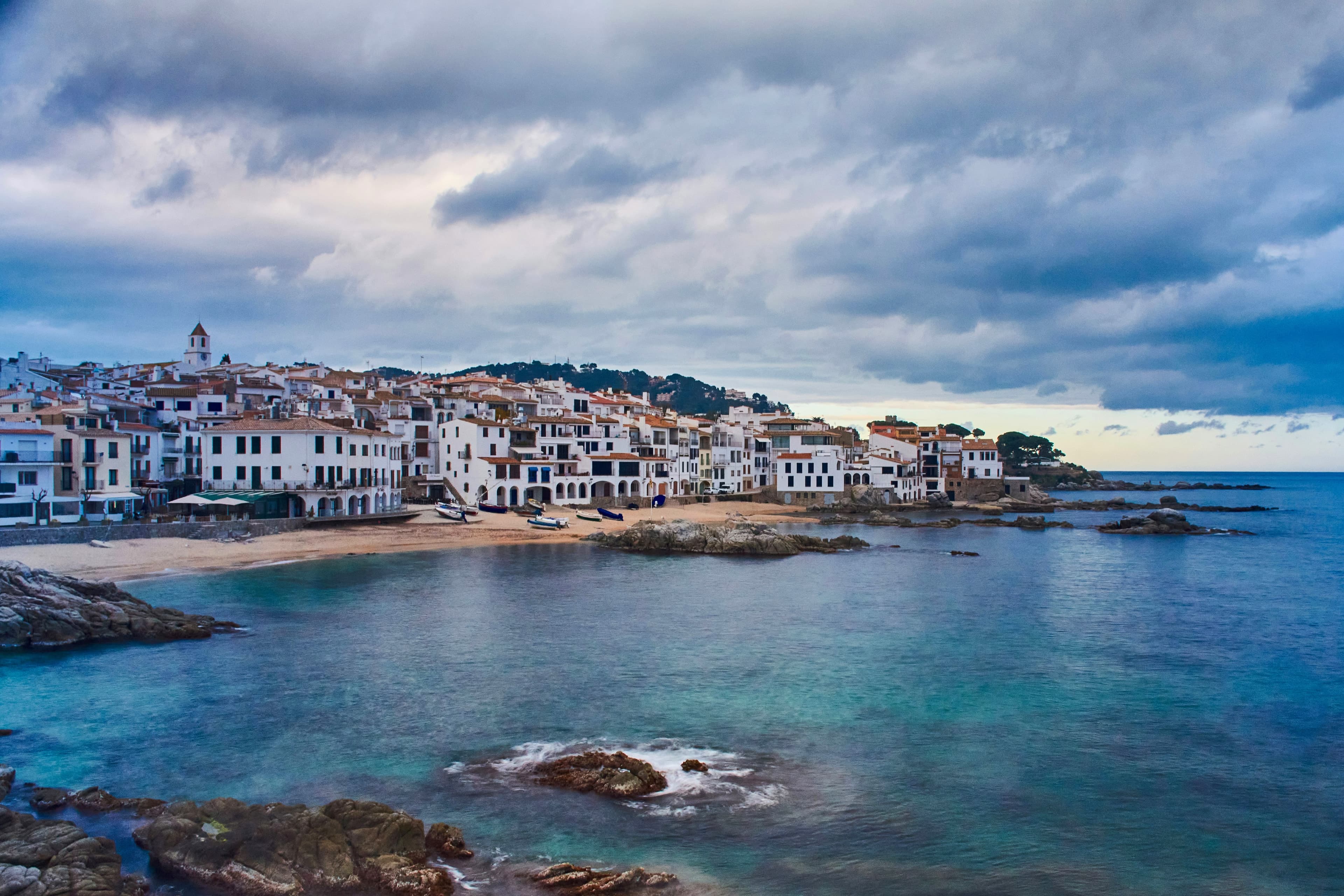
The white town of Calella de Palafrugell and its cala under an overcast sky at dusk, turquoise sea and rocks in the foreground

Baix Empordà

Calella de Palafrugell

Calella de Palafrugell is probably the most recognizable image of the whole Costa Brava. White houses, les Voltes of Port Bo, boats drawn up on the sand, the Mediterranean woven into the town's daily life — it turns up in thousands of photographs every summer. And yet that postcard only tells part of the story: the real Calella shows itself once you step a few meters off the main promenade, walk the Camí de Ronda without hurrying, or come back at dusk, when the terraces start to empty and the town settles back into the unhurried pace it always kept. Because before it became one of the great icons of the Mediterranean, Calella was — and still is — a fishing village.