PuraCostaBrava
ES
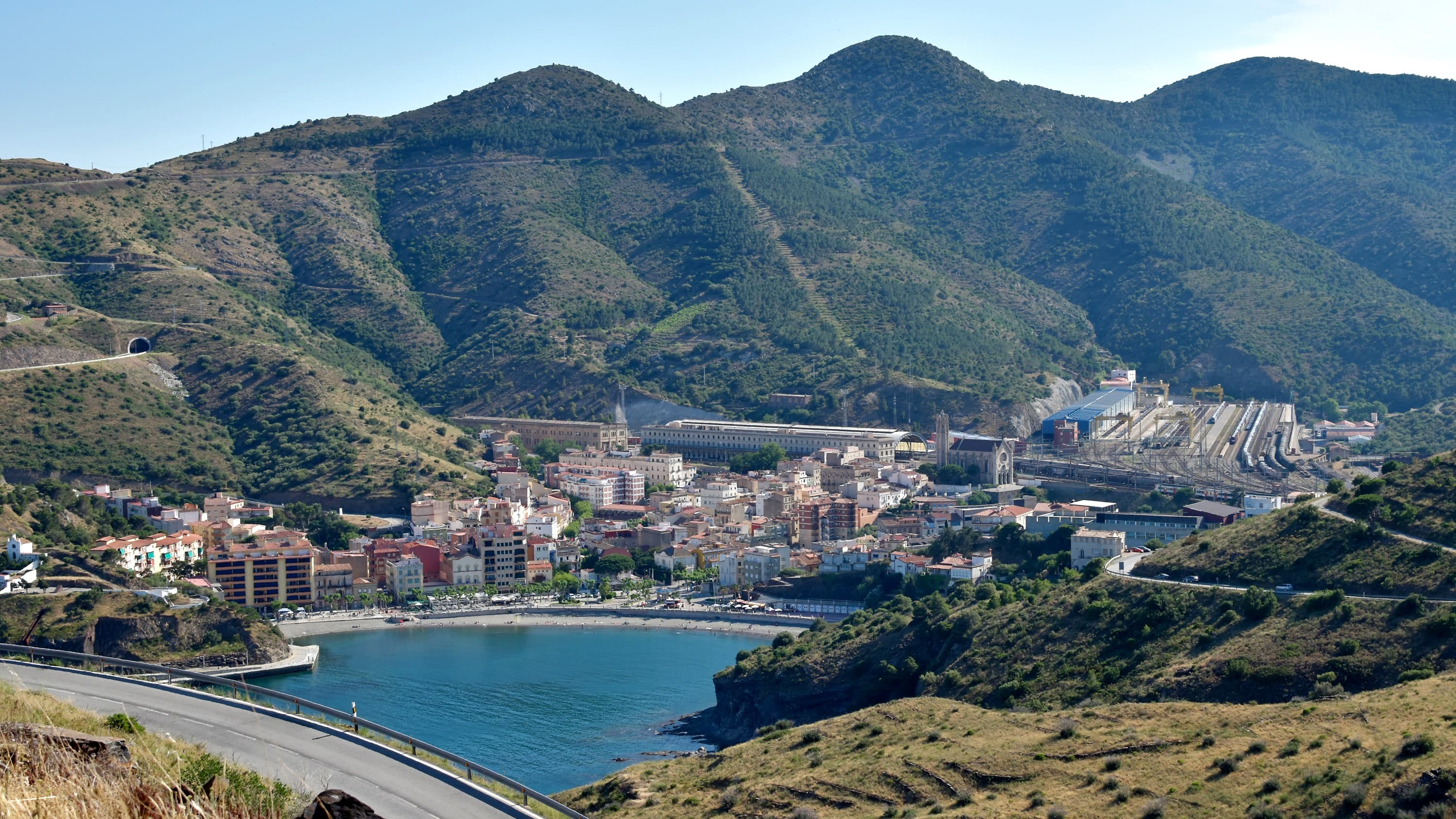
View of Portbou from the hills: the bay, the town and its large railway station, the Pyrenees behind

Alt Empordà

Portbou

Photo: BlueBreezeWiki / Wikimedia Commons (CC BY-SA 3.0)

Some towns are visited for their beaches. Portbou is remembered for what it represents: the last town in Catalonia before France, a place where the Pyrenees drop straight into the Mediterranean and where history has left a mark as deep as the landscape itself. For more than a century it was one of the great railway gateways between Spain and the rest of Europe — freight passed through here, travelers, exiles, refugees, Walter Benjamin among them, who found in Portbou the end of his flight from Nazism. Today, far from the bustle of other Costa Brava towns, Portbou keeps a quiet, faintly melancholic character, where sea, mountain and border sit within a few meters of each other.

The international station

Something feels off the moment you arrive. Portbou's railway station looks wildly out of proportion for a town of barely a thousand people. And it is: for decades it was one of the main rail junctions between Spain and France, since trains here had to switch gauge before continuing their journey.

Walking the platforms and watching the tracks vanish under the mountain toward Cerbère helps explain just how important this place once was, through much of the twentieth century.
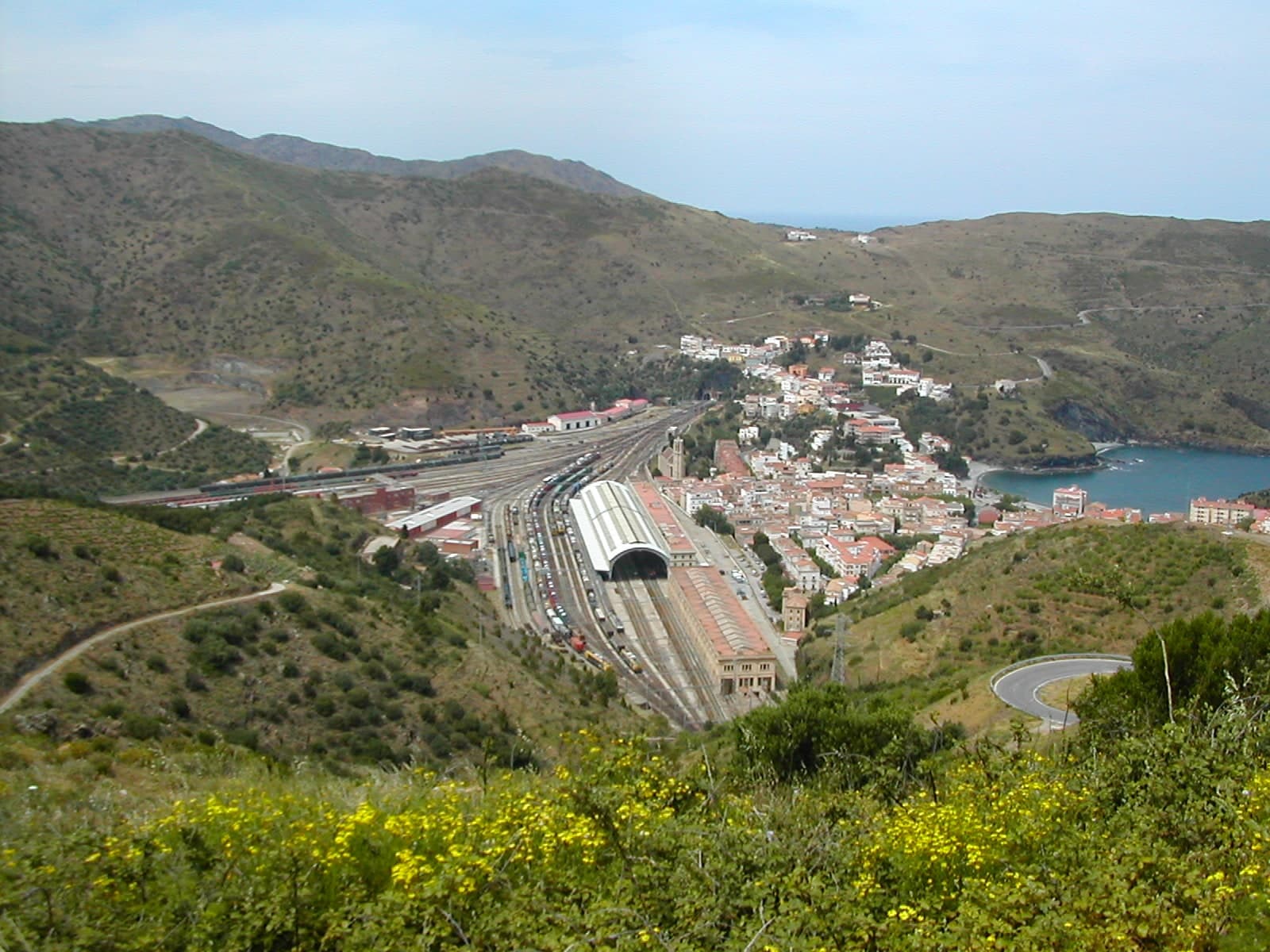
Aerial view of Portbou with its large border railway station and covered platforms, wedged between mountains beside the bay
Portbou and its historic railway station, out of all proportion to the town's size.Photo: David.gaya / Wikimedia Commons (CC BY-SA 2.5)

The Passatges memorial

Beside the cemetery stands one of the most moving works of contemporary art in Catalonia. Designed by Dani Karavan, Passatges is a steel corridor that descends toward the sea before stopping at a pane of glass. It's a tribute to the German philosopher Walter Benjamin, who reached Portbou fleeing the Nazis in September 1940 and died here that same night.

It's more an experience than a monument. Walk it slowly, and in silence.

Portbou's beach

The beach looks different from most of the Costa Brava. Its dark sand, mixed with slate, reflects the geology of the Albera range and the nearby Cap de Creus. The water tends to be calm and clear, and the mood stays distinctly local even in summer.

This isn't a beach for beach bars or a scene. It's a beach for reading, swimming, and watching the mountains fall into the Mediterranean.
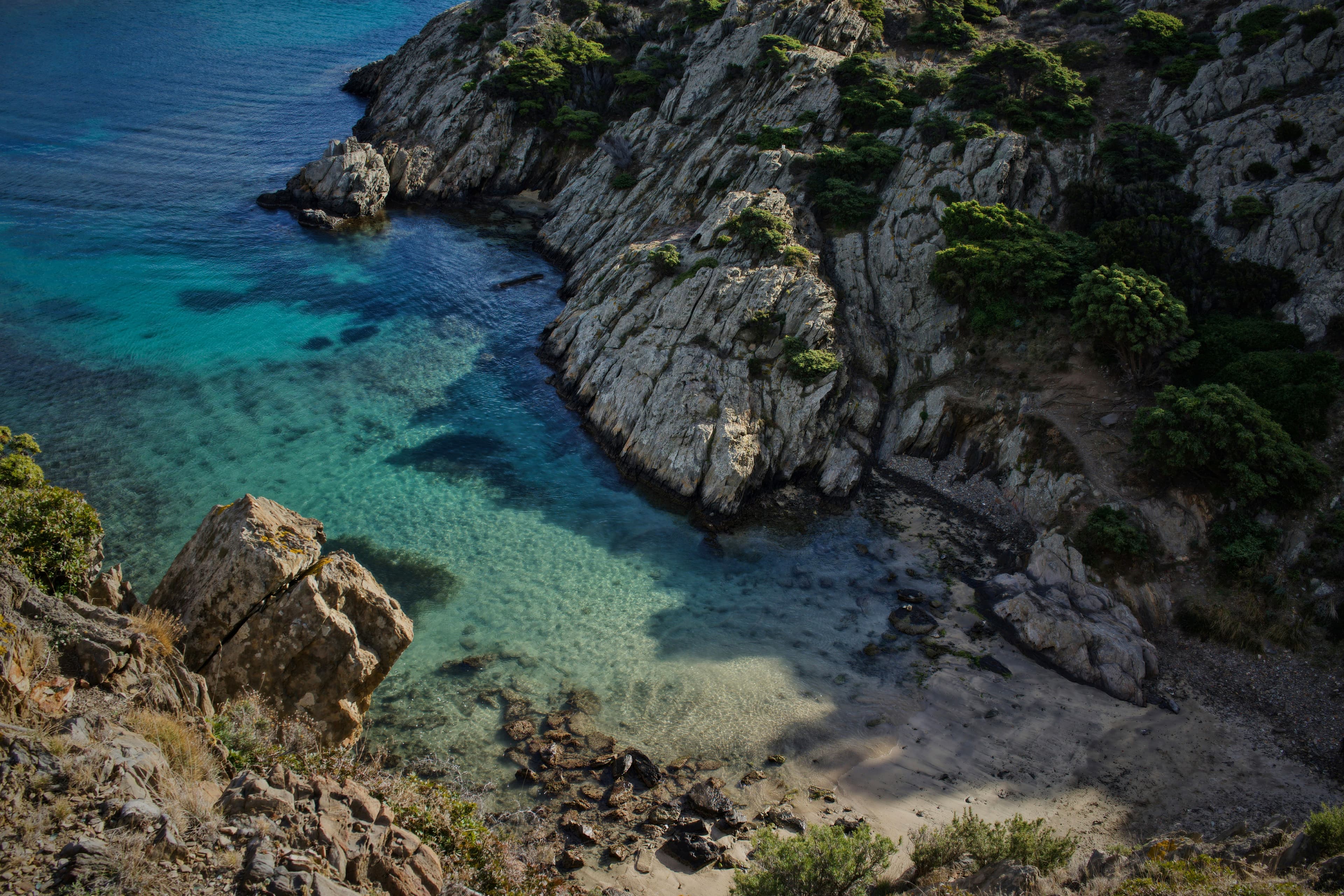
A cala of dark rock and slate, with clear water, on the Cap de Creus coastline near Portbou
The dark rocky coastline of Cap de Creus, whose slate colors Portbou's beaches.

Neighboring towns: Cerbère and Colera

Barely five minutes separate Portbou from France. Cerbère keeps the same railway and seafaring character, but with an unmistakably French air that makes the landscape feel different even though it's the same Mediterranean. It's worth the trip over for a walk around the harbor or a meal facing the sea.

South of Portbou is Colera, one of the quietest towns in the Alt Empordà. Its small beaches, fishing harbor and unhurried pace make it a perfect excursion to round out the day.
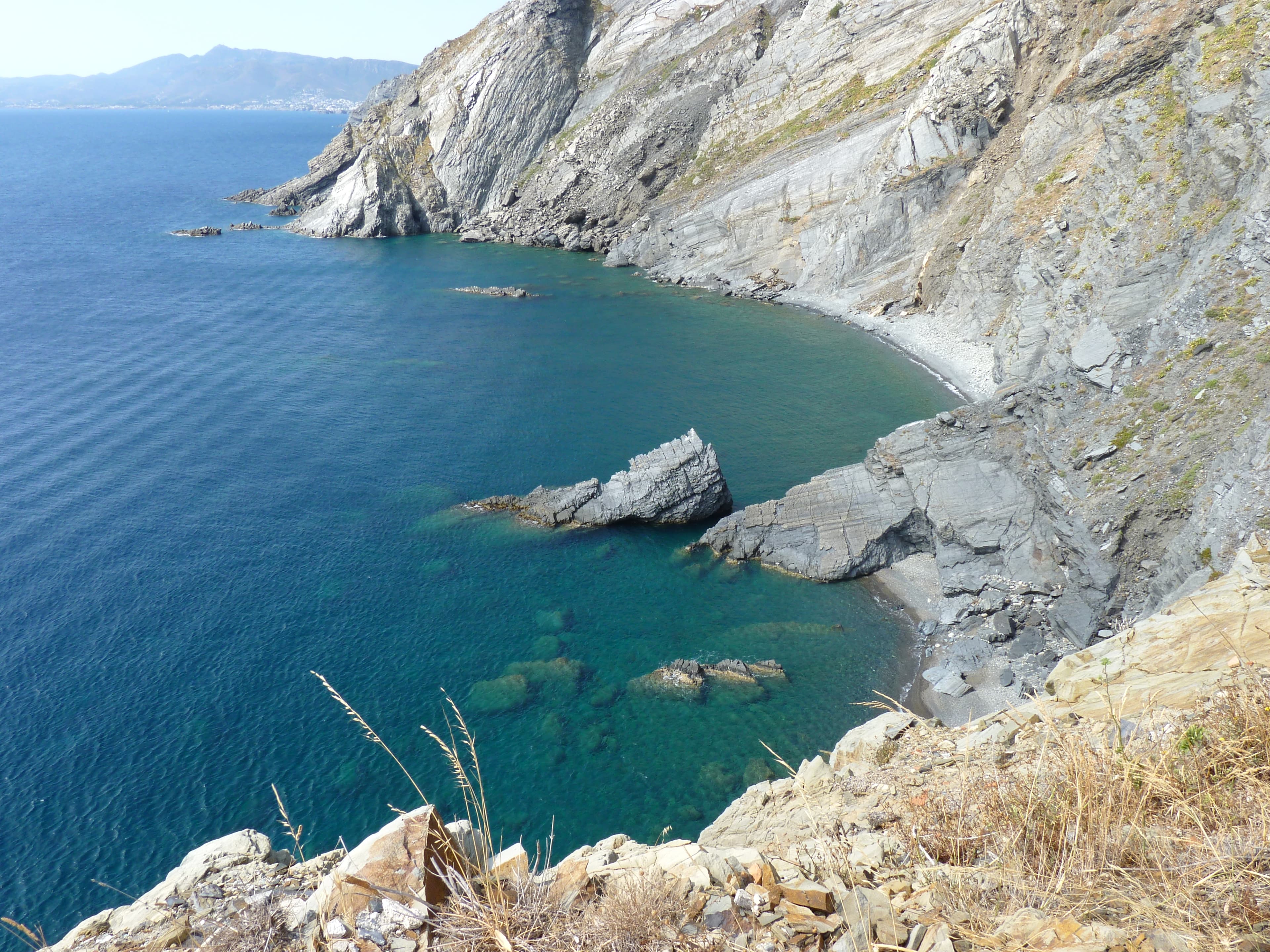
A cala of turquoise water and slate cliffs in Cerbère, the first town across the border
A cala in Cerbère, already in France, just minutes from Portbou.Photo: Bertrand Grondin / Wikimedia Commons (CC BY-SA 3.0)

Corners that rarely make the guidebooks

Most visitors reach the Walter Benjamin memorial and then leave. It's worth walking a little further to find one of the best balconies over the bay: from here you understand why Portbou was always a strategic place — town, station, sea and border all gathered into a single view.

Very few travelers make it to the Caseta dels Alemanys, a small building perched above the cliffs. During the Second World War it served as a German watch post — the southernmost point reached by Nazi troops in Western Europe. Today only a simple structure remains, but the place still carries enormous historical weight, along with spectacular views over the Catalan and French coasts.

While almost everyone stays on the main beach, locals know Cala del Pi, tucked among the rocks. You reach it on foot along a short stretch of the Camí de Ronda, and it tends to stay quiet even in summer: clear water, dark rock, and the feeling of a nearly secret corner.

Behind the station survives another Portbou: small sloped streets, old railway workers' housing, squares that still carry the feel of a time when thousands worked around the trains. It's a side of town most visitors never discover.

You don't need to walk the whole route from Banyuls-sur-Mer — just the final stretch descending into Portbou is enough to understand the landscape Walter Benjamin crossed during his flight. And if you want a genuine secret, stay until a train passes. Watching a convoy disappear under the mountain toward France while the Mediterranean stays perfectly still sums up Portbou's identity better than any photograph could.
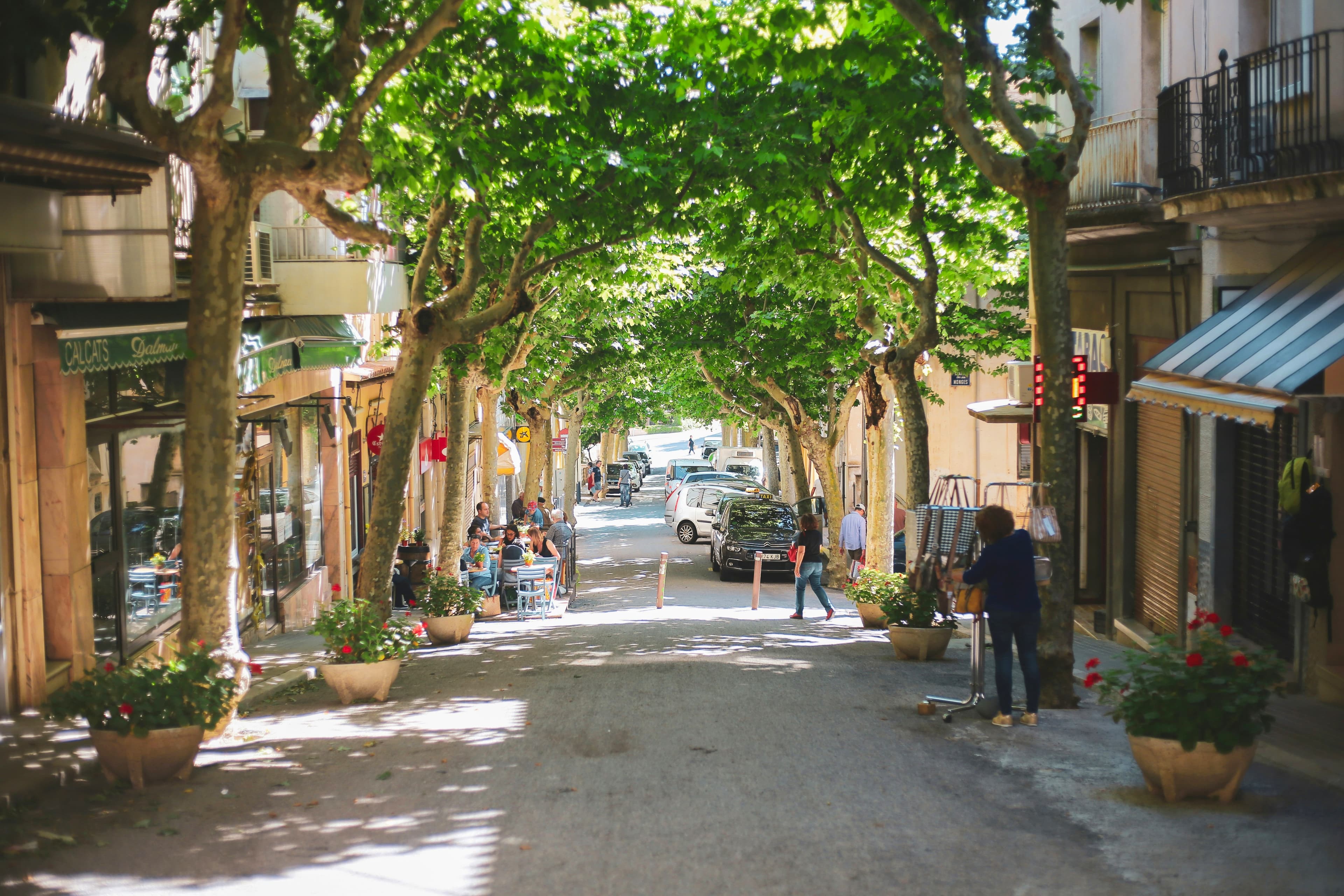
A tree-lined street in central Portbou, terraces and shops in the shade of plane trees
The old railway quarter, the part of Portbou few visitors discover.

The Portbou notebook

Where we go

Portbou keeps a small but genuine food scene: fish, home cooking and Empordà produce still take the lead here. Here's the short list: where to eat, what to see in silence, and where to slip away to.

Approximate positions · Portbou · Cartography © OpenStreetMap contributors, tiles by OpenFreeMap

Tap a pin or a place in the list to zoom in

Where to eat

  • The town's great gastronomic reference. Contemporary Mediterranean cooking, excellent produce, and a terrace with a privileged view over the bay.

  • The restaurant locals actually go to. Catalan cooking without frills, fresh fish, tapas, and a thoroughly local atmosphere.

  • In Llançà, 15 minutes from Portbou. Chef Paco Pérez combines bakery, café and Mediterranean cooking with Empordà produce.

Coves & swimming

  • Dark slate sand, calm water, and still fairly uncrowded.

  • Tucked among the rocks, a short stretch of the Camí de Ronda away. Clear water and the feeling of a nearly secret corner.

What to do

  • The Walter Benjamin memorial, beside the cemetery above the sea. Visit it slowly, and in silence.

  • The cemetery lookout

    A few meters past the memorial, one of the best balconies over the bay: town, station, sea and border in a single view.

    No fixed pin
  • La Caseta dels Alemanys

    An old German watch post above the cliffs, the southernmost point reached by Nazi troops in Western Europe. Spectacular views.

    No fixed pin
  • The Walter Benjamin trail

    Just the final stretch, descending into Portbou, is enough to understand the landscape Benjamin crossed during his flight.

    No fixed pin
  • The first town across the border, minutes away by car or train.

  • A neighbor with beaches much like Portbou's, and its own quiet pace.

Good to know

Frequently asked questions

Who was Walter Benjamin, and why is there a memorial in Portbou?

Walter Benjamin was a German philosopher and cultural critic who, fleeing the Nazis, crossed the Pyrenees on foot into Portbou in September 1940. On learning he would be sent back to France, he took his own life that same night. The Passatges memorial, designed by Dani Karavan beside the cemetery, commemorates his story and has become one of the most important sites of memory in Europe.

Why is Portbou's railway station so large?

Because for more than a century it was one of the main rail crossings between Spain and France. The difference in track gauge forced trains to switch or freight to be transferred, turning Portbou into a strategic point for international transport.

What is Portbou's beach like?

It's a beach of dark sand and slate pebbles, with very clean water and a quiet atmosphere even in summer. The landscape, ringed by the Albera mountains, sets it apart from the rest of the Costa Brava's beaches.

What's worth seeing near Portbou?

Cerbère, already in France, and Colera are both well worth the trip. With more time, Llançà and the monastery of Sant Pere de Rodes round out a perfect route through the northern edge of the Costa Brava.

What shouldn't I miss in Portbou?

Walking the Passatges memorial, strolling the international station, climbing to the cemetery lookout, discovering the Caseta dels Alemanys, swimming at Cala del Pi, and watching a train cross the border toward France.

Other villages to discover

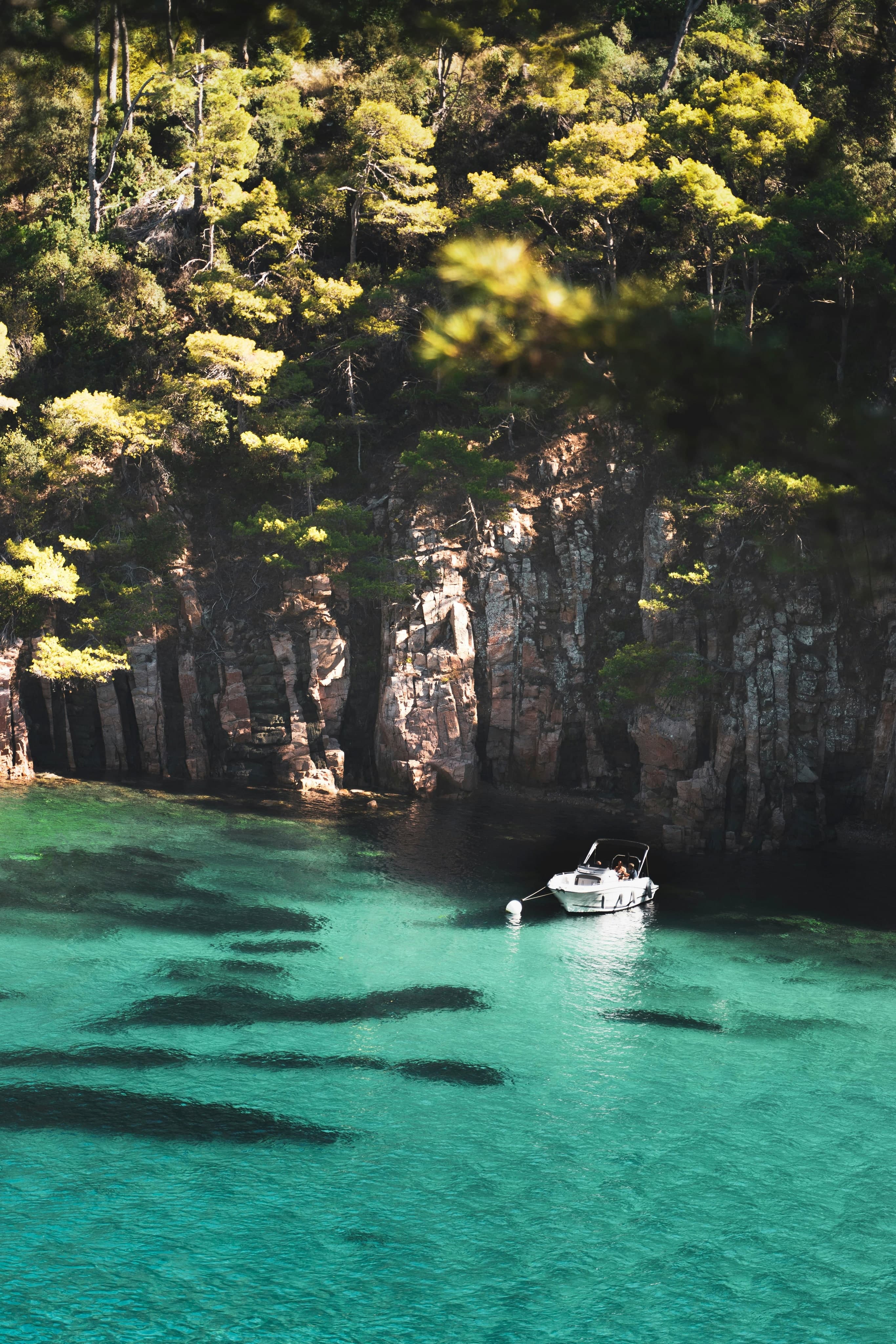
A turquoise-water cala in Begur, between reddish rock cliffs and pines, with a boat at anchor

Baix Empordà

Begur

Begur sits a little inland, and that one fact explains almost everything else. It isn't a town built beside the water but on a hill above it, with the Mediterranean laid out below: while other Costa Brava towns grew up around a harbor, Begur grew up around a castle, and the calas came later. So nobody here asks which is the beach — they ask which cala you're going down to today. Sa Tuna, Sa Riera, Aiguablava, Platja Fonda, Fornells, Aiguafreda, Illa Roja: a string of small bays linked by the Camí de Ronda, the coastal footpath, each with its own temperament. And behind all of them sits an old quarter of Indiano mansions, quiet squares and cobbled streets that remember something easy to forget now — before it became one of the most coveted places on the Costa Brava, Begur looked west toward Cuba more than east toward Barcelona.

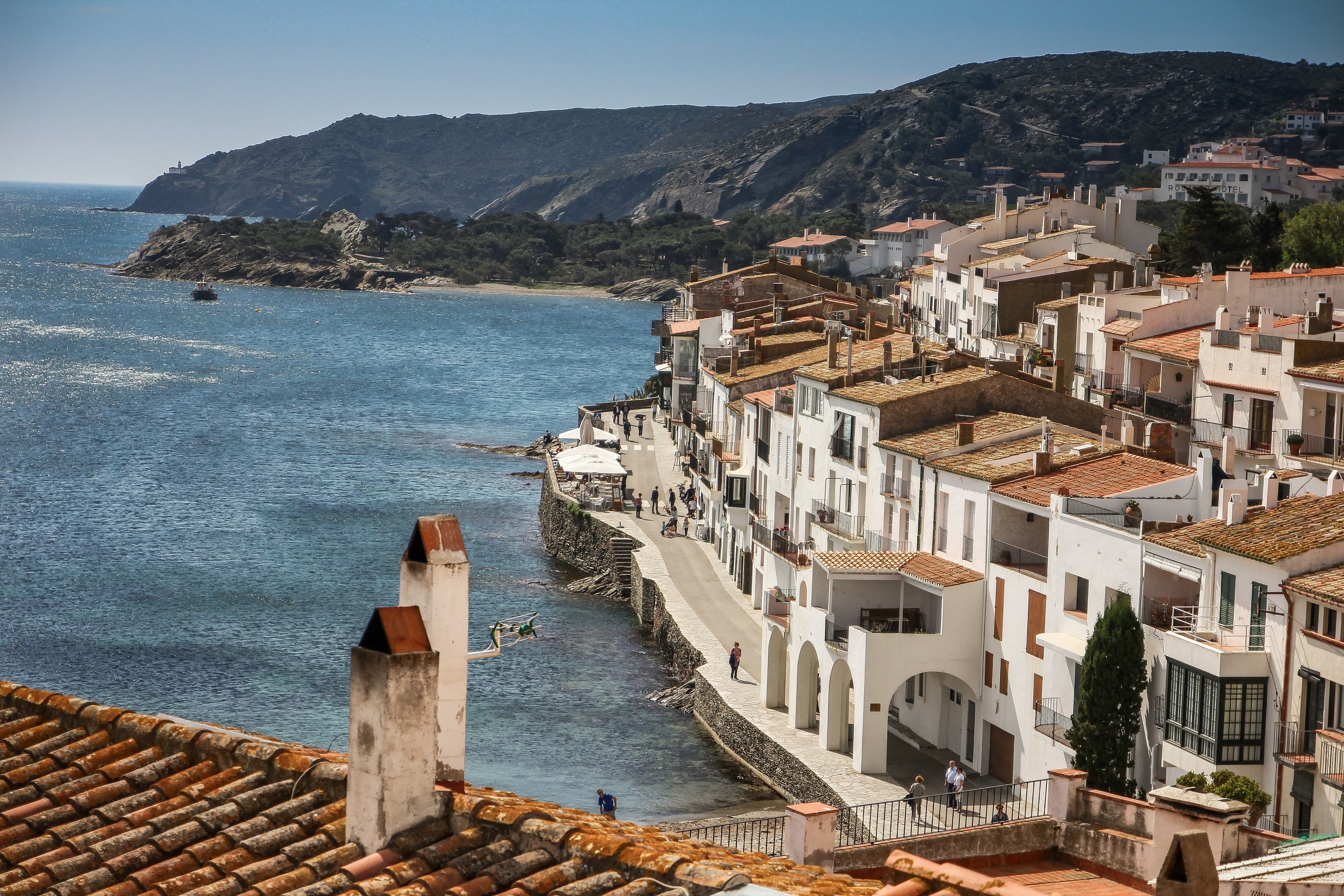
The seafront of Cadaqués beside the water, with the white houses and tiled roofs of the old town and the Cap de Creus coastline behind

Alt Empordà

Cadaqués

Cadaqués is the most photographed town on the Costa Brava, and the hardest to actually get to know. White houses, green shutters, boats drawn up facing the sea, the light that undid Dalí — it's all over every postcard, and none of it explains why people keep coming back. Maybe it has to do with the winding road that kept the town cut off from the rest of the Empordà for centuries, or with that light, which changes by the hour and makes the place feel like somewhere new each morning, noon and evening. You don't come here for wide sandy beaches or a promenade lined with shops. You come to walk slowly, to lose yourself in slate-paved streets, to watch the sea from the rocks, and to understand why this corner of the coast ended up gathering some of the twentieth century's most important artists.

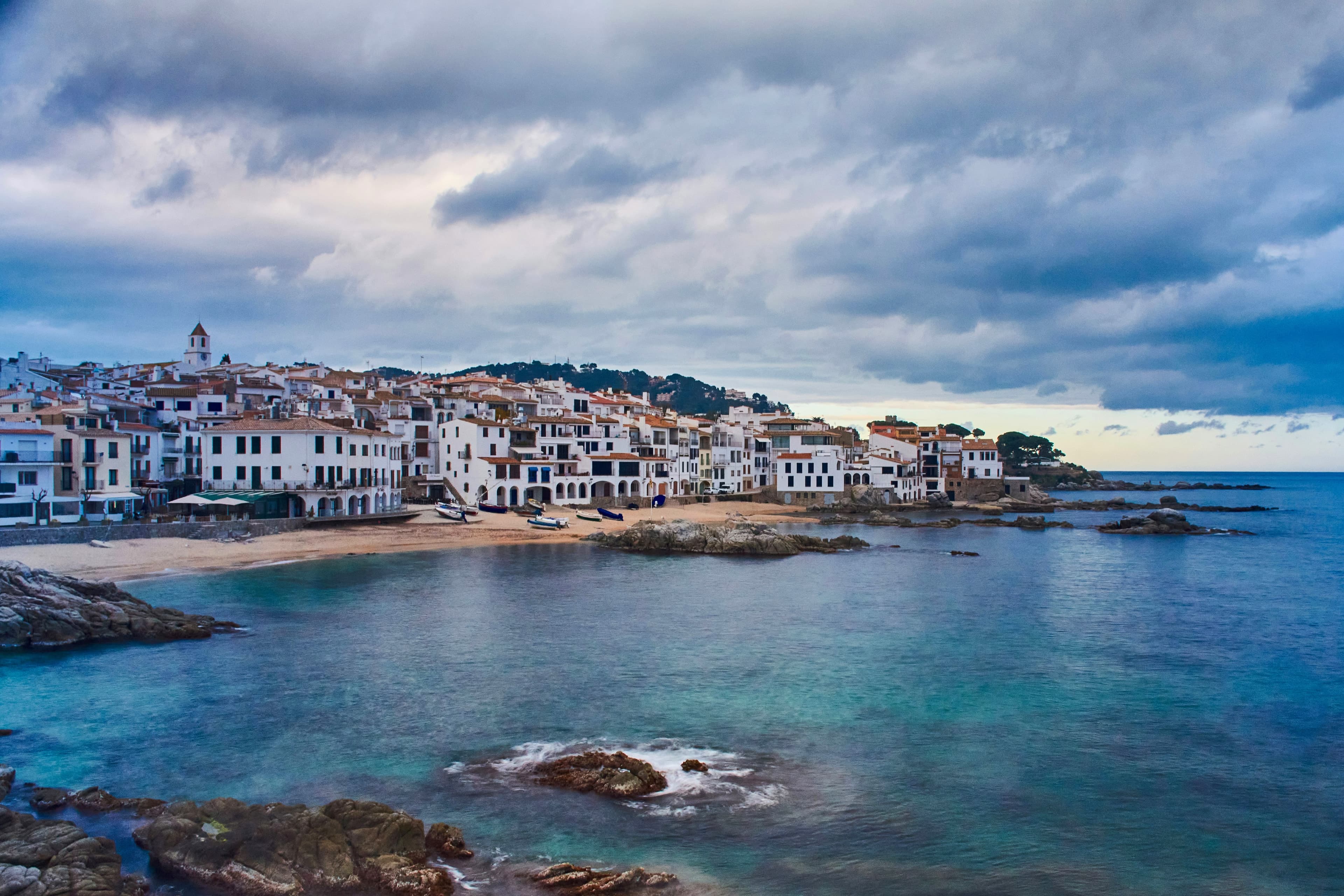
The white town of Calella de Palafrugell and its cala under an overcast sky at dusk, turquoise sea and rocks in the foreground

Baix Empordà

Calella de Palafrugell

Calella de Palafrugell is probably the most recognizable image of the whole Costa Brava. White houses, les Voltes of Port Bo, boats drawn up on the sand, the Mediterranean woven into the town's daily life — it turns up in thousands of photographs every summer. And yet that postcard only tells part of the story: the real Calella shows itself once you step a few meters off the main promenade, walk the Camí de Ronda without hurrying, or come back at dusk, when the terraces start to empty and the town settles back into the unhurried pace it always kept. Because before it became one of the great icons of the Mediterranean, Calella was — and still is — a fishing village.