PuraCostaBrava
ES
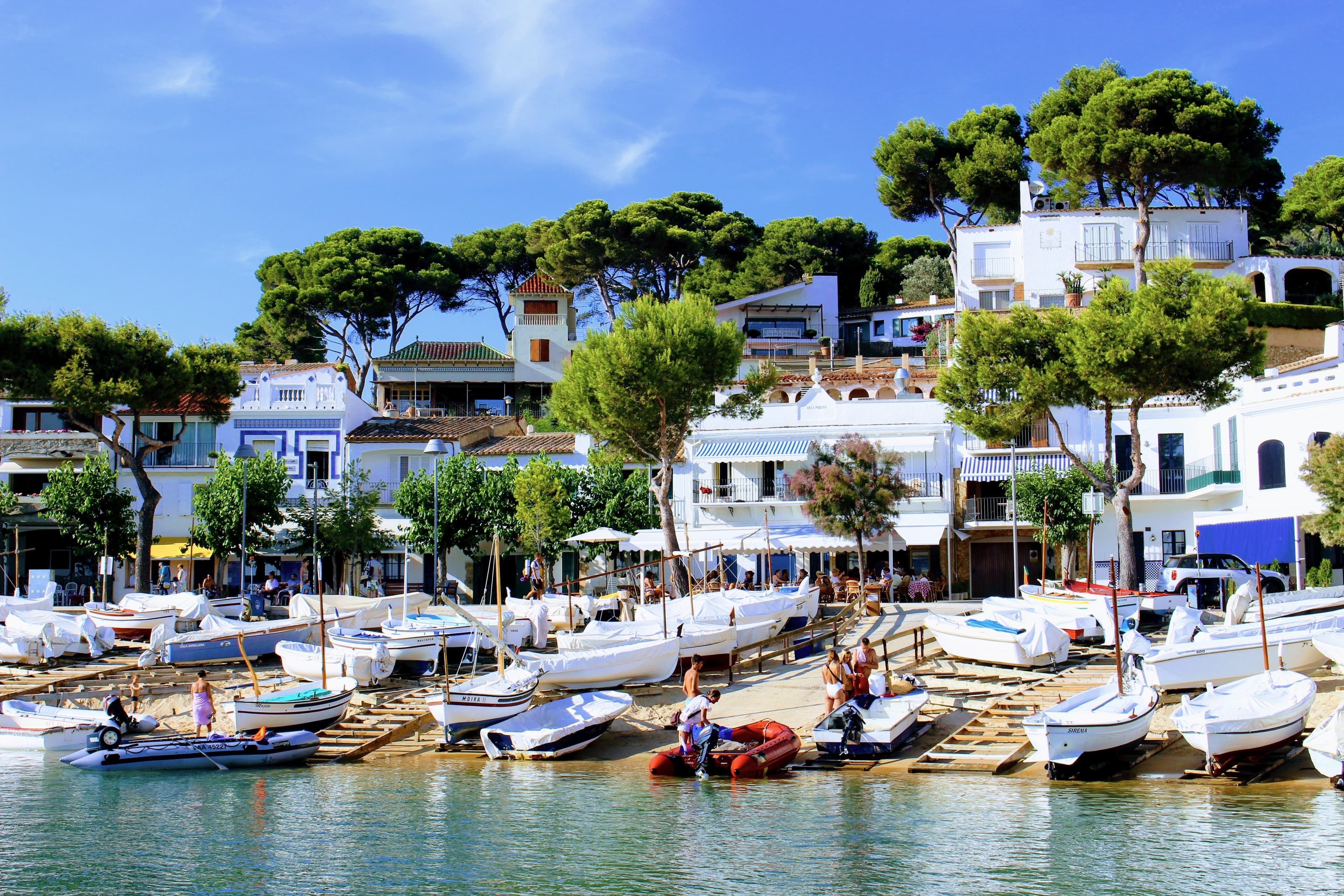
Llafranc's harbor with boats drawn up on the beach and the town's white houses behind

Baix Empordà

Llafranc

Llafranc has never needed to raise its voice. It has none of Calella's Voltes, none of Begur's Indiano mansions, none of Tossa's walls, and yet there's something here that keeps drawing people back, year after year. Maybe it's the perfectly sheltered bay, the small marina, the seafront promenade, or the way the town has managed to grow without losing its poise. Here the Costa Brava changes rhythm: breakfast with the boats in view, a walk up to the lighthouse, a swim in a hidden cala, and the rest of the day happening without much of a plan at all. Llafranc isn't a town for rushing between places. It's one of those places where the greatest luxury is simply staying a little longer.

The beach and the harbor

Llafranc's beach is one of the most comfortable on the Costa Brava. Fine sand, calm water, and the shape of the bay make it a perfect place to spend the whole day without moving. On one side, the marina keeps the town's bond with the sea alive; on the other, the promenade gathers terraces, small shops and historic hotels that have watched entire generations of summer visitors come and go.

Our advice is to get up early. At that hour, when the first boats leave the harbor and hardly anyone is out walking, Llafranc feels like the small fishing town it once was.
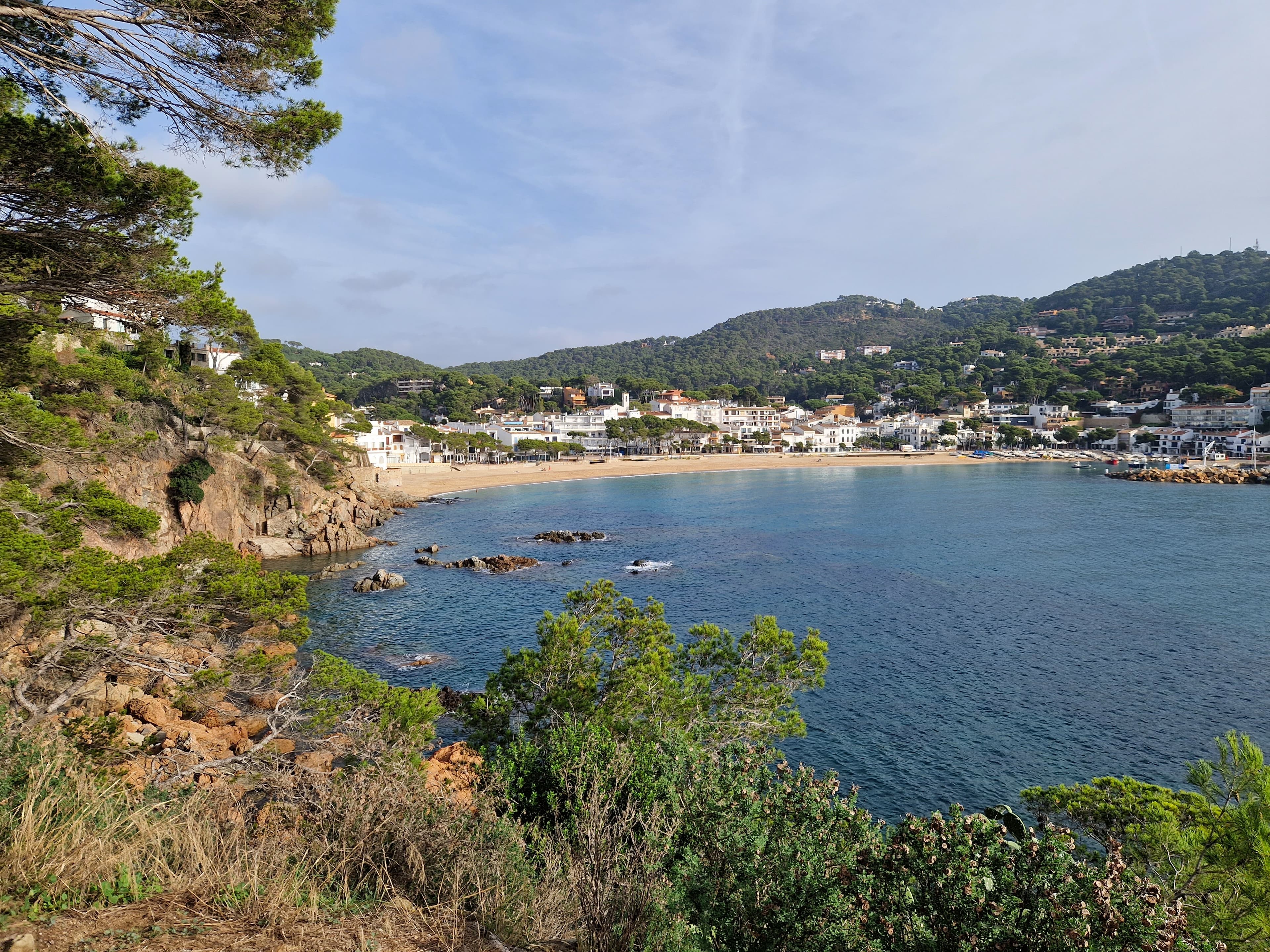
Llafranc's shell-shaped bay, seen through pines from the camí de ronda, with the beach and town in the distance
Llafranc's shell-shaped bay, from the path up to the lighthouse.Photo: Chris j wood / Wikimedia Commons (CC BY-SA 4.0)

The Sant Sebastià lighthouse

There are plenty of lighthouses on the Mediterranean, but few viewpoints like this one. The Sant Sebastià lighthouse stands on a cliff more than 160 meters high, with one of the most spectacular panoramas on the whole Costa Brava. From here you can make out Calella de Palafrugell, the Begur headland, the Medes islands, and even the Pyrenees when the tramuntana has swept the sky clean.

Beside the lighthouse sit an old hostelry, an eighteenth-century hermitage, and the remains of an Iberian settlement — a reminder that this spot has been strategic for more than two thousand years.
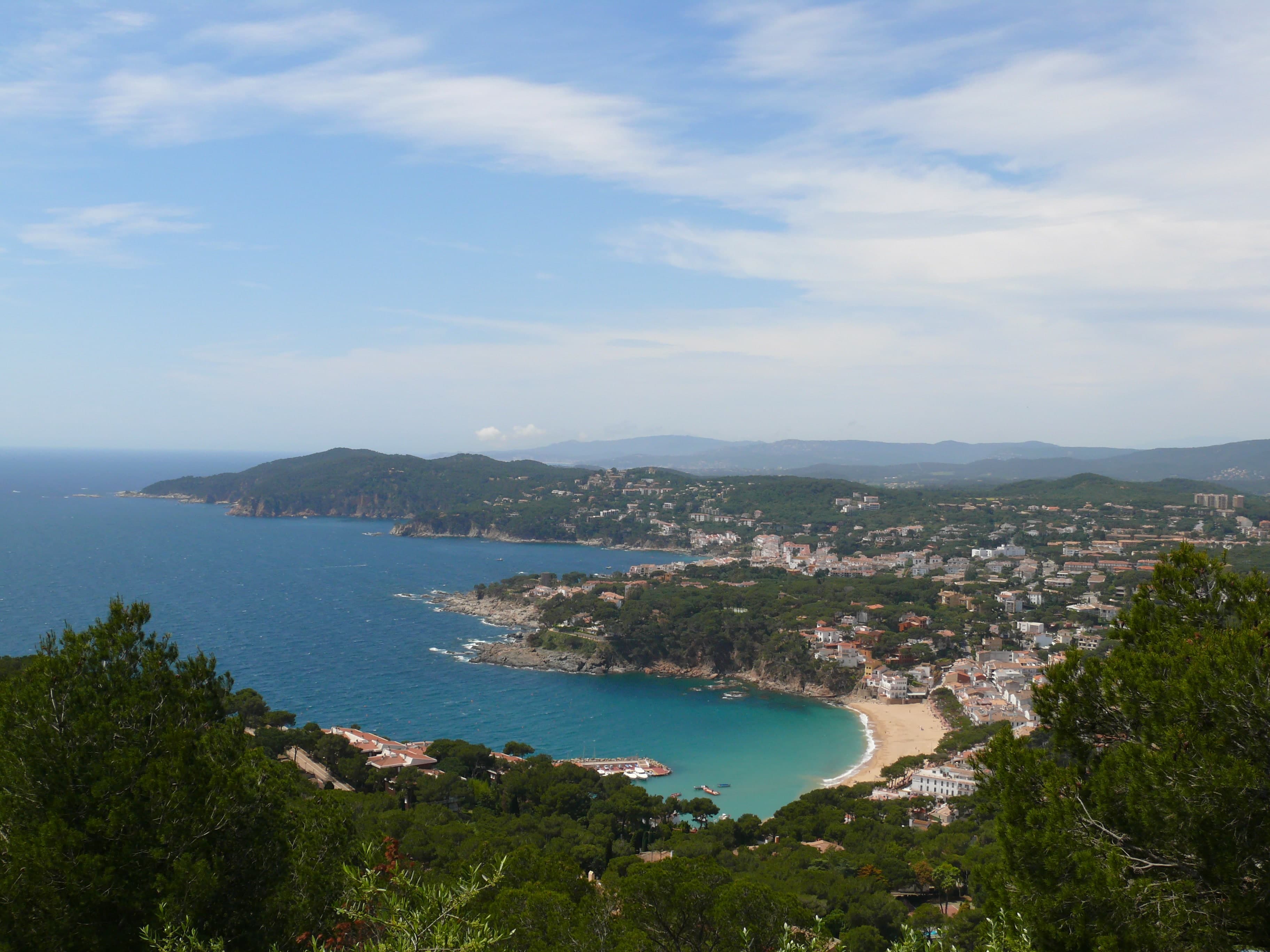
Panoramic view of the coast and Llafranc's bay from the Sant Sebastià lighthouse headland
The coast from the Sant Sebastià lighthouse: the Mediterranean opens up all at once.Photo: DagafeSQV / Wikimedia Commons (CC BY-SA 3.0)

The Camí de Ronda

The best of Llafranc begins the moment you start walking. Heading south, the Camí de Ronda connects in barely twenty minutes with Calella de Palafrugell, tracing the sea the whole way. Heading north, the path climbs to Sant Sebastià and continues through pine woods and cliffs to Tamariu. It's one of the loveliest stretches on the entire Costa Brava, and one of the rare routes where the walk matters as much as the destination.
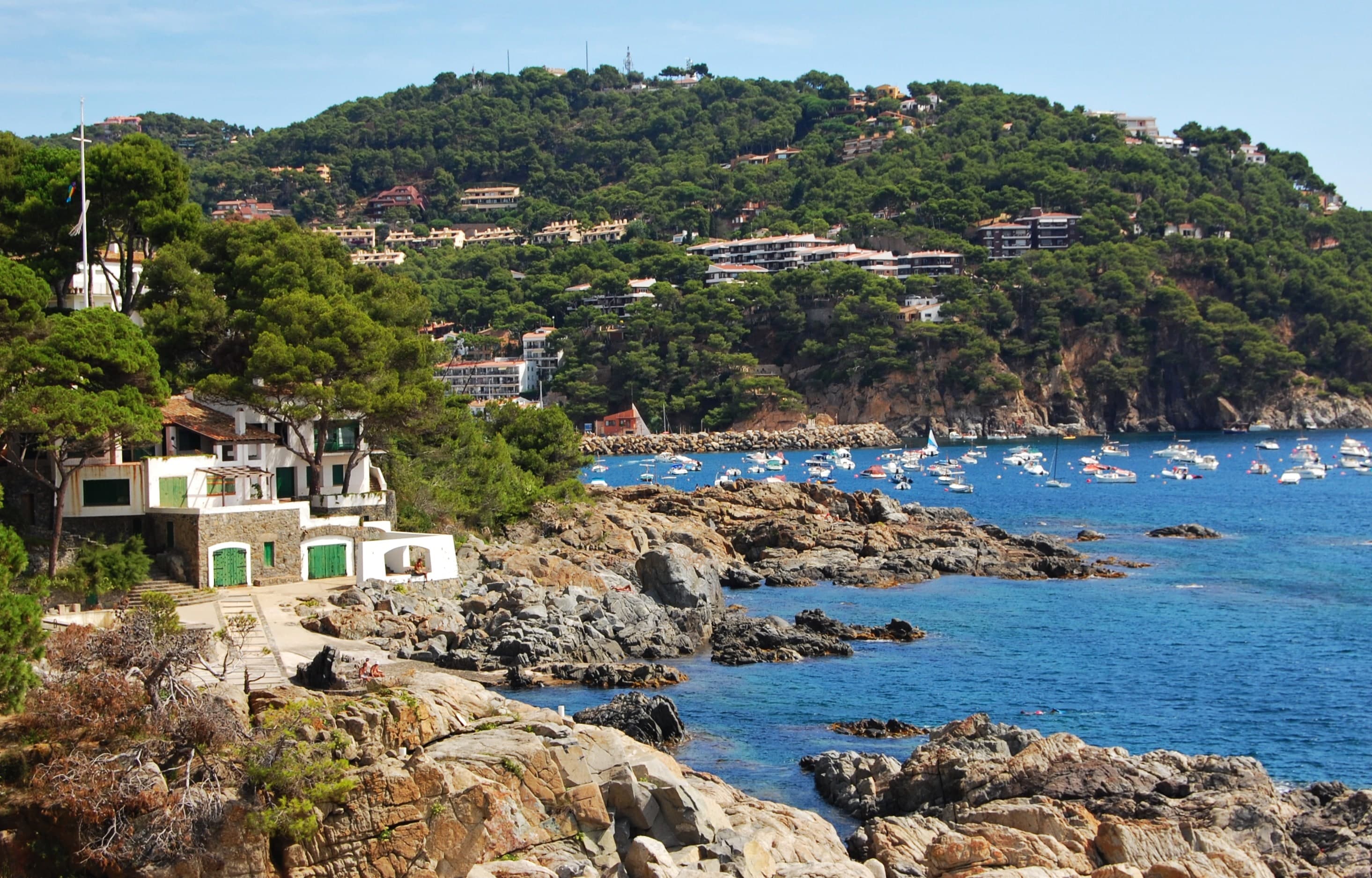
The rocky coast of Llafranc's camí de ronda, with an old fisherman's house with green doors and boats anchored in the bay
The camí de ronda skirting the rock between Llafranc and its neighbors.Photo: Maria Rosa Ferre / Wikimedia Commons (CC BY-SA 2.0)

The best calas

It's the reward for anyone who keeps walking. Tucked between Llafranc and Tamariu, Cala Pedrosa is reachable only on foot along the Camí de Ronda, or by sea. No beach bars, no sun loungers, no real facilities — just rock, clear water, and a silence that gets harder to find in summer every year.

Toward Calella lies El Golfet, a small cala ringed by cliffs and Mediterranean pines. Technically part of the Cap Roig estate, many people discover it on foot from Llafranc: perfect for a stop before continuing the walk.

Corners that rarely make the guidebooks

Very close to the lighthouse hides one of the oldest monuments in the Empordà. The dolmen of Can Mina dels Torrents, built more than four thousand years ago, goes unnoticed by most visitors, but it's a reminder that these hills were inhabited long before Llafranc ever existed.

Most people reach the lighthouse, take a photo, and head back down. It's worth pushing on a few more minutes: the small natural balconies that ring the headland offer some of the best views on the whole coast, and tend to be completely empty even at the height of the season.

Between Cala Pedrosa and the harbor sits a small rocky inlet that barely shows up on the tourist maps: Cala d'en Gotes. It's not a beach for spending the day — it's one of those places where you stop for a few minutes, swim, and keep walking. Locals know it well; most visitors walk straight past without noticing.

When the sun goes down, Llafranc changes completely. The terraces stay full, but the daytime buzz disappears. It's the best moment to walk beside the harbor, sit facing the sea, or simply watch the lights begin to reflect on the boats.
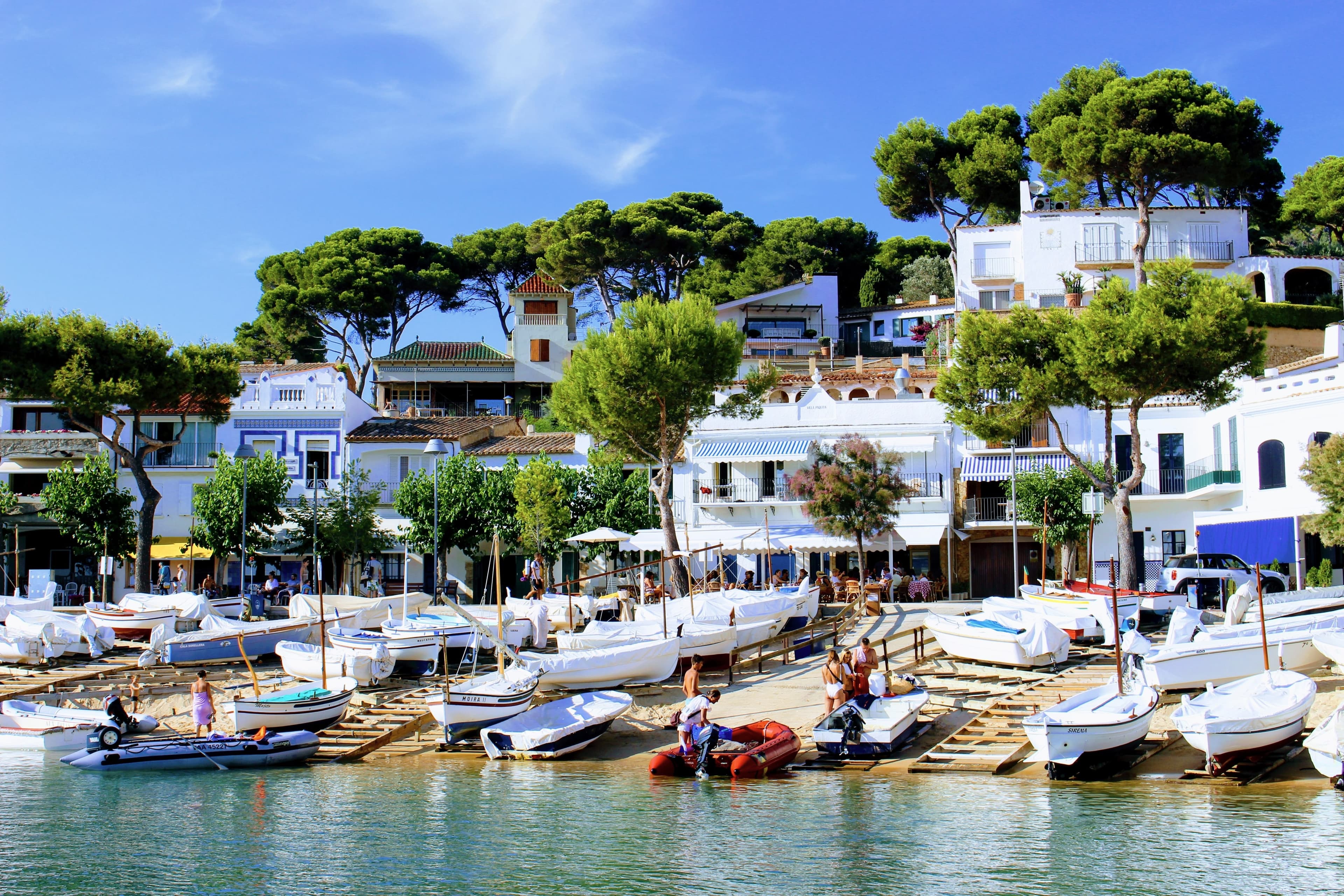
Llafranc's seafront promenade with wooden boats drawn up on the sand and white houses among pines
The promenade at nightfall, once the day's bustle has faded.Photo: Wikimedia Commons (CC0)

The Llafranc notebook

Where we go

Llafranc has always been one of the great gastronomic destinations on the Costa Brava. Here's the short list: where we eat, which cala to head to when the town beach fills up, and what earns the climb.

Approximate positions · Llafranc · Cartography © OpenStreetMap contributors, tiles by OpenFreeMap

Tap a pin or a place in the list to zoom in

Where to eat

  • Llafranc's gastronomic benchmark. Contemporary Mediterranean cooking that has turned this small family hotel into one of the essential restaurants in the Empordà.

  • A promenade classic, open most of the year. Mediterranean produce, a relaxed atmosphere, and a terrace perfect for eating with the sea in view.

  • Wild-caught fish, rice dishes and market cooking without frills. A safe bet for anyone after good produce, simply done.

  • More than a restaurant — a privileged lookout over the Costa Brava. Worth the climb for the views as much as the Mediterranean cooking.

  • One of the most pleasant terraces on the promenade for a long lunch looking out over the bay.

  • A contemporary offering where local produce meets a more creative Mediterranean kitchen.

Coves & swimming

  • Pale sand and still water, sheltered from the wind. The town's own — for staying put. Fills up by midday in summer: come early.

  • On the way to Calella, at the foot of the Cap Roig gardens. Small, dark sand and rock, with fewer people than the main beach.

  • Tucked between Llafranc and Tamariu, no facilities, no easy access. Reachable only on foot along the camí de ronda or by boat — which is exactly why it stays so quiet.

  • Cala d'en Gotes

    Between Cala Pedrosa and the harbor, a small rocky inlet that barely shows up on the maps. Not a place for the whole day — a place to stop, swim, and keep walking.

    No fixed pin

What to do

  • On foot from town, about 40–45 minutes through pines, past the Iberian settlement, the hermitage, and the lighthouse. Go at sunset, when the whole coast opens up.

  • Very close to the lighthouse, one of the oldest monuments in the Empordà, over four thousand years old. Most visitors walk right past it.

  • A few minutes past the lighthouse, the small natural balconies that ring the headland. Usually empty even at the height of the season.

  • The camí de ronda to Calella and Tamariu

    The cliffside path linking the three towns, with plenty of calas along the way for a swim. The best plan around here, and it costs nothing.

    No fixed pin

Good to know

Frequently asked questions

How do you get to the Sant Sebastià lighthouse from Llafranc?

A path leaves from Llafranc's seafront and climbs to the lighthouse in about 40 to 45 minutes. You can also drive up, though walking lets you take in some of the best viewpoints on the Costa Brava.

Which is the prettiest cala in Llafranc?

The main beach is perfect for spending the day, but if you're after something wilder, Cala Pedrosa is one of the best options. It can only be reached on foot or by sea, and keeps a far quieter atmosphere.

Which towns can I visit on foot from Llafranc?

The Camí de Ronda links Calella de Palafrugell, Llafranc and Tamariu, letting you cover all three without ever needing a car.

What sets Llafranc apart?

Its balance. It keeps the poise of a historic summer destination without losing its seafaring character. It doesn't try to impress with grand monuments or spectacular beaches — it wins you over slowly, with the calm of its bay, its seafront promenade, and one of the loveliest stretches of Camí de Ronda on the whole Costa Brava.

Other villages to discover

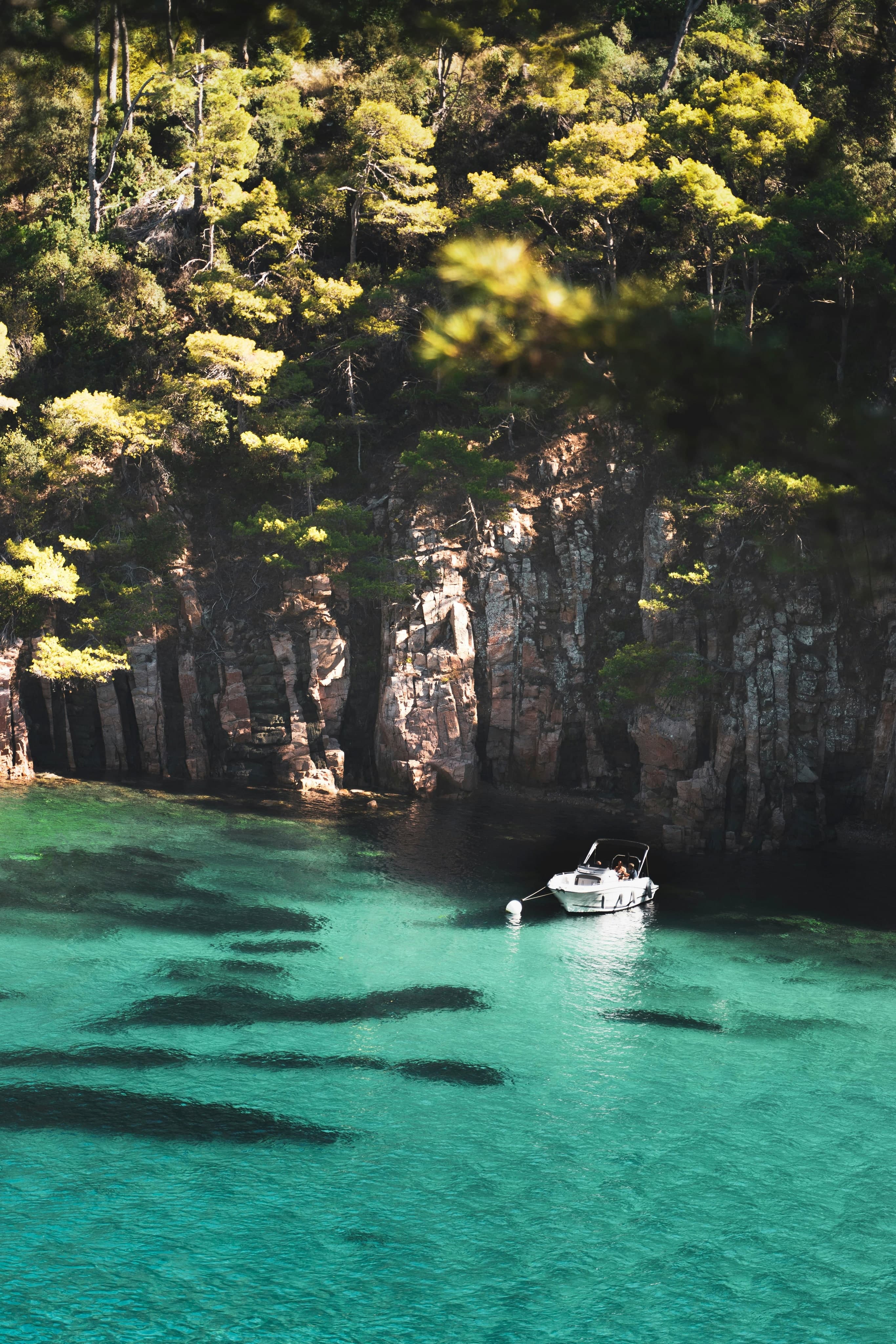
A turquoise-water cala in Begur, between reddish rock cliffs and pines, with a boat at anchor

Baix Empordà

Begur

Begur sits a little inland, and that one fact explains almost everything else. It isn't a town built beside the water but on a hill above it, with the Mediterranean laid out below: while other Costa Brava towns grew up around a harbor, Begur grew up around a castle, and the calas came later. So nobody here asks which is the beach — they ask which cala you're going down to today. Sa Tuna, Sa Riera, Aiguablava, Platja Fonda, Fornells, Aiguafreda, Illa Roja: a string of small bays linked by the Camí de Ronda, the coastal footpath, each with its own temperament. And behind all of them sits an old quarter of Indiano mansions, quiet squares and cobbled streets that remember something easy to forget now — before it became one of the most coveted places on the Costa Brava, Begur looked west toward Cuba more than east toward Barcelona.

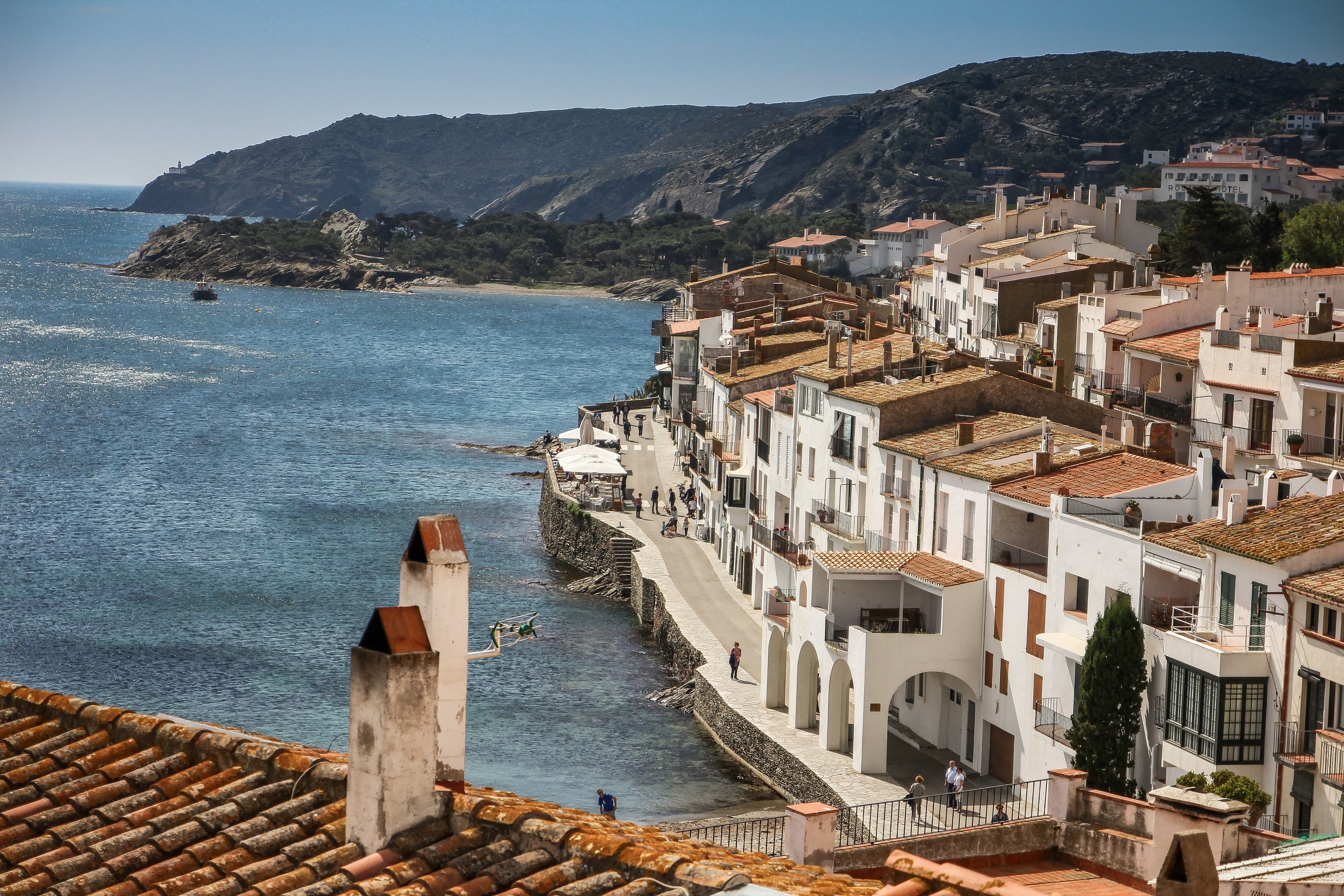
The seafront of Cadaqués beside the water, with the white houses and tiled roofs of the old town and the Cap de Creus coastline behind

Alt Empordà

Cadaqués

Cadaqués is the most photographed town on the Costa Brava, and the hardest to actually get to know. White houses, green shutters, boats drawn up facing the sea, the light that undid Dalí — it's all over every postcard, and none of it explains why people keep coming back. Maybe it has to do with the winding road that kept the town cut off from the rest of the Empordà for centuries, or with that light, which changes by the hour and makes the place feel like somewhere new each morning, noon and evening. You don't come here for wide sandy beaches or a promenade lined with shops. You come to walk slowly, to lose yourself in slate-paved streets, to watch the sea from the rocks, and to understand why this corner of the coast ended up gathering some of the twentieth century's most important artists.

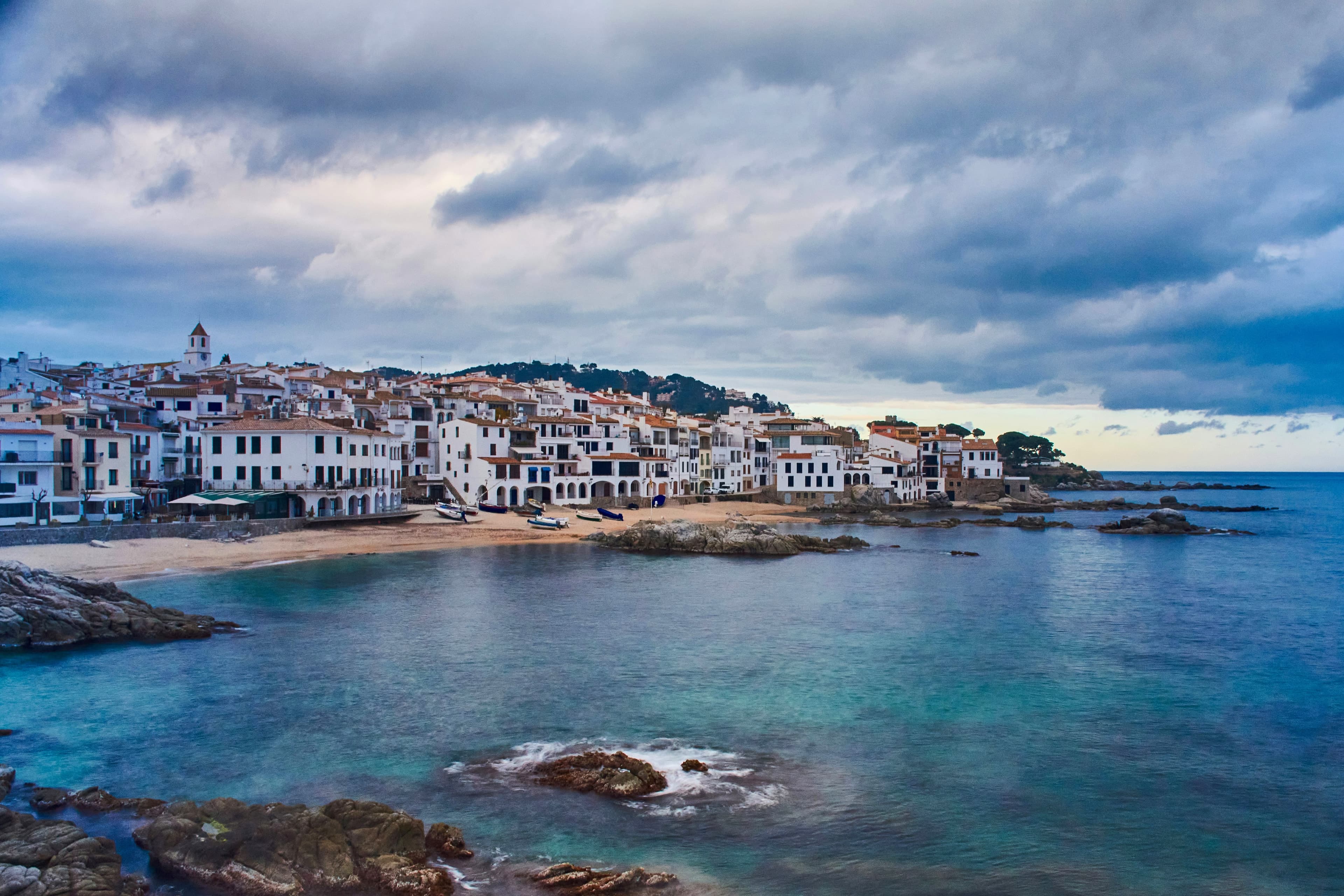
The white town of Calella de Palafrugell and its cala under an overcast sky at dusk, turquoise sea and rocks in the foreground

Baix Empordà

Calella de Palafrugell

Calella de Palafrugell is probably the most recognizable image of the whole Costa Brava. White houses, les Voltes of Port Bo, boats drawn up on the sand, the Mediterranean woven into the town's daily life — it turns up in thousands of photographs every summer. And yet that postcard only tells part of the story: the real Calella shows itself once you step a few meters off the main promenade, walk the Camí de Ronda without hurrying, or come back at dusk, when the terraces start to empty and the town settles back into the unhurried pace it always kept. Because before it became one of the great icons of the Mediterranean, Calella was — and still is — a fishing village.