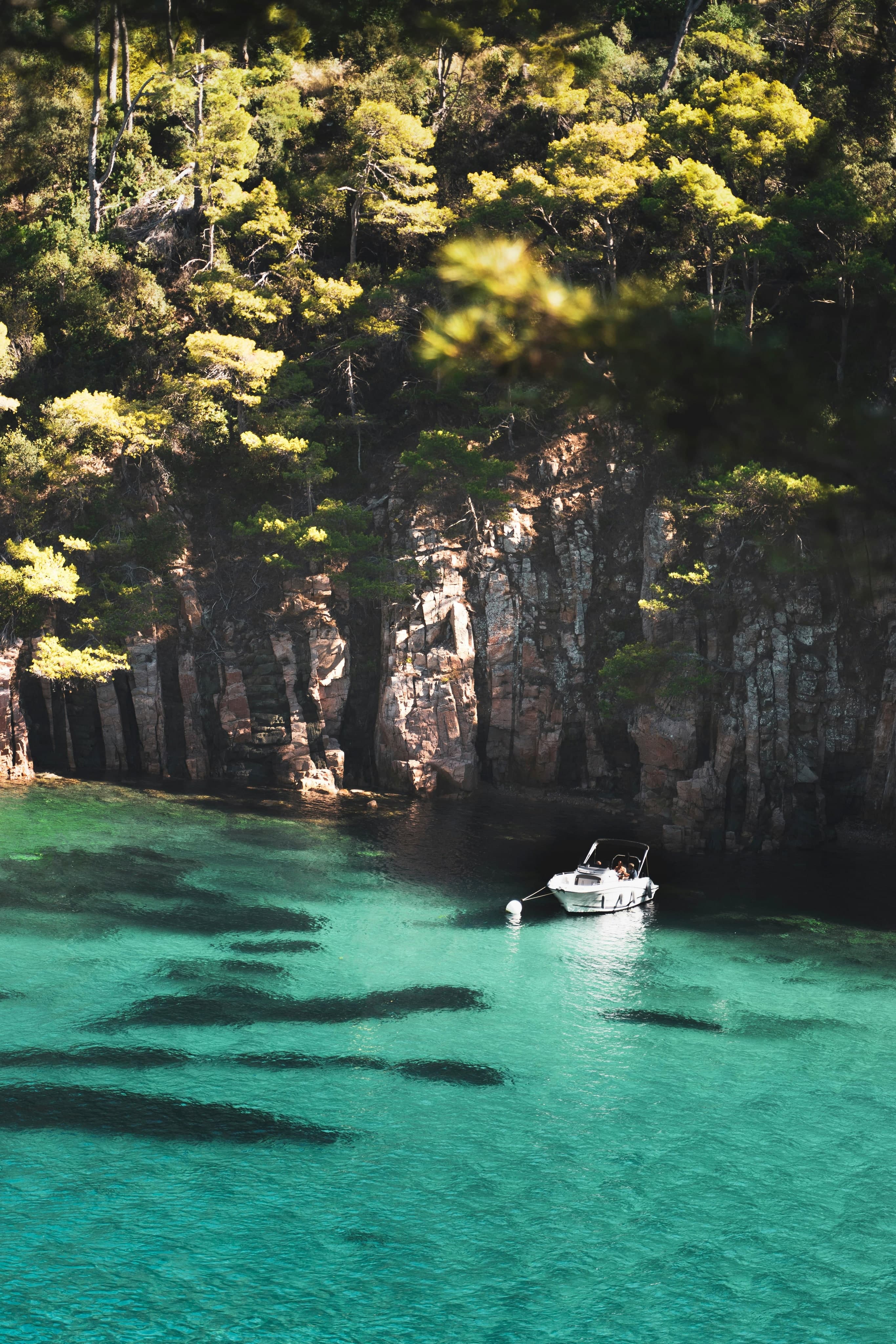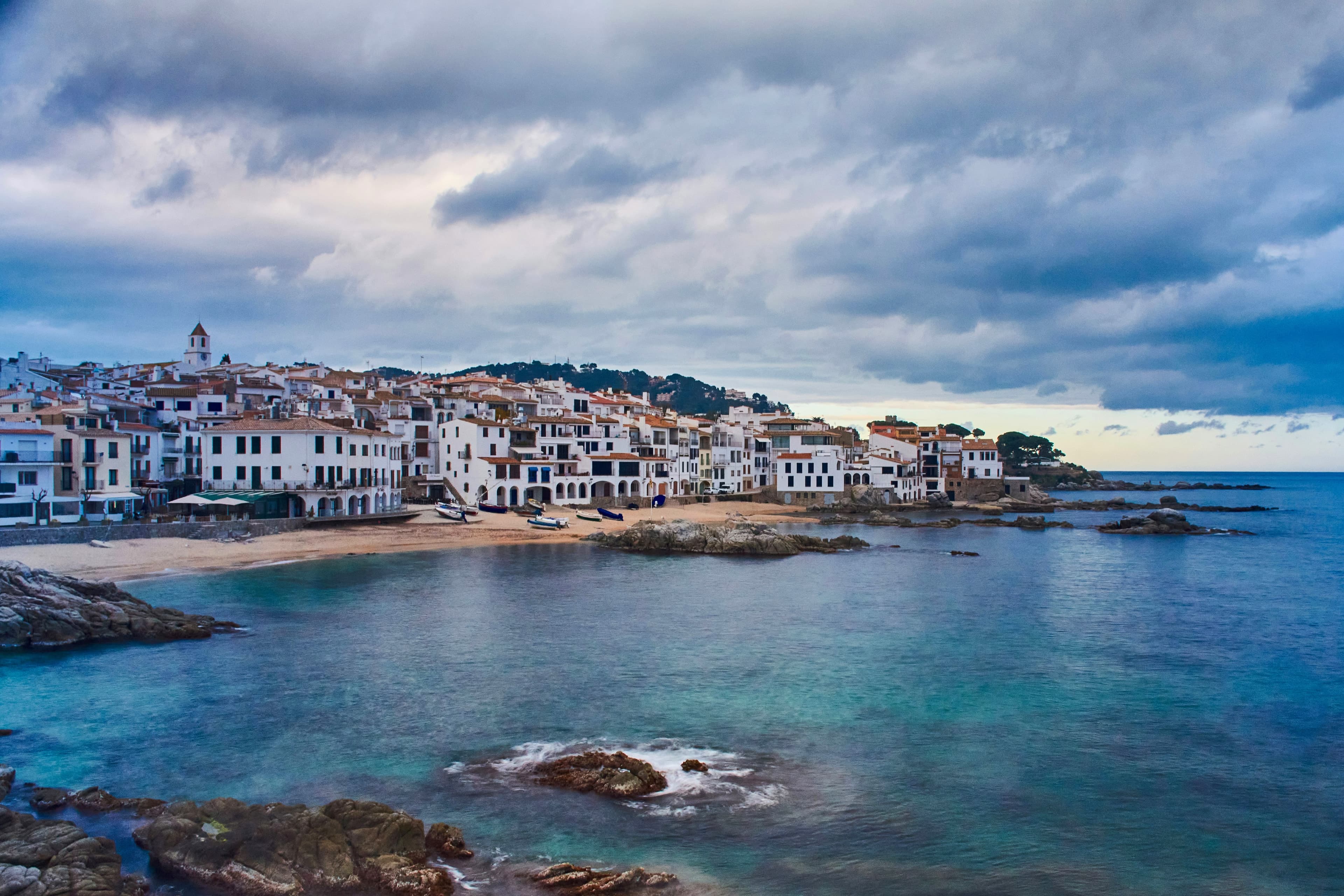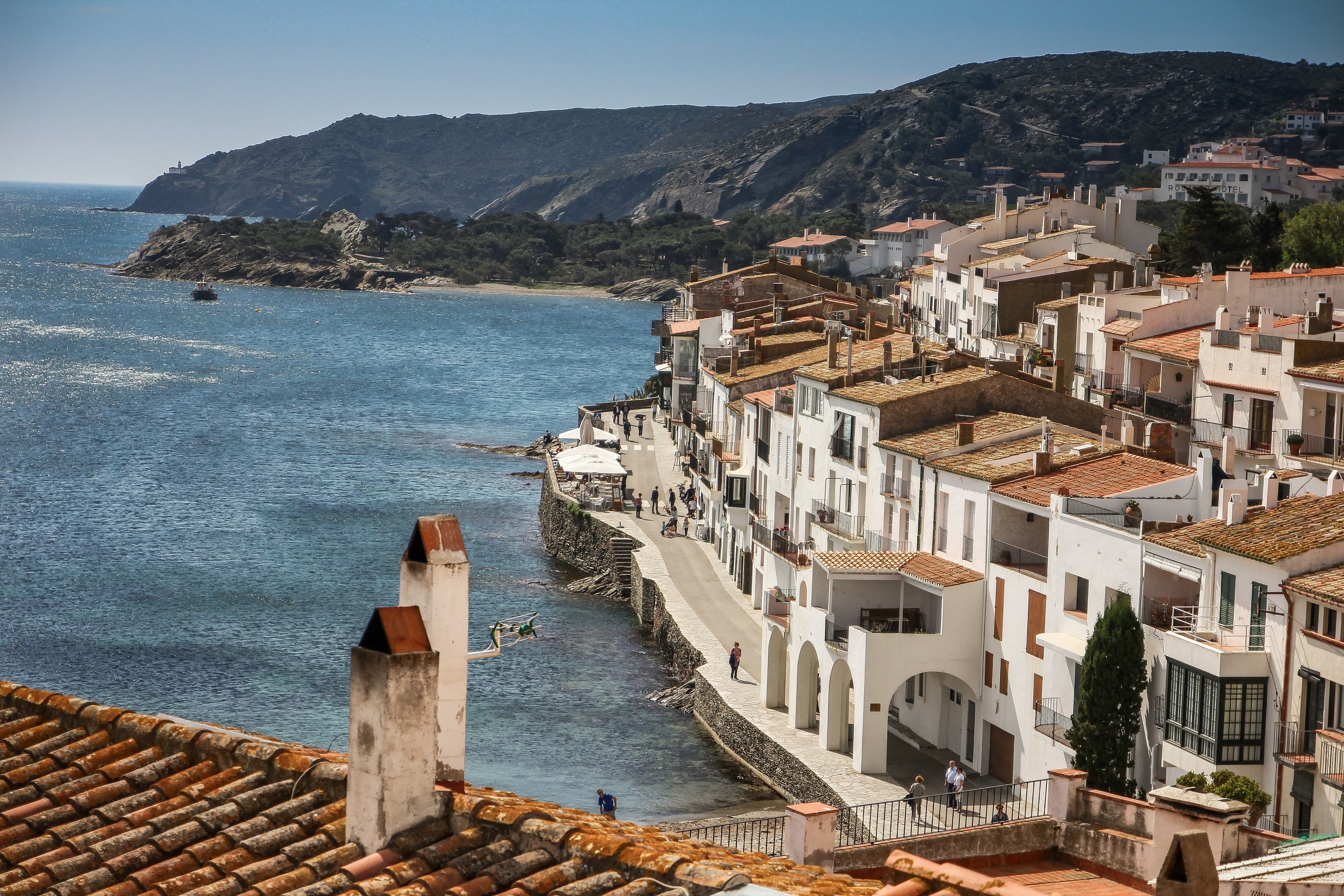
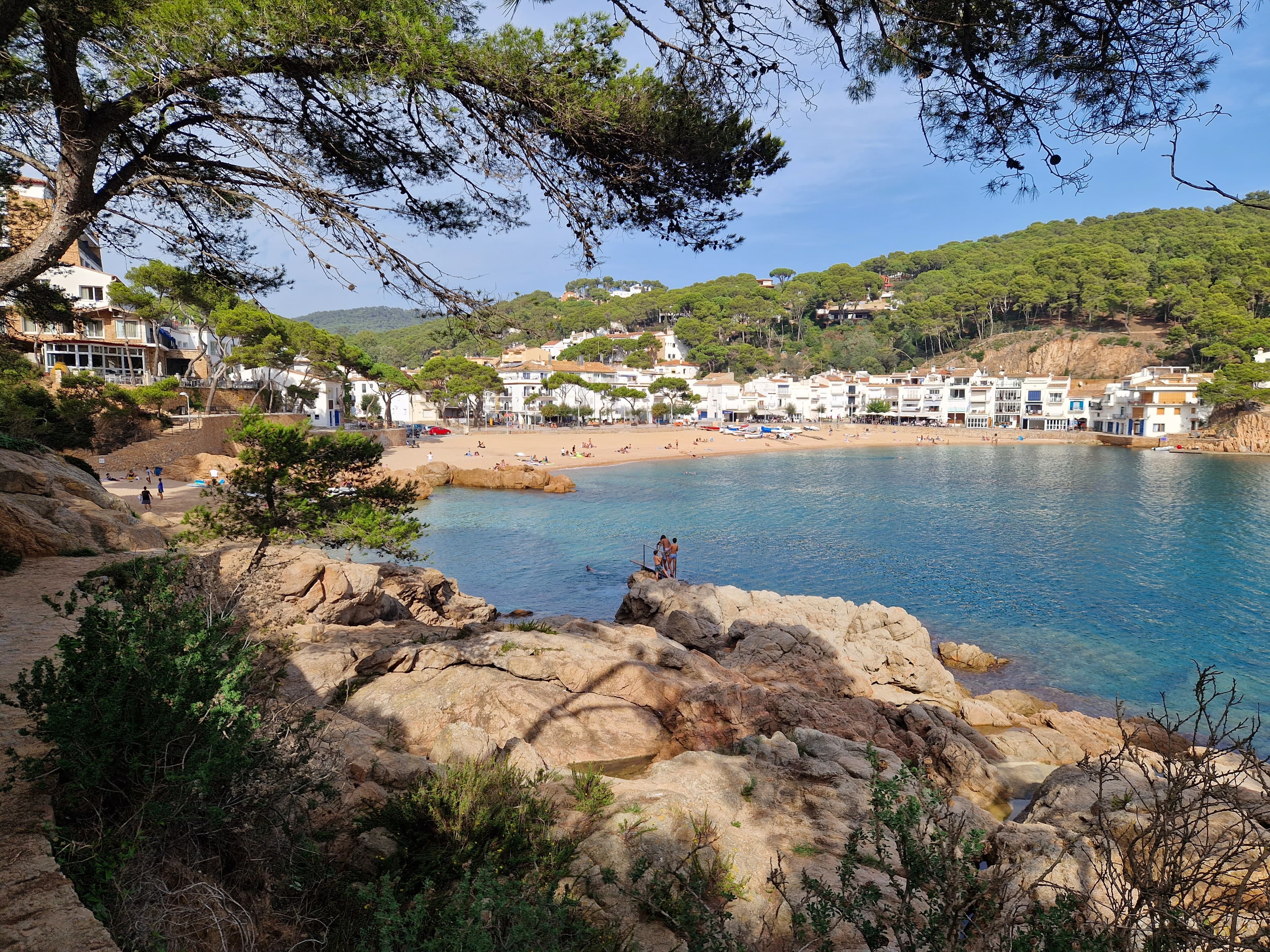
Tamariu takes its name from the tamariu, the tamarisk that grew on this cala long before the town existed. Today it's still the smallest and quietest of Palafrugell's three coastal towns — Calella, Llafranc and Tamariu — and that's exactly where its charm lives. There's no grand promenade here, no harbor crowded with boats: the houses run straight to the sand, the boats rest on the beach, and the sea is simply part of everyday life. The beach isn't somewhere you go — it's the town's living room. Even though it fills up with life in summer, Tamariu holds on to something that's grown scarce on the Costa Brava: quiet. Walk a few minutes along the Camí de Ronda and the terraces fall away, leaving only cliffs, pine woods, and some of the clearest water on the Mediterranean.
The Platja Gran
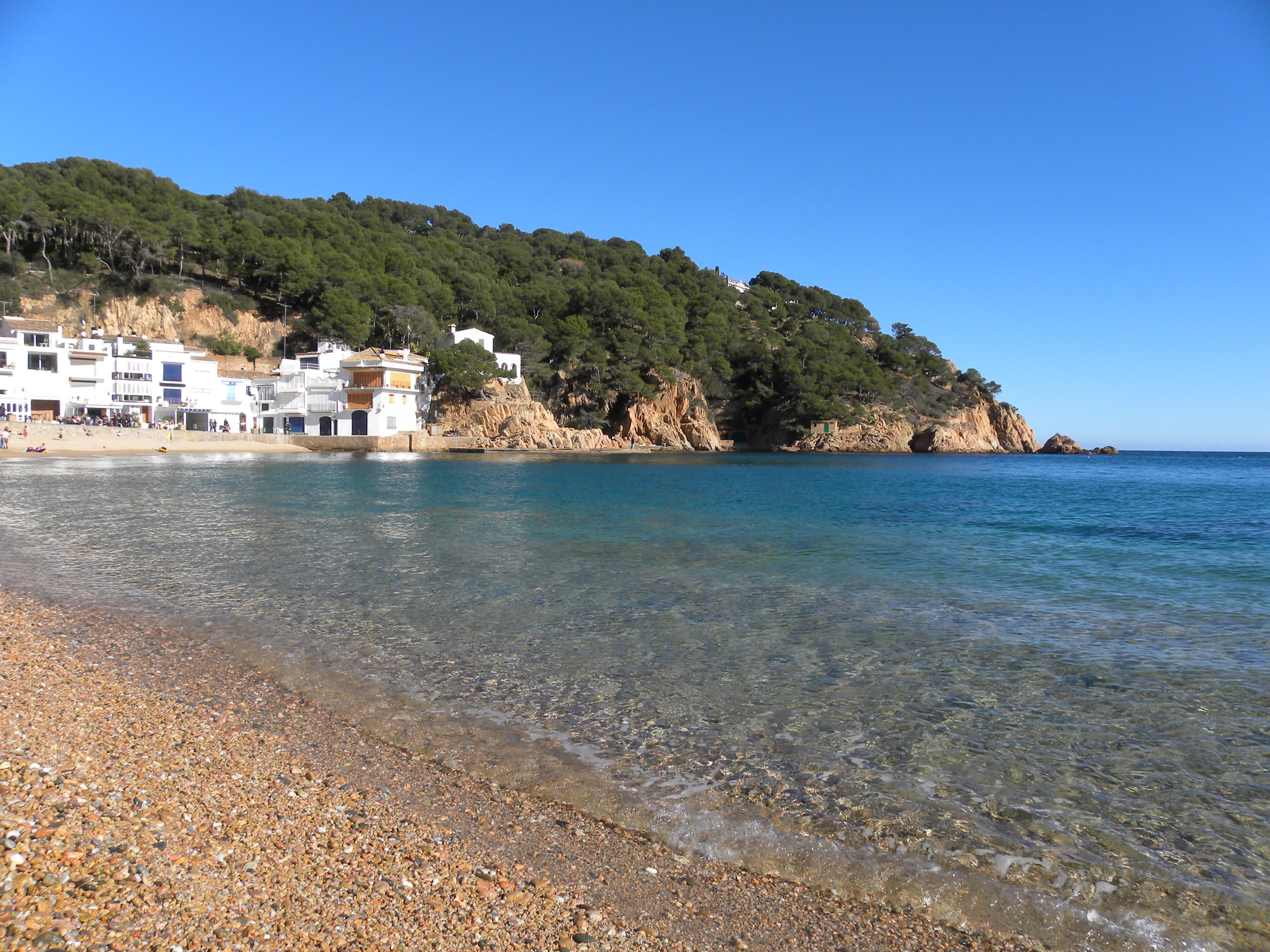
The main beach is the town's heart. Small, coarse-sand, crystalline water, it stands out for something almost unheard of elsewhere on the Costa Brava: the fronts of the houses run straight onto the sand. There's no road separating town from sea, so the whole of daily life turns around the beach.
Even in August it keeps a family atmosphere that recalls the Tamariu of decades past.
The Camí de Ronda
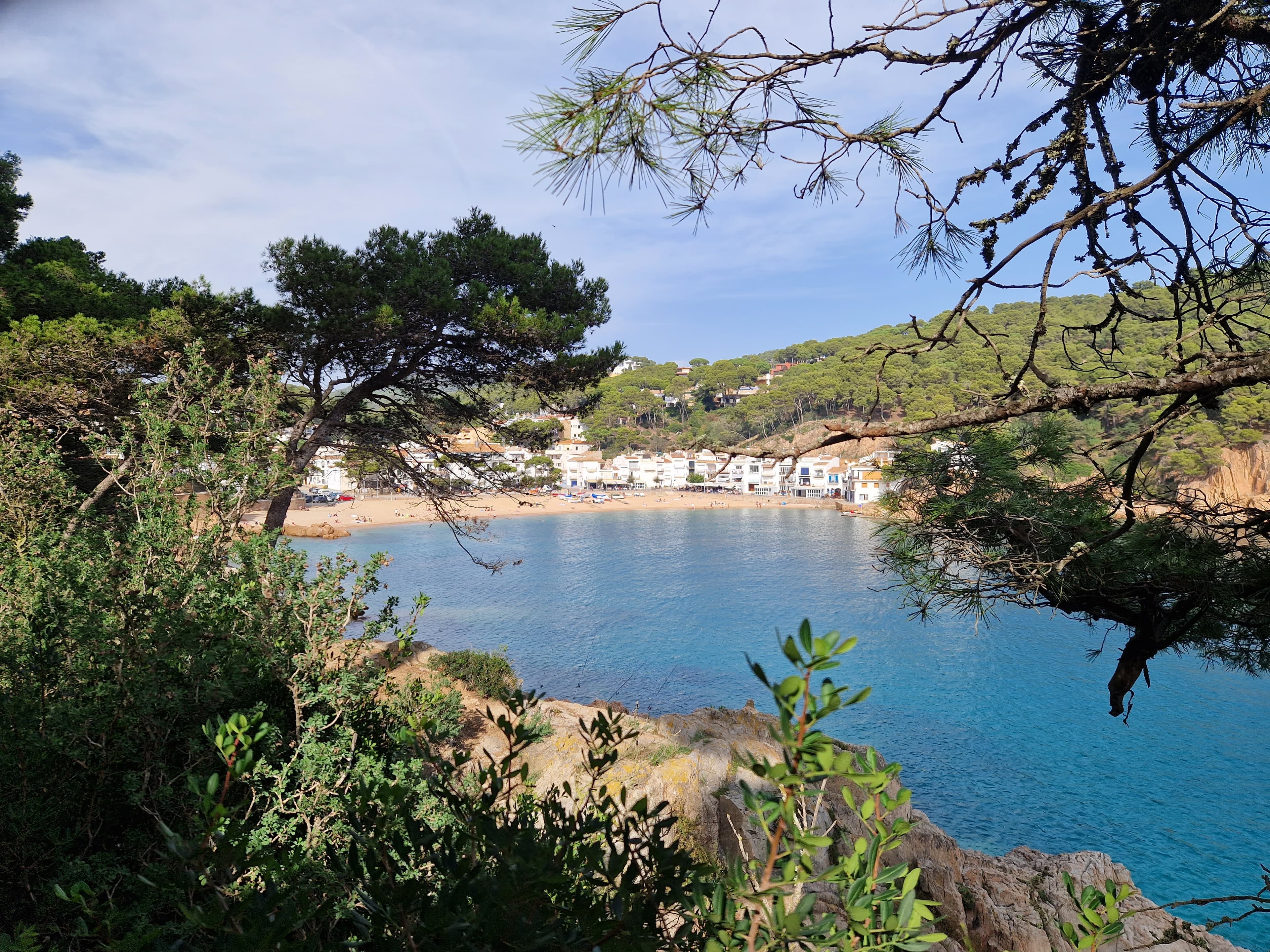
If there's one place where Tamariu shows its true character, it's here. The path leaving from the town's southern edge covers one of the most spectacular stretches on the whole Costa Brava. Steps cut into the rock, pine woods running down to the sea, small lookouts appearing one after another, the Mediterranean keeping pace the entire way.
From here you can walk toward Cala Pedrosa, the Sant Sebastià lighthouse and Llafranc, or follow the coast north toward Aigua Xelida.
The Sant Sebastià lighthouse
Though it technically belongs to Llafranc, the lighthouse is part of any visit to Tamariu. Standing on one of the highest cliffs on the coastline, it offers one of the widest panoramas in the Baix Empordà. The walk there is as rewarding as the destination itself.
The best calas
It's Tamariu's best-known cala, and rightly so. The waters of Cala d'Aigua Xelida are remarkably clear, and the seabed makes it one of the best spots on the Costa Brava for snorkeling. There are no facilities, so bring water and everything else you'll need before setting out.
Cala Marquesa is more hidden and quieter than Aigua Xelida. Ringed by rock and scrub, it's one of those calas where the sea shifts color as the afternoon wears on — perfect for anyone after some distance from the main beach.
Many visitors never make it to Cala Pedrosa. It's reached on foot along the Camí de Ronda, through Mediterranean woodland and cliffs. Its beach of round pebbles, the old fishermen's huts, and the near-total absence of facilities give it a thoroughly wild character.
Corners only the locals know
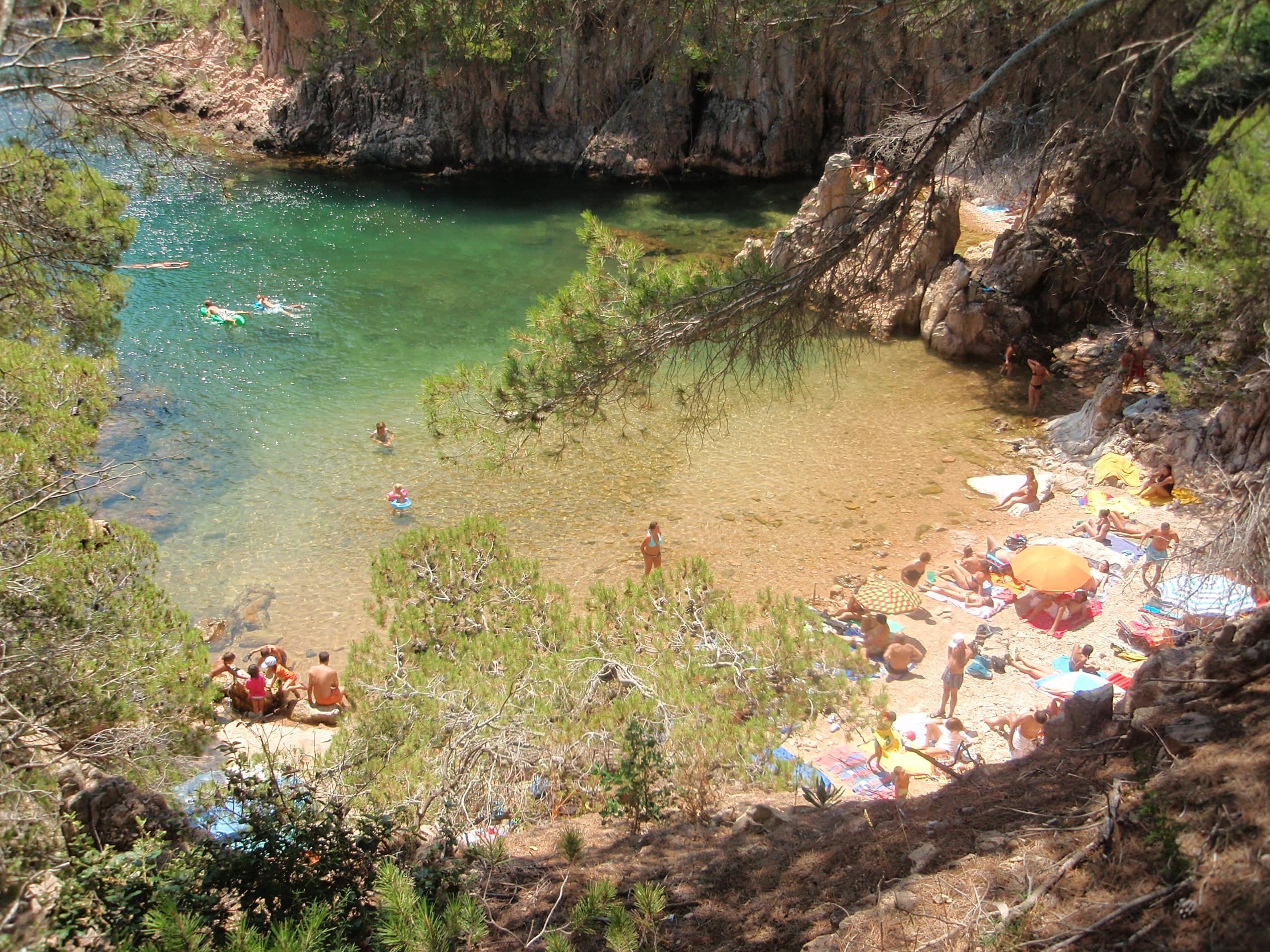
While most people stay on the main beach, locals tend to head to Es Portió, popularly known as Els Lliris: a small rocky cala presided over by a historic fisherman's hut that has become one of Tamariu's landmarks. A perfect corner for sitting and watching the sea with almost nobody else around.
Few visitors know that close to Tamariu lies one of the largest sea caves in Catalonia, the Cova d'en Gispert. It can only be reached from the water, by kayak or boat trip: the light entering through the cave's mouth and the echo of the water create one of the most striking scenes on the Costa Brava.
When the levante wind blows, something curious happens at Sa Roncadora: the sea forces its way through a crack in the rock and lets out a roar that can be heard from the Camí de Ronda. It's a little-known natural phenomenon, even among regular Costa Brava visitors.
Most people look at Tamariu from the beach. Locals know the best views are up above: from Puig Gruí you take in the whole bay, the profile of the Cap de Begur, and much of the Empordà coastline. At sunrise or sunset it's one of those places worth simply standing still in for a few minutes.
If you're an early riser, get down to the beach before eight. With the swimmers not yet arrived and little to hear but the water breaking against the boats drawn up on the sand, the Tamariu that year-round residents know appears. It's probably the loveliest moment of the day.