PuraCostaBrava
ES
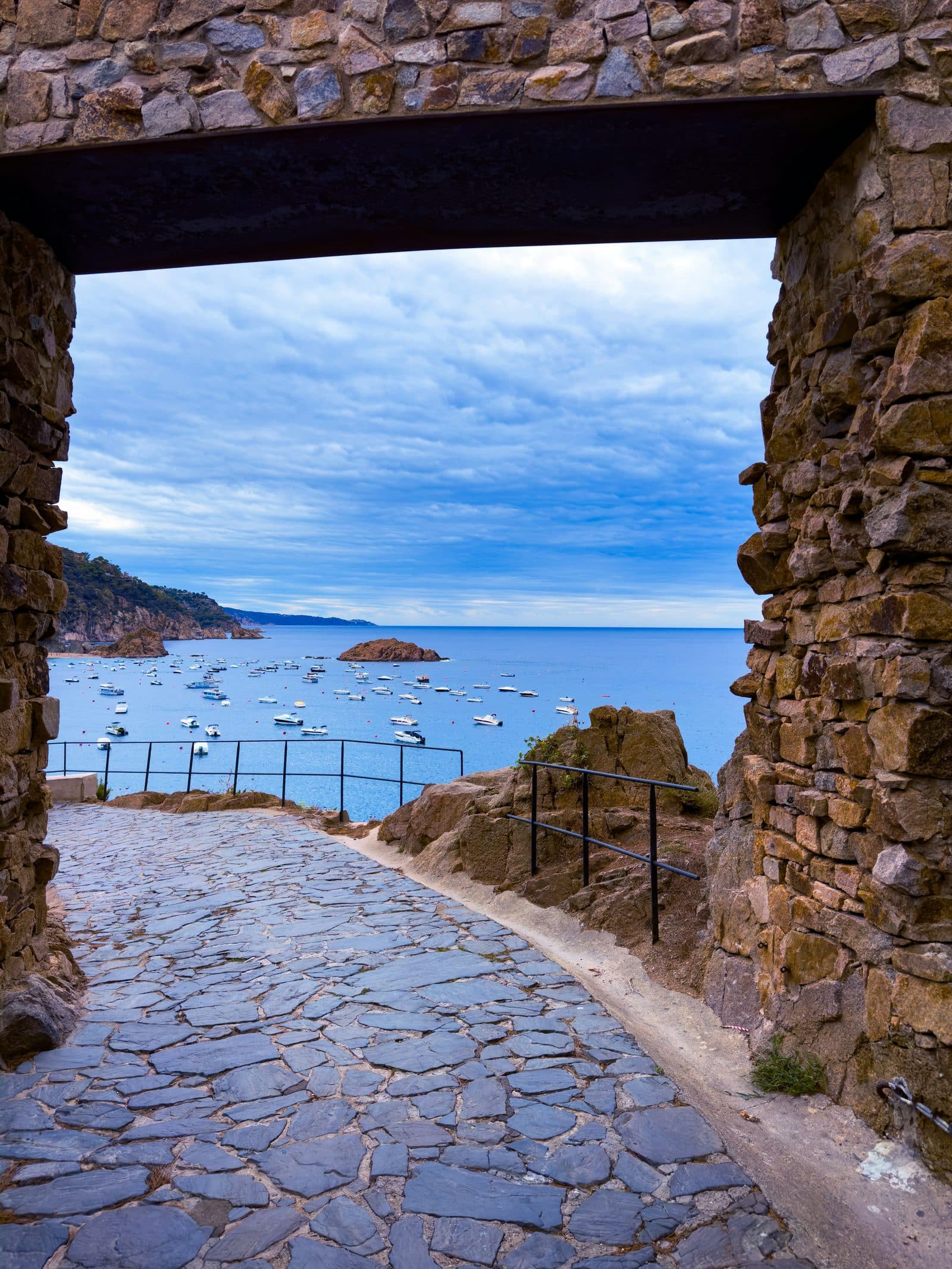
Tossa de Mar's bay with boats at anchor, seen through a stone gateway in the Vila Vella

La Selva

Tossa de Mar

Tossa de Mar is the only town on the whole Catalan coast that still has its medieval walled quarter fully intact. By day it can look like a monument: cobbled streets, camera shutters, visitors working their way along the towers. But wait for dusk and its real character shows: once the day-trippers leave, the Vila Vella settles back into silence, the walls go back to being simply stone, gulls replace the noise, and the Mediterranean changes color beneath the castle. That's when you understand why Marc Chagall called it his "blue paradise." But Tossa is far more than its walls: behind the postcard survives an old fishing quarter, hidden calas, natural pools among the rocks, and a seafaring tradition still served up at its tables.

The Vila Vella

There's nowhere else quite like it on the Catalan coast. Built between the twelfth and fourteenth centuries, the Vila Vella is the only fortified medieval quarter to have reached us complete. You walk it with no ticket and no opening hours, losing yourself among stone streets, old fishermen's houses, and towers facing the Mediterranean.

Our advice is simple: don't climb up at midday. Go at dusk, once most visitors have left and the walls have their calm back.
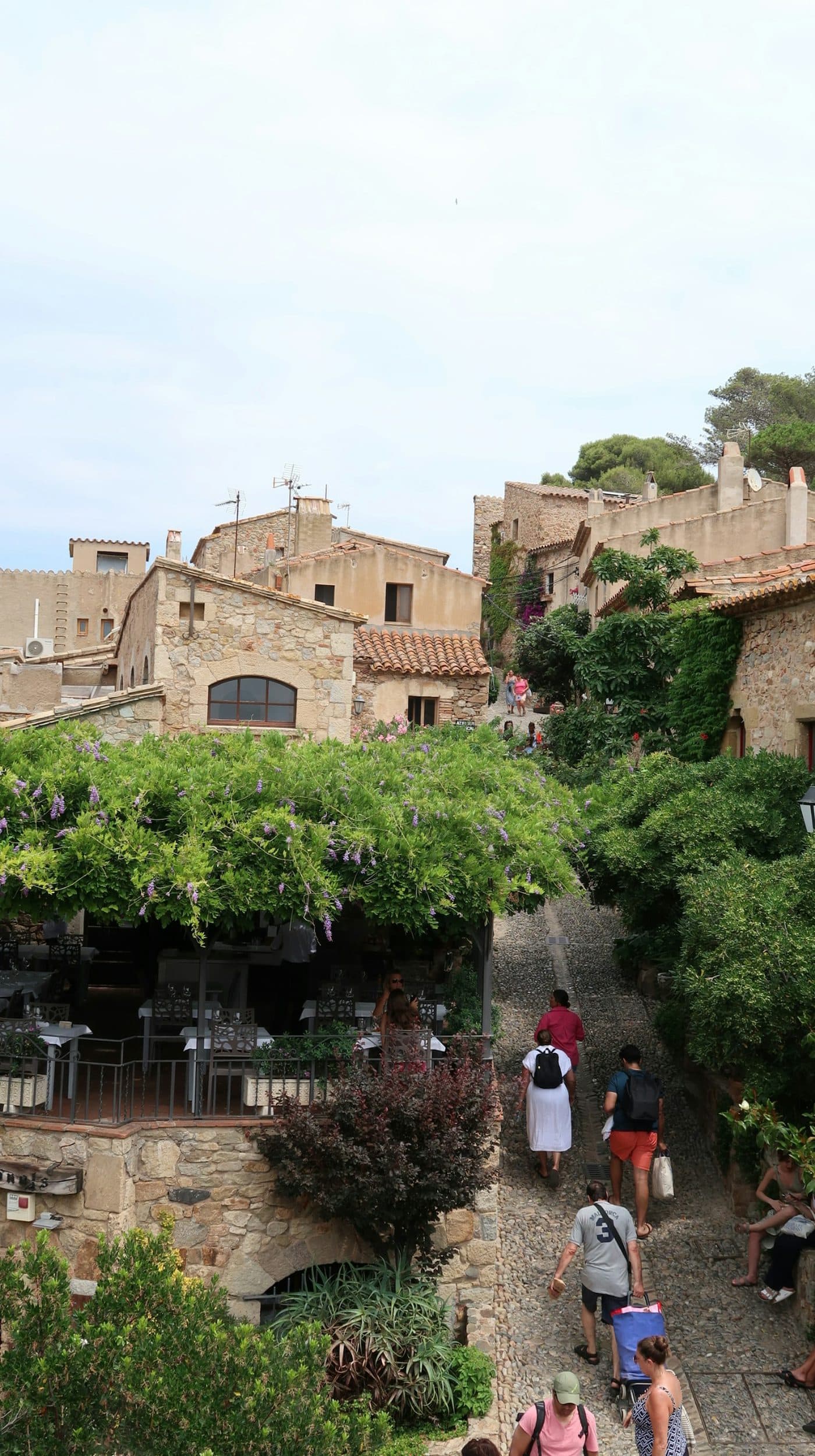
A sloped cobbled street in the Vila Vella of Tossa de Mar, between stone houses and a terrace draped in wisteria
The cobbled streets of the Vila Vella.

Chagall and the "blue paradise"

In 1933, Marc Chagall arrived in Tossa looking for quiet to paint in. He found much more: he was so taken with the town that he called it his "blue paradise," a phrase still tied to Tossa today.

Before leaving, he donated his work The Celestial Violinist to the municipal museum, making it the first museum in Spain to exhibit international contemporary art.

Ava Gardner and Hollywood

Long before the Costa Brava became an international destination, Hollywood had already discovered Tossa. In 1951, Ava Gardner arrived to film Pandora and the Flying Dutchman.

That film carried the town's name around the world, and a statue of the actress, standing beside the path to the lighthouse, still marks the moment today.

The lighthouse

At the highest point of the Vila Vella stands Tossa's lighthouse. The climb takes only a few minutes and rewards you with one of the loveliest panoramas on the Costa Brava: the walls, the Platja Gran, and the Mediterranean stretching out in both directions.
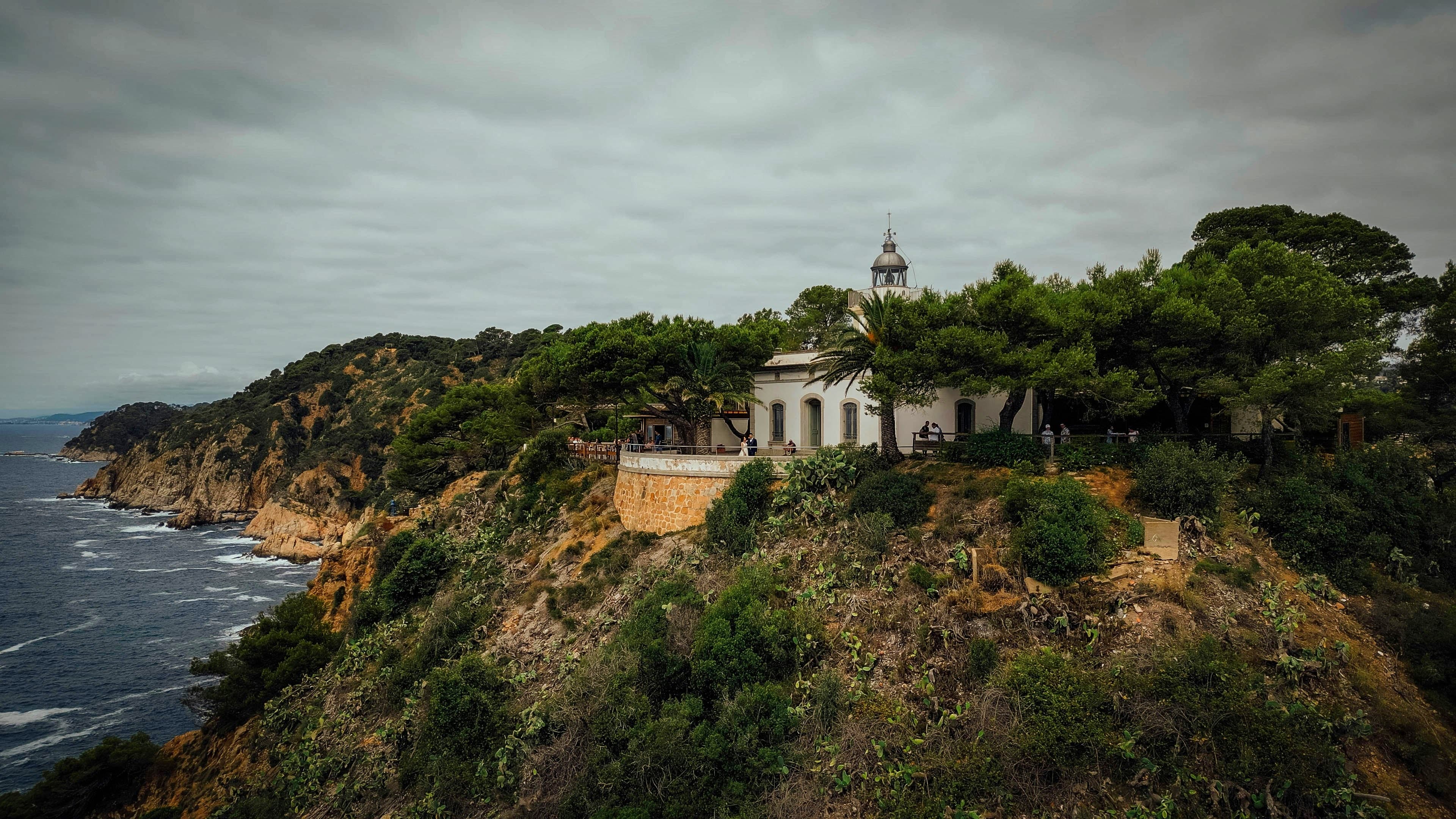
Tossa de Mar's lighthouse on the wooded headland, among pines and cliffs, under an overcast sky
The lighthouse, at the top of the headland, above the sea.

The best beaches and calas

These are Tossa's two town beaches. The Platja Gran offers the classic image of the wall beside the sea, while the Mar Menuda, on the other side of the headland, tends to be quieter and is one of the best spots in town for snorkeling.

A few kilometers from the center lie Cala Giverola and Cala Pola, two of the prettiest calas on the Costa Brava. Ringed by pine woods and cliffs, both keep clear water and a landscape far wilder than the town center's.
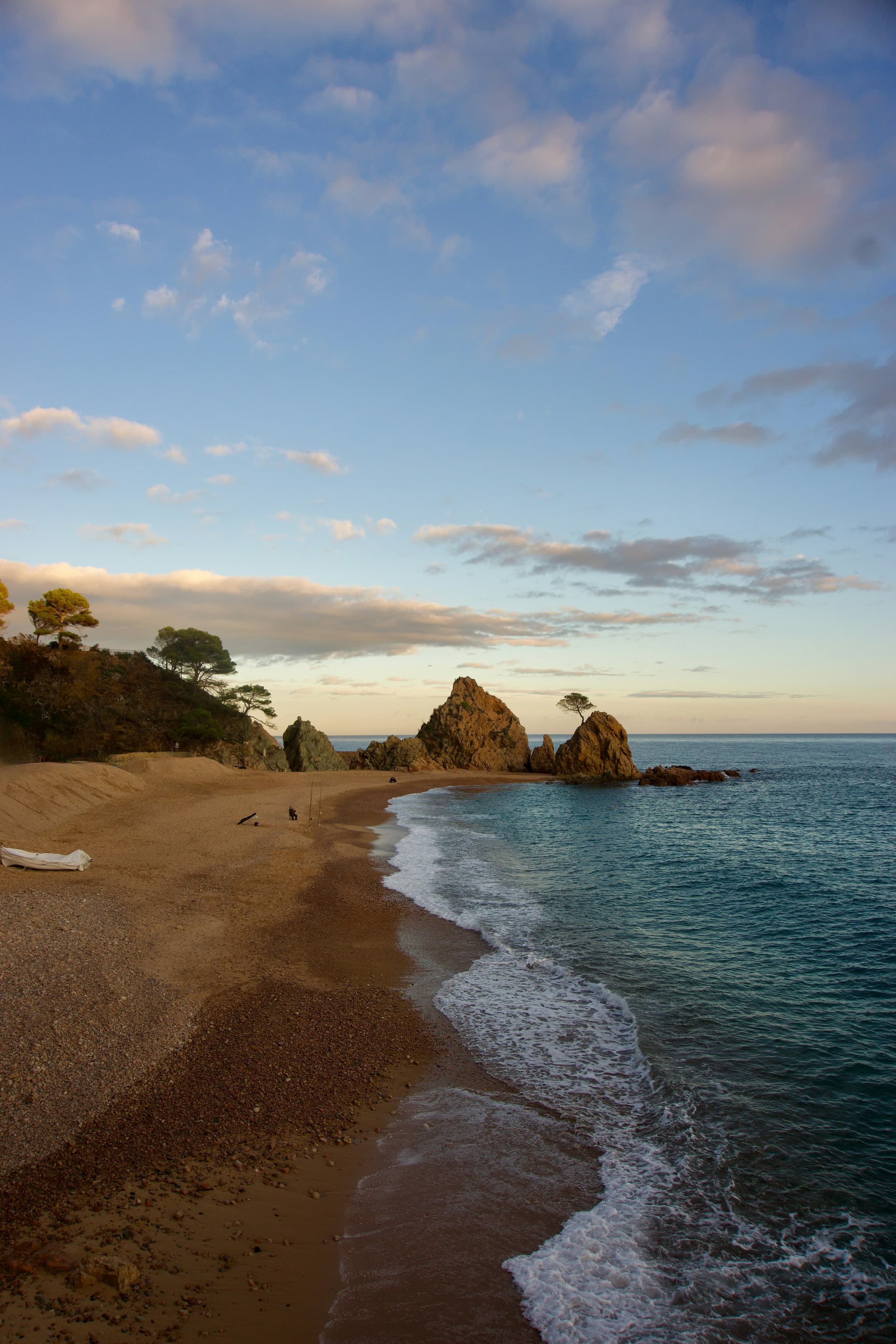
A beach in Tossa de Mar at dusk, jagged rocks and a lone pine silhouetted against the sea
Tossa's calas, as the afternoon falls.

Corners that rarely make the guidebooks

Most visitors walk straight through the gate of the Vila Vella. But just beneath the walls lies Sa Roqueta, the old fishing quarter: narrow streets, whitewashed façades, stone stairways and a far quieter pace make this one of Tossa's most charming corners.

At one end of the Mar Menuda hides the Banyera de ses Dones, a small natural pool sheltered by the rocks. Tradition has it that the town's women once bathed here while the men used the Platja Gran. Today it's still one of the best places to snorkel, thanks to the clarity of the water and the abundance of fish.

Everyone photographs Es Codolar from the walls. Very few come down before nine in the morning: while the town still sleeps and the sun begins to light up the stones of the Vila Vella, this small beach shows probably the most authentic image of Tossa.

More than just a dish, the Cim i Tomba is part of the town's identity. This stew of rockfish, potatoes and allioli was born on the fishermen's boats and is still Tossa's most representative recipe. If you visit, it's worth trying at least once.
The Tossa de Mar notebook

Where we go

Tossa gathers some of the best tables on the Costa Brava. From gastronomic restaurants to seafaring taverns, they all share the same philosophy: local produce, fresh fish, Mediterranean cooking. Here's the short list.

Approximate positions · Tossa de Mar · Cartography © OpenStreetMap contributors, tiles by OpenFreeMap

Tap a pin or a place in the list to zoom in

Where to eat

  • The town's great gastronomic reference. Set in an old fisherman's house inside the Vila Vella, it offers chef-driven cooking deeply tied to the Mediterranean.

  • One of Tossa's more elegant offerings. Contemporary Mediterranean cooking built on seasonal produce, with excellent handling of fish and shellfish.

  • A classic beside the walls. Well known for its rice dishes, fish and traditional recipes, in one of the prettiest spots in the historic quarter.

  • A safe bet for fresh fish and Mediterranean cooking a few meters from the beach. A restaurant with real history behind it.

  • A more contemporary offering for sharing tapas, local produce and creative cooking in a relaxed setting.

  • Another of the town's old-timers. Fish, shellfish and rice dishes built on produce from the Costa Brava's own lonjas.

  • El Cim i Tomba

    It's not a restaurant, it's the dish: a stew of rockfish, potatoes and allioli, born on the fishermen's boats. Ask for it at the town's seafaring taverns.

    No fixed pin

Coves & swimming

  • Between cliffs and pines, with the campsite behind it. One of the prettiest in the municipality.

  • About 5 km from the center, tucked between cliffs. Worth the trip.

  • In the town itself, on the other side of the headland: the old standby for a quick swim, and one of the best for snorkeling.

  • A small natural pool at one end of the Mar Menuda. Crystal-clear water and plenty of fish: one of the best corners for snorkeling.

  • The beach everyone photographs from the walls. Come down before nine in the morning to see it for real, with nobody around.

What to do

  • The only fully preserved medieval walled quarter on the Catalan coast. Go up once it empties out, not at midday.

  • A short climb to the highest point of the headland, with the best view of the town and the tribute to the actress facing the sea.

  • The first museum in Spain to exhibit foreign contemporary art. Inside, the Chagall the painter donated to the town.

  • Just beneath the walls, the old fishing quarter. Narrow streets and whitewashed façades, at a far quieter pace than the rest of town.

Good to know

Frequently asked questions

What makes the Vila Vella of Tossa de Mar unique?

It's the only fully preserved medieval walled quarter left on the entire Catalan coast. Its walls, towers and cobbled streets form one of the best-preserved historic ensembles on the Mediterranean.

Why did Marc Chagall call Tossa the "blue paradise"?

Because he spent a season here in the 1930s and was captivated by the light, the landscape and the town's calm. Before leaving, he donated one of his works to the municipal museum.

Which calas shouldn't I miss?

Beyond the Platja Gran and the Mar Menuda, the ones most worth seeking out are Cala Giverola, Cala Pola and the small Banyera de ses Dones, perfect for snorkeling.

What's the typical dish of Tossa de Mar?

The Cim i Tomba, a traditional stew of rockfish, potatoes and allioli that fishermen once prepared, and which is still the most representative dish of the local cuisine.

Other villages to discover

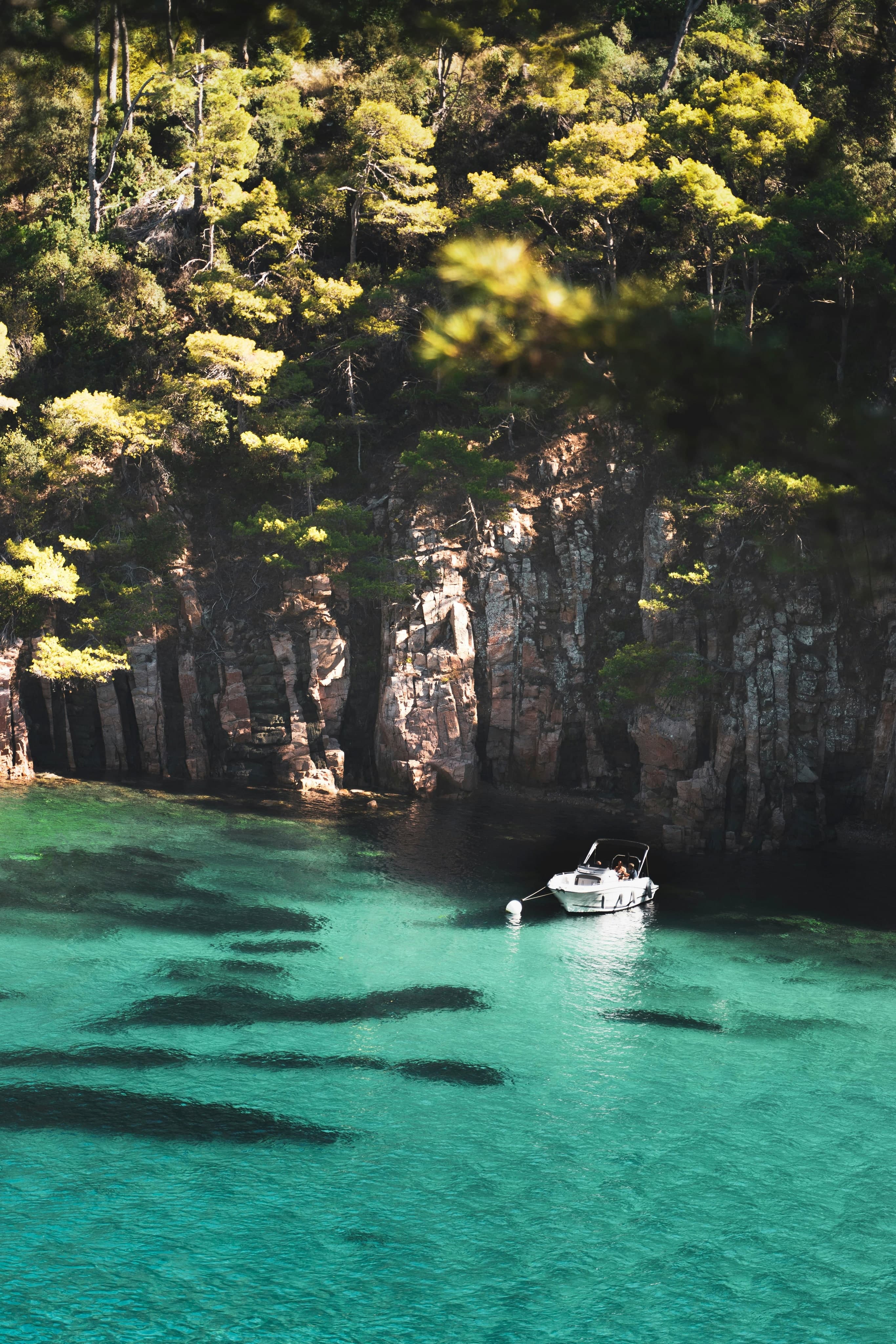
A turquoise-water cala in Begur, between reddish rock cliffs and pines, with a boat at anchor

Baix Empordà

Begur

Begur sits a little inland, and that one fact explains almost everything else. It isn't a town built beside the water but on a hill above it, with the Mediterranean laid out below: while other Costa Brava towns grew up around a harbor, Begur grew up around a castle, and the calas came later. So nobody here asks which is the beach — they ask which cala you're going down to today. Sa Tuna, Sa Riera, Aiguablava, Platja Fonda, Fornells, Aiguafreda, Illa Roja: a string of small bays linked by the Camí de Ronda, the coastal footpath, each with its own temperament. And behind all of them sits an old quarter of Indiano mansions, quiet squares and cobbled streets that remember something easy to forget now — before it became one of the most coveted places on the Costa Brava, Begur looked west toward Cuba more than east toward Barcelona.

The seafront of Cadaqués beside the water, with the white houses and tiled roofs of the old town and the Cap de Creus coastline behind

Alt Empordà

Cadaqués

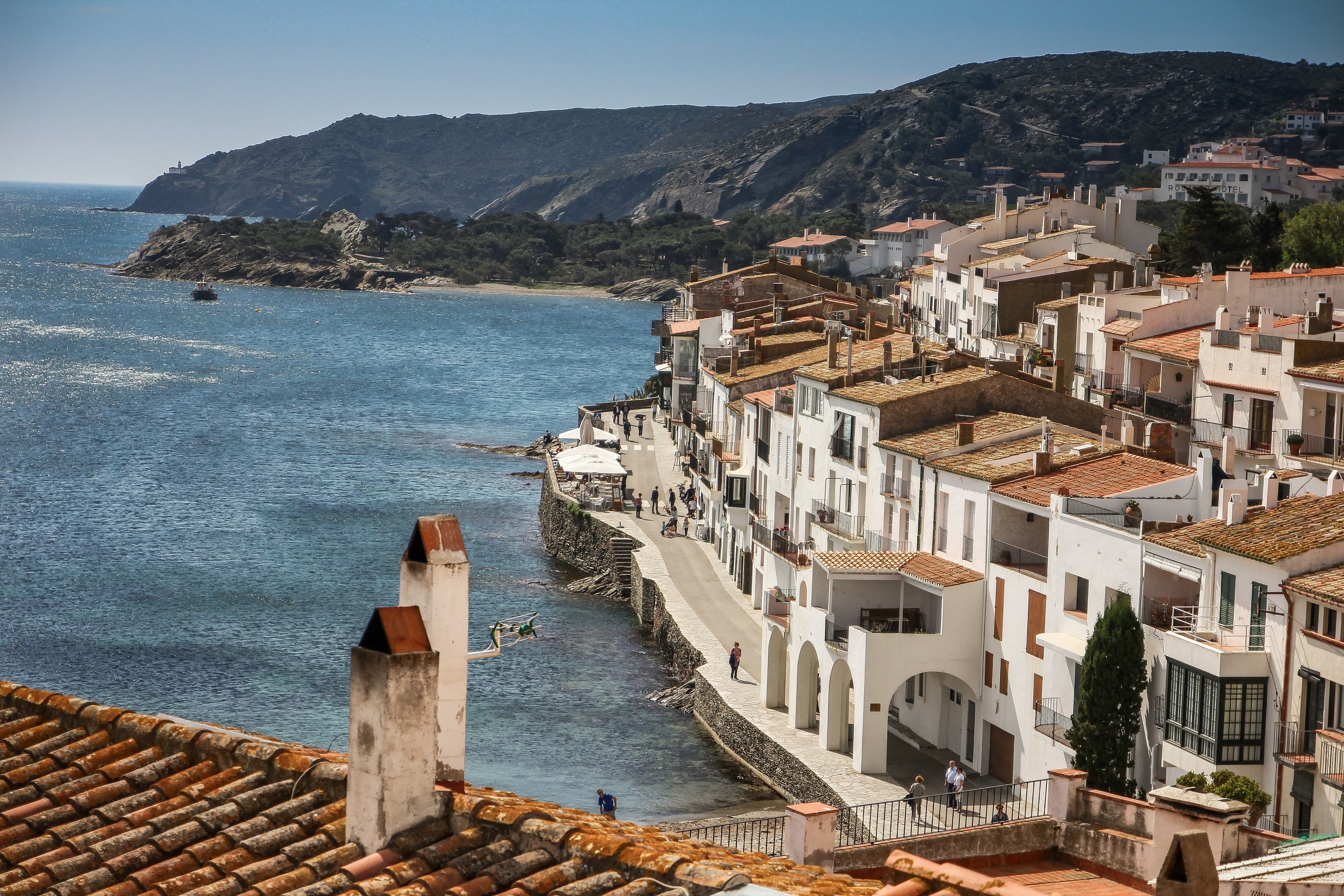
Cadaqués is the most photographed town on the Costa Brava, and the hardest to actually get to know. White houses, green shutters, boats drawn up facing the sea, the light that undid Dalí — it's all over every postcard, and none of it explains why people keep coming back. Maybe it has to do with the winding road that kept the town cut off from the rest of the Empordà for centuries, or with that light, which changes by the hour and makes the place feel like somewhere new each morning, noon and evening. You don't come here for wide sandy beaches or a promenade lined with shops. You come to walk slowly, to lose yourself in slate-paved streets, to watch the sea from the rocks, and to understand why this corner of the coast ended up gathering some of the twentieth century's most important artists.

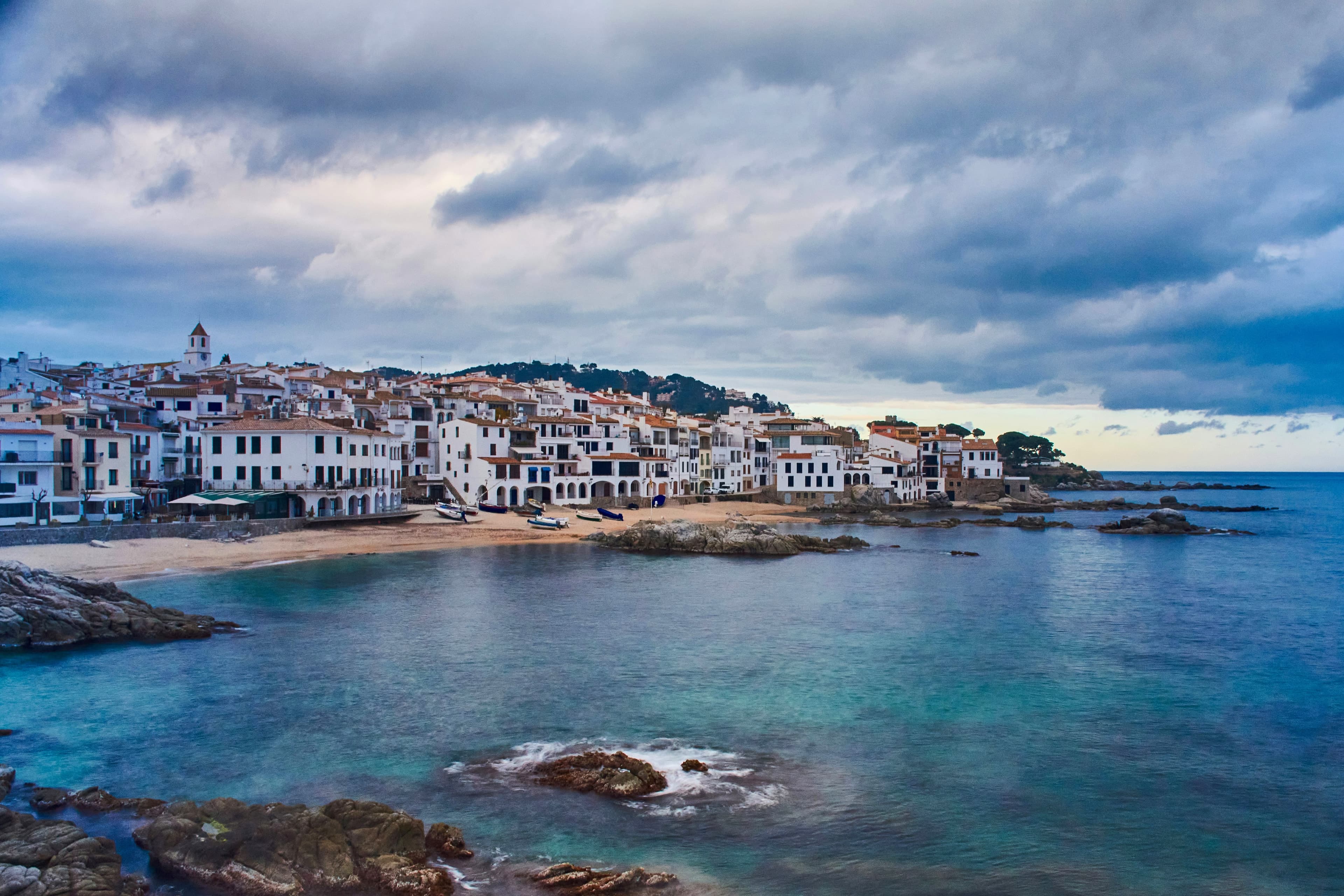
The white town of Calella de Palafrugell and its cala under an overcast sky at dusk, turquoise sea and rocks in the foreground

Baix Empordà

Calella de Palafrugell

Calella de Palafrugell is probably the most recognizable image of the whole Costa Brava. White houses, les Voltes of Port Bo, boats drawn up on the sand, the Mediterranean woven into the town's daily life — it turns up in thousands of photographs every summer. And yet that postcard only tells part of the story: the real Calella shows itself once you step a few meters off the main promenade, walk the Camí de Ronda without hurrying, or come back at dusk, when the terraces start to empty and the town settles back into the unhurried pace it always kept. Because before it became one of the great icons of the Mediterranean, Calella was — and still is — a fishing village.