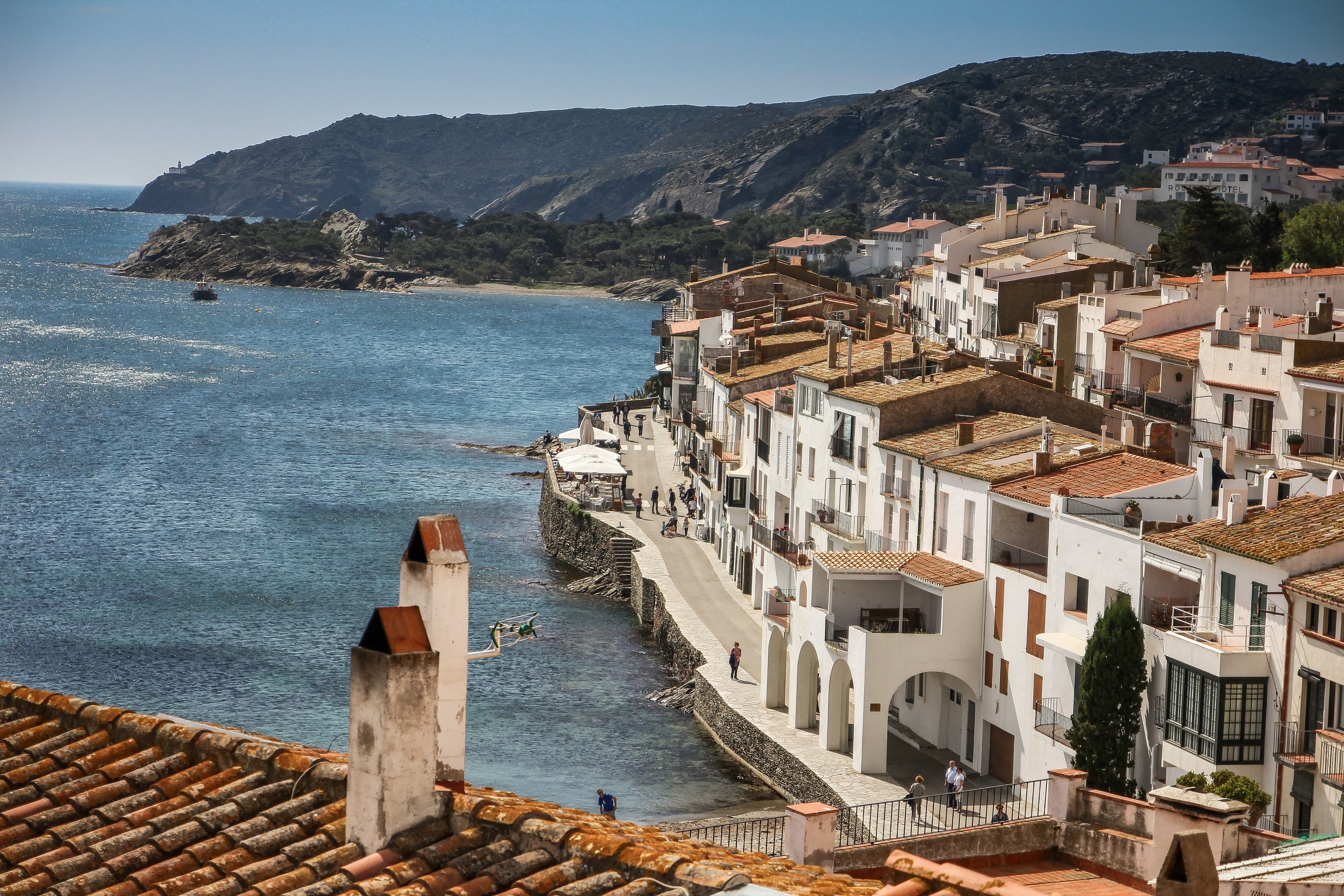
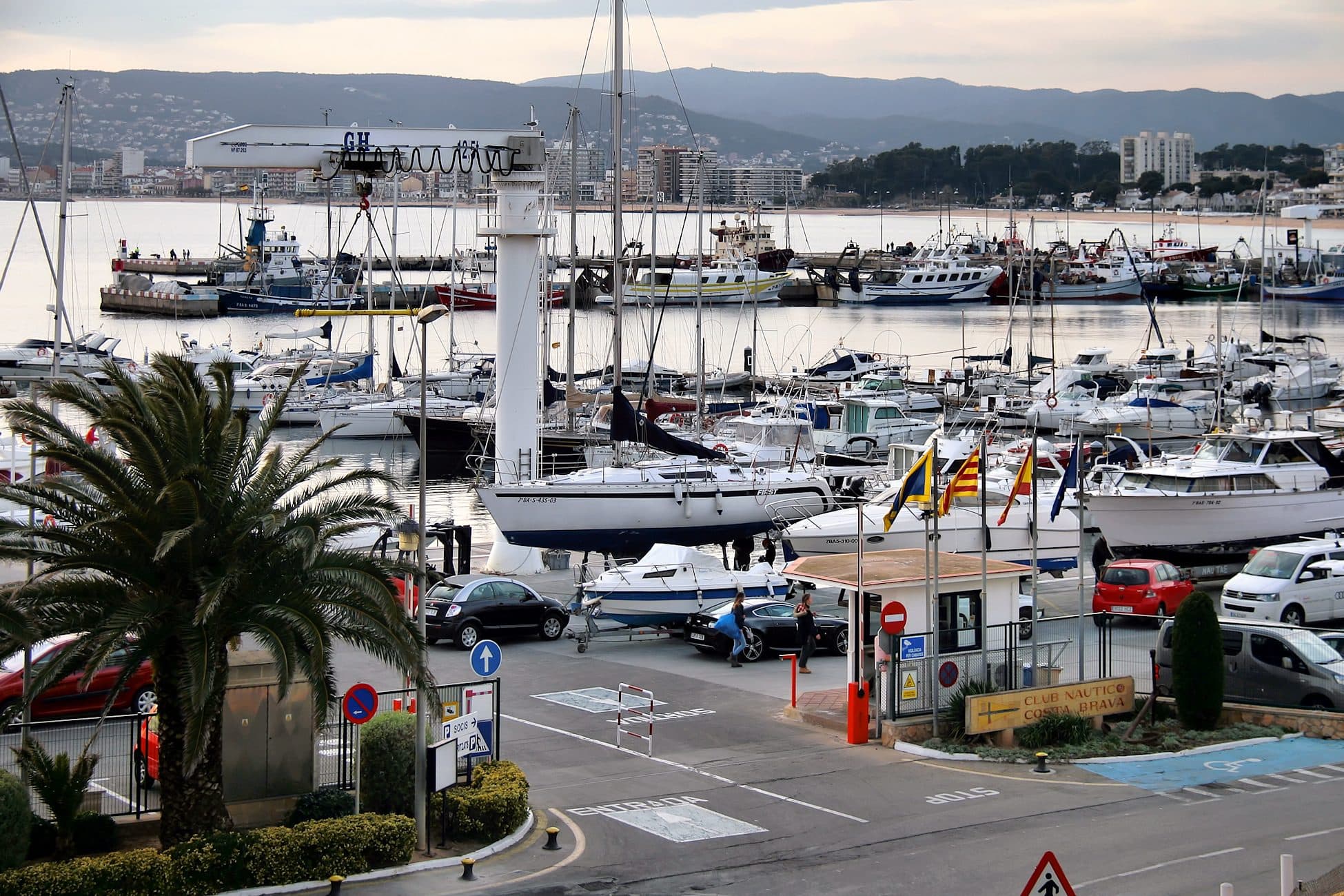
Some towns live facing the sea. Palamós still lives off it. While most of the Costa Brava turned its harbors into leisure marinas, here the boats still come back every evening loaded with fish, the auction house still opens for business, and the restaurants still wait on the day's catch: the harbor keeps setting the town's rhythm the way it has for centuries. But walk a few minutes north and you find another Costa Brava entirely, where the landscape changes at once: the fishermen's huts of Cala S'Alguer, the untouched sands of Castell beach, pine woods running down to the water, a coastline that has somehow stayed clear of development. Palamós holds together two sides that rarely coexist in one place — the authenticity of a working fishing harbor, and some of the best-preserved calas on the Mediterranean.
The harbor and the fish auction
The best hour to understand Palamós is mid-afternoon. Trawlers come back into the harbor one after another as the unloading begins. What looks, to most visitors, like a spectacle is above all a working day: within minutes the crates move from the boats to the lonja, the auction house, where buyers and restaurateurs bid on the fate of every catch.
Few places on the Mediterranean keep a fishing trade this alive. Here the harbor isn't a backdrop for tourism — it's still the town's economic and cultural heart.
The Museu de la Pesca
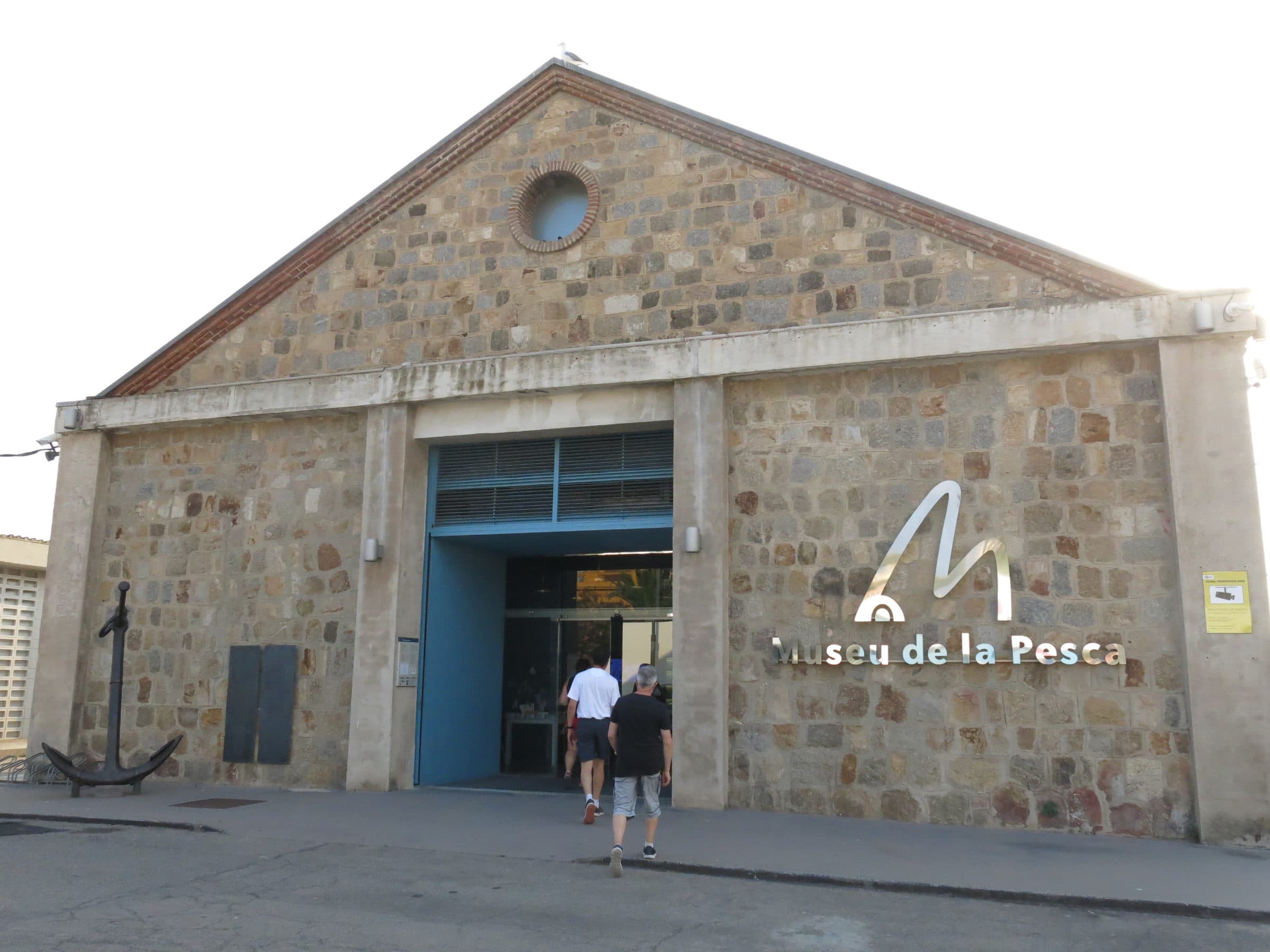
Facing the lonja stands the Museu de la Pesca, the only museum on the Mediterranean devoted entirely to fishing culture. It doesn't stop at displaying boats or traditional gear — it explains how fishing has shaped Palamós's economy, landscape and identity for generations.
The visit makes even more sense paired with the fish auction, which the museum itself organizes through guided tours.
The Palamós prawn
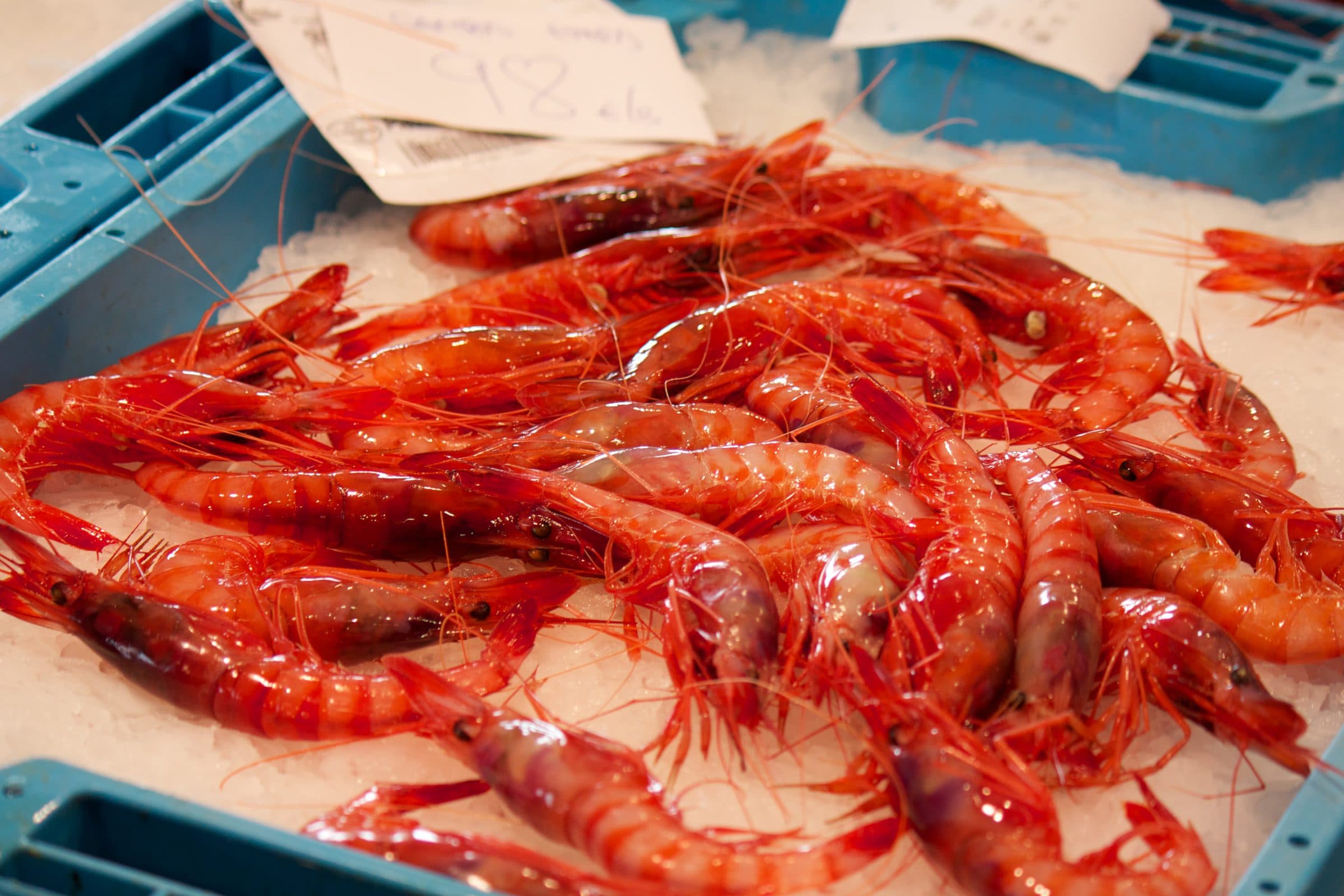
Talking about Palamós means talking about its prawn. Caught in the deep waters off this coast, it stands out for its intense red color, its delicate texture, and a flavor that has made it one of Catalonia's great culinary products.
The best restaurants barely touch it: boiled or grilled, with little more than salt. When the produce is this good, it doesn't need much else.
Cala S'Alguer and Castell beach
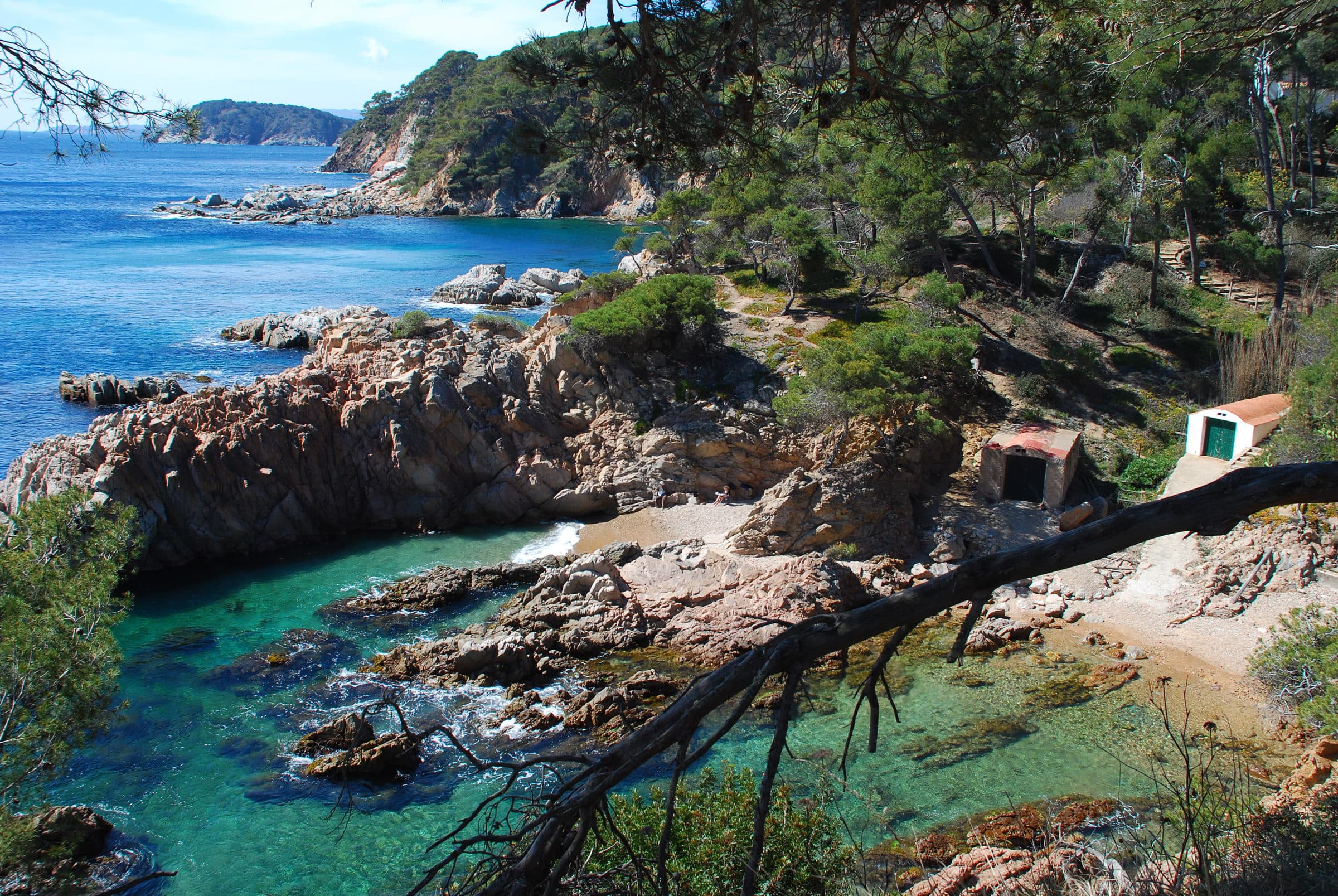
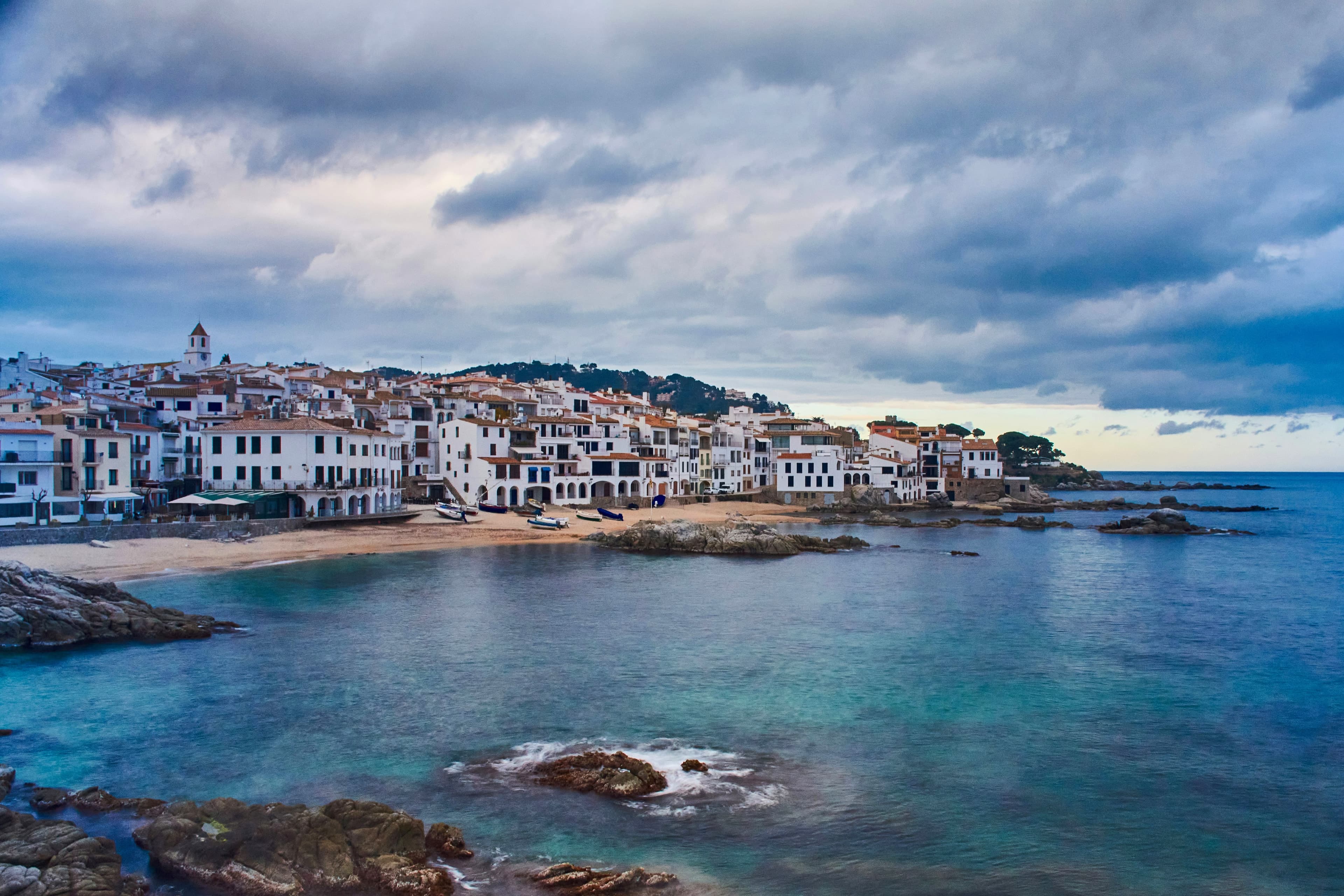
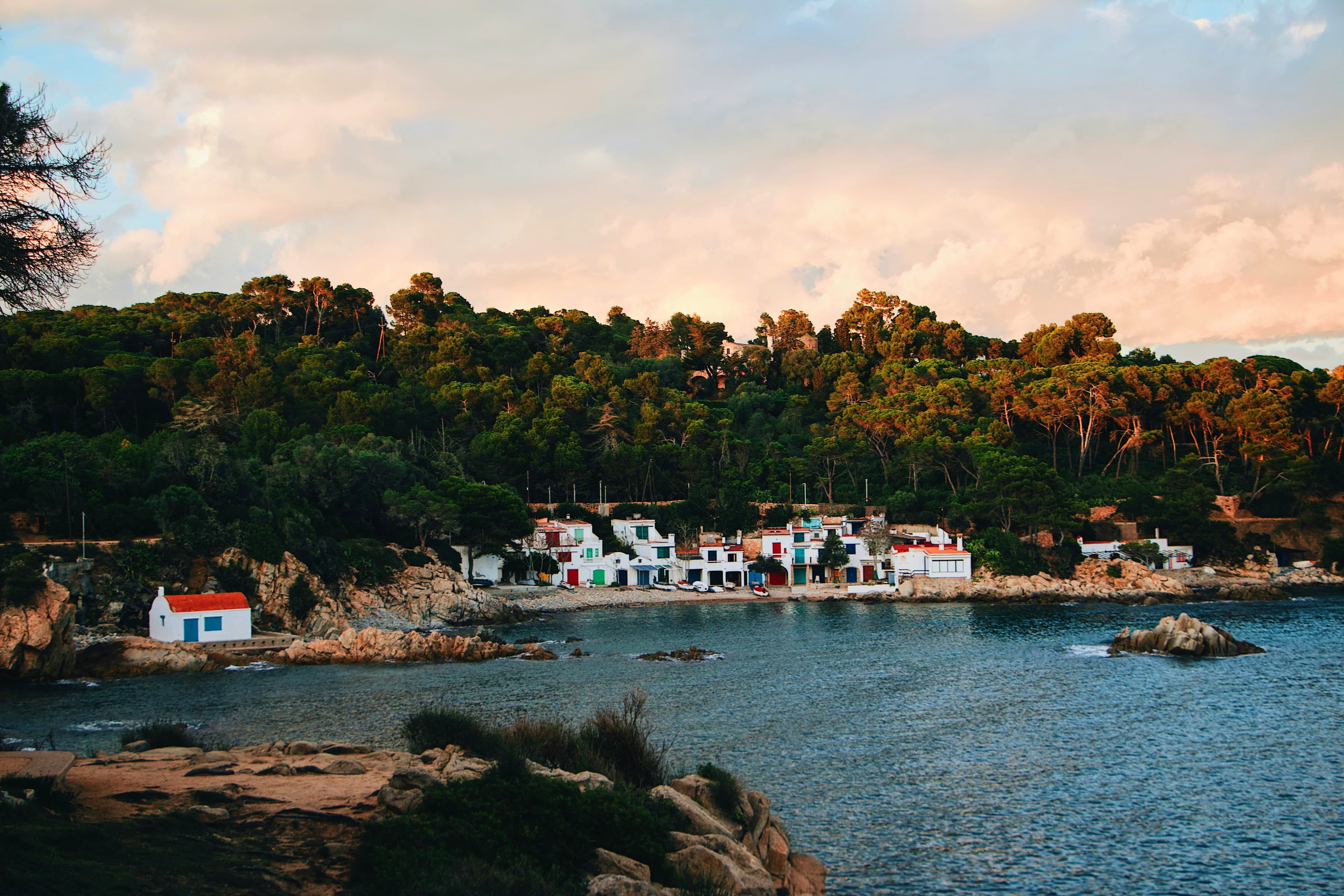
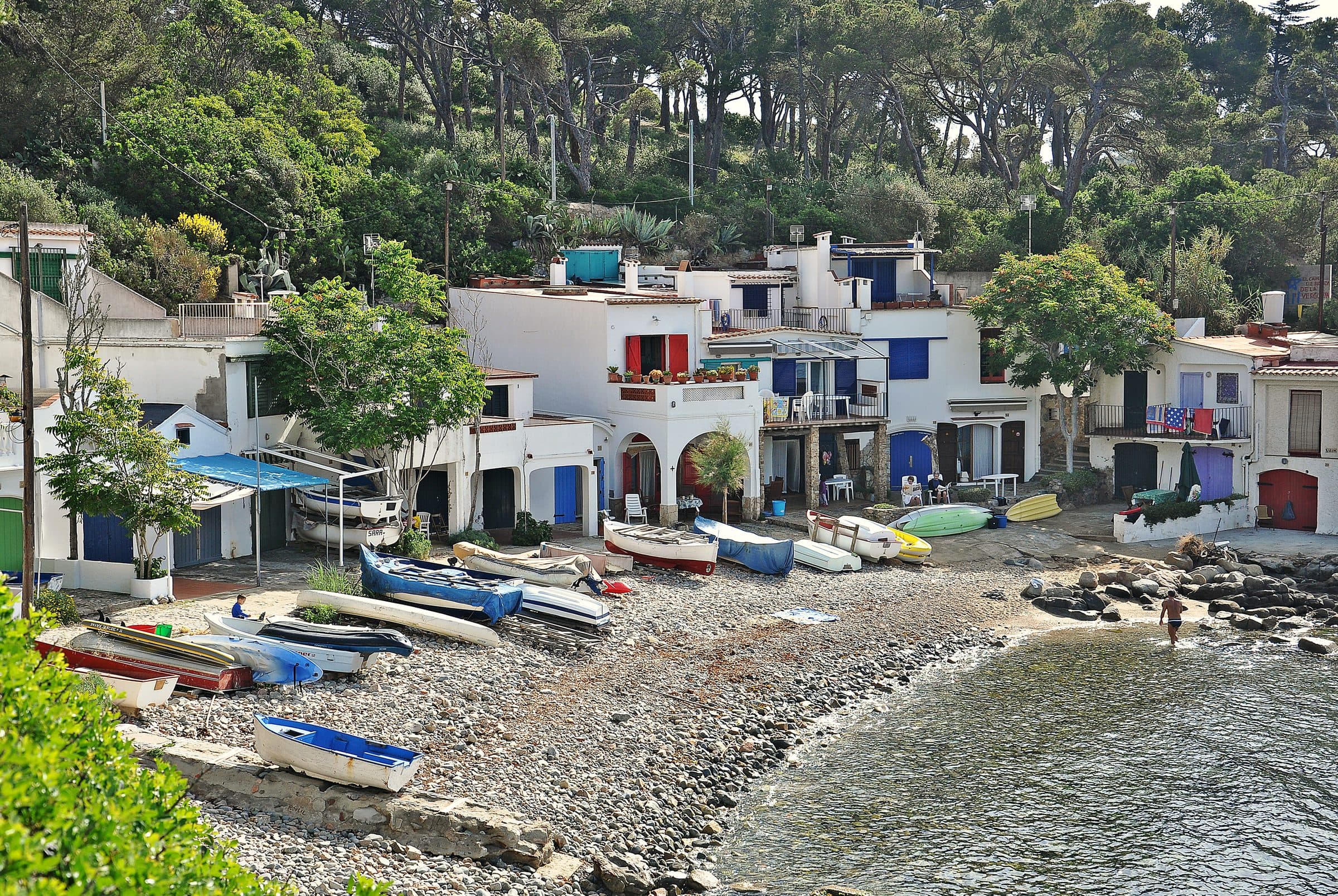
A few minutes' walk from the harbor lies one of the most iconic corners of the Costa Brava. Cala S'Alguer preserves a cluster of fishermen's huts built between the sixteenth and eighteenth centuries, declared a National Cultural Heritage site. White, ochre, and set directly on the rock, they show what this coastline looked like long before tourism arrived.
Castell beach is an exception on the Costa Brava: one of the last great undeveloped beaches on the Catalan coast, saved by citizen mobilization against several development projects over the years. Ringed by Mediterranean woodland and with no buildings on the seafront, it remains one of the most intact landscapes on this coast. On the headland overlooking the bay sit the remains of the Iberian settlement of Castell, which kept watch over this stretch of coast more than two thousand years ago.
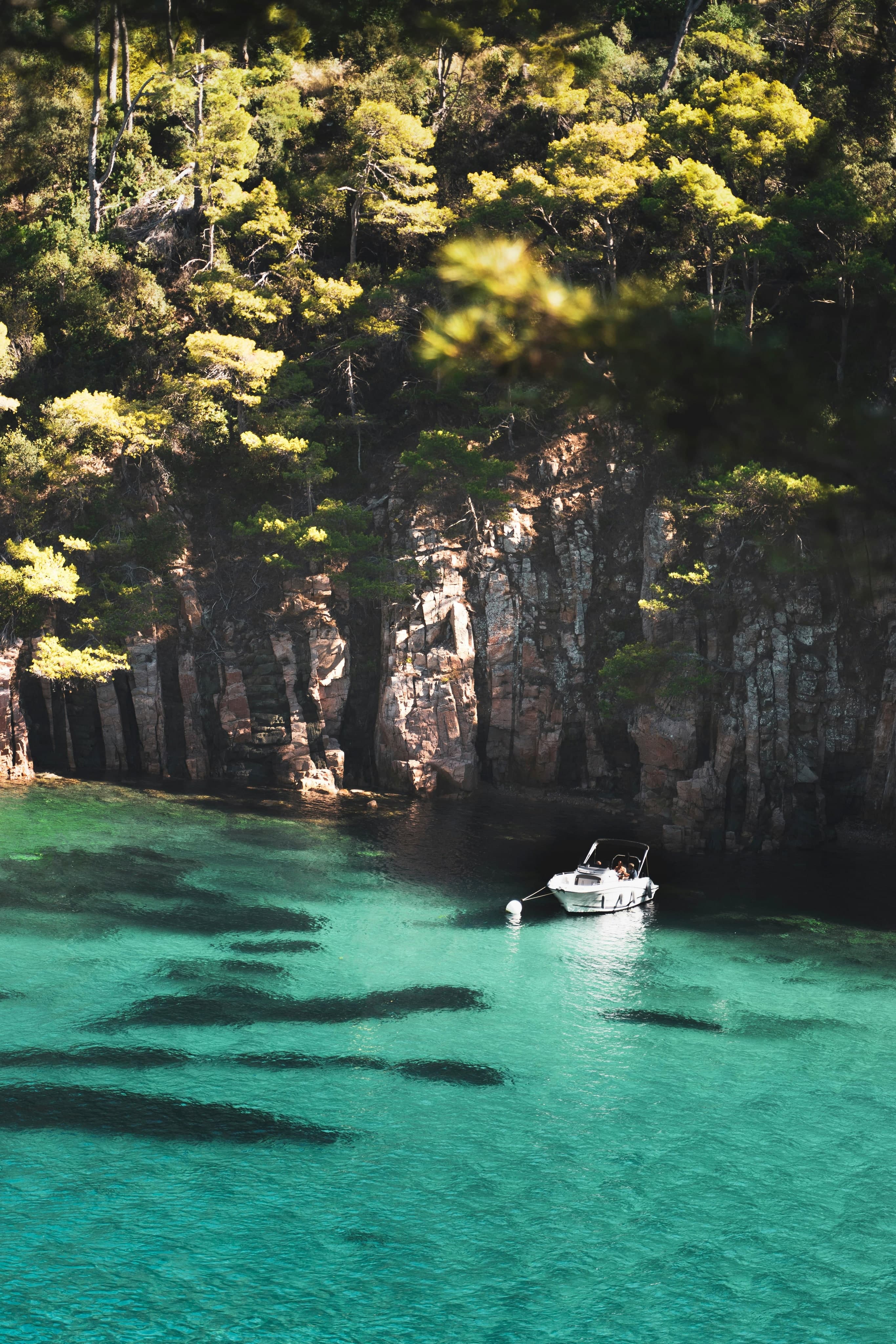
From Castell begins one of the loveliest stretches of the Camí de Ronda: twenty or thirty minutes bring you to Cala Estreta, a completely natural cala ringed by pine and rock, considered by many one of the prettiest beaches on the Costa Brava. More accessible and family-friendly, La Fosca is the perfect beach for a quiet morning; from one end of it starts the path up to Sant Esteve de Mar castle and the Pineda d'en Gori.
Corners that rarely make the guidebooks
Before reaching Cala S'Alguer, it's worth stopping a few minutes at the Pineda d'en Gori. It's not quite a beach and not quite a lookout — it's a pine wood suspended over the Mediterranean, with views of the Illes Formigues, Cala S'Alguer and much of the coastline. It's the kind of place where locals simply come to sit under the pines when they need to switch off.
Very few visitors make it to the Cap Gros lookout. From this headland you get one of the best panoramas of the whole bay of Palamós — the harbor, La Fosca, and much of the Camí de Ronda. At sunset, as the sun drops over the Mediterranean, it's probably the best lookout in the whole municipality.
Barely ten minutes from the harbor lies Cala Margarida. More than a beach, it's an old fishing quarter that still keeps its traditional huts by the water and an atmosphere far calmer than the seafront promenade. It isn't the best cala for swimming — it's the one for a slow walk and a more everyday side of Palamós.
Most visitors never make it to Sant Joan de Palamós, an independent municipality in its own right until the mid-twentieth century. Walking its streets shows a quieter, more local side of Palamós, away from the harbor's bustle.
Everyone recommends watching the boats come back in the afternoon. We'd suggest the opposite: get up early and head to the harbor or the lighthouse before sunrise. Watching the fishing fleet leave while the town still sleeps is one of those moments that rarely make the guidebooks, but sums up the essence of Palamós better than anything else.