In this article▾
- Cala Estreta (Palamós): the luxury of no hurry
- Platja Fonda (Begur): a dark, quiet cala beneath the cliffs
- Cala Taballera (Cadaqués / Cap de Creus): the reward after the walk
- Cala Sa Cova (Platja d'Aro): an intimate hideaway near the bustle
- Cala S'Alguer (Palamós): a living postcard of the seafaring Costa Brava
- Cala Aiguablava (Begur): the Costa Brava's "Caribbean"
- Cala de Rosamar (Santa Cristina d'Aro): bends in the road, pines, family calas
- The Costa Brava, a paradise made for exploring on foot, unhurried
The Costa Brava is, without question, one of the most striking coastlines in the Mediterranean. Across its roughly 214 km — from Blanes to Portbou — unfolds a landscape of steep, pine-covered cliffs, fishing towns full of character, and calas that have kept an air almost untouched by time. Along this coast of contrasts, where rock meets the blue of the sea, every beach has its own identity: some are easy and comfortable, ideal for a family day out, while others ask a little effort to reach — effort that's more than repaid by views you won't forget. Below, a selection of Costa Brava beaches that bring together natural beauty, stillness, history and that particular Mediterranean charm.
Cala Estreta (Palamós): the luxury of no hurry
Cala Estreta is the definition of a wild Costa Brava cala. There's no parking at the water's edge — you leave the car at Platja de Castell and follow the Camí de Ronda for about 20–25 minutes, between pines, rocks and the sea the whole way. That small effort keeps the mood here quiet even at the height of summer, worlds away from the more built-up beaches nearby.
The cala is narrow, as its name suggests, with sand mixed with rock and water so clear that pleasure boats often choose it to drop anchor. No beach bars, no showers, no facilities: this is a place to listen to the waves, snorkel among the rocks, and forget what time it is. It's also a well-known spot for naturism, and the mood tends to be relaxed and respectful.
Platja Fonda (Begur): a dark, quiet cala beneath the cliffs
Hidden beneath the Fornells development, Platja Fonda is one of the more singular calas in Begur. Seeing it takes some commitment: a long run of stairs leads from the top of the cliff down to a spot wedged between rock walls and pines, where the sea seems to speak in a lower voice.
Instead of golden sand, you'll find a mix of coarse sand and dark gravel, which sets off the deep blue of the water and adds to the place's mysterious, unspoiled feel. There are no beach bars or real facilities, but that's exactly why it remains one of the quietest calas on this stretch of coast. It's ideal for anyone after silence, some shade during part of the day, and a landscape that feels almost staged. Just know your legs will feel those stairs on the way back up.
Cala Taballera (Cadaqués / Cap de Creus): the reward after the walk
Cala Taballera isn't a cala you drop by for a moment; it's a destination in its own right. It sits inside the Cap de Creus Natural Park, and reaching it from Cadaqués or El Port de la Selva means following paths that rise and fall between hills, dry-stone walls and Mediterranean scrub.
When it finally appears, Taballera opens up like a natural amphitheatre: a broad curve of coarse sand and gravel, framed by rough terrain, with a well-sheltered bay where the sea is often surprisingly calm. There's no promenade, no bars, no rows of parasols. Just sea, wind, and sometimes a sailboat anchored offshore. It's a fine cala for hikers and anyone drawn to that end-of-the-world feeling, as long as you respect the setting and bring everything you need: water, some shade, and comfortable shoes.
Cala Sa Cova (Platja d'Aro): an intimate hideaway near the bustle
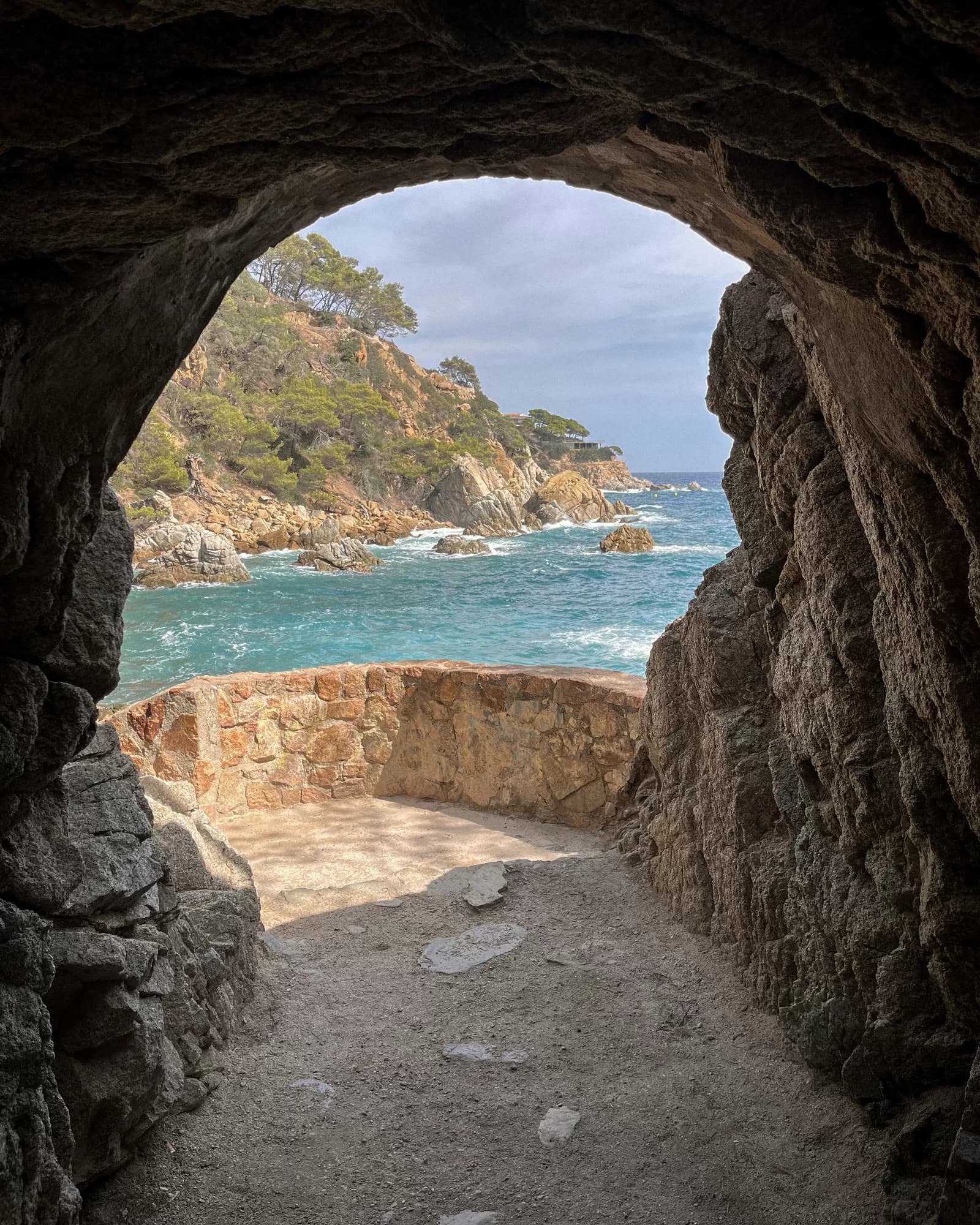
Very close to the lively centre of Platja d'Aro, Cala Sa Cova feels like it belongs to another coast entirely. It's a small cala, some 50–55 metres long, set right beneath a cliff and ringed by pines leaning out over the water. You reach it along the Camí de Ronda from Cala Rovira, and the walk itself is part of the experience, with tunnels cut into the rock connecting neighbouring calas.
The sand is coarse, the seabed drops away gradually, and the water stays clean and clear — good for swimming or snorkelling close to the rocks. There are no real facilities, but there is the feeling of standing in a small natural amphitheatre facing the sea. It fills up fast in high season, so the best plan is an early start, while the cala is still quiet.
Cala S'Alguer (Palamós): a living postcard of the seafaring Costa Brava
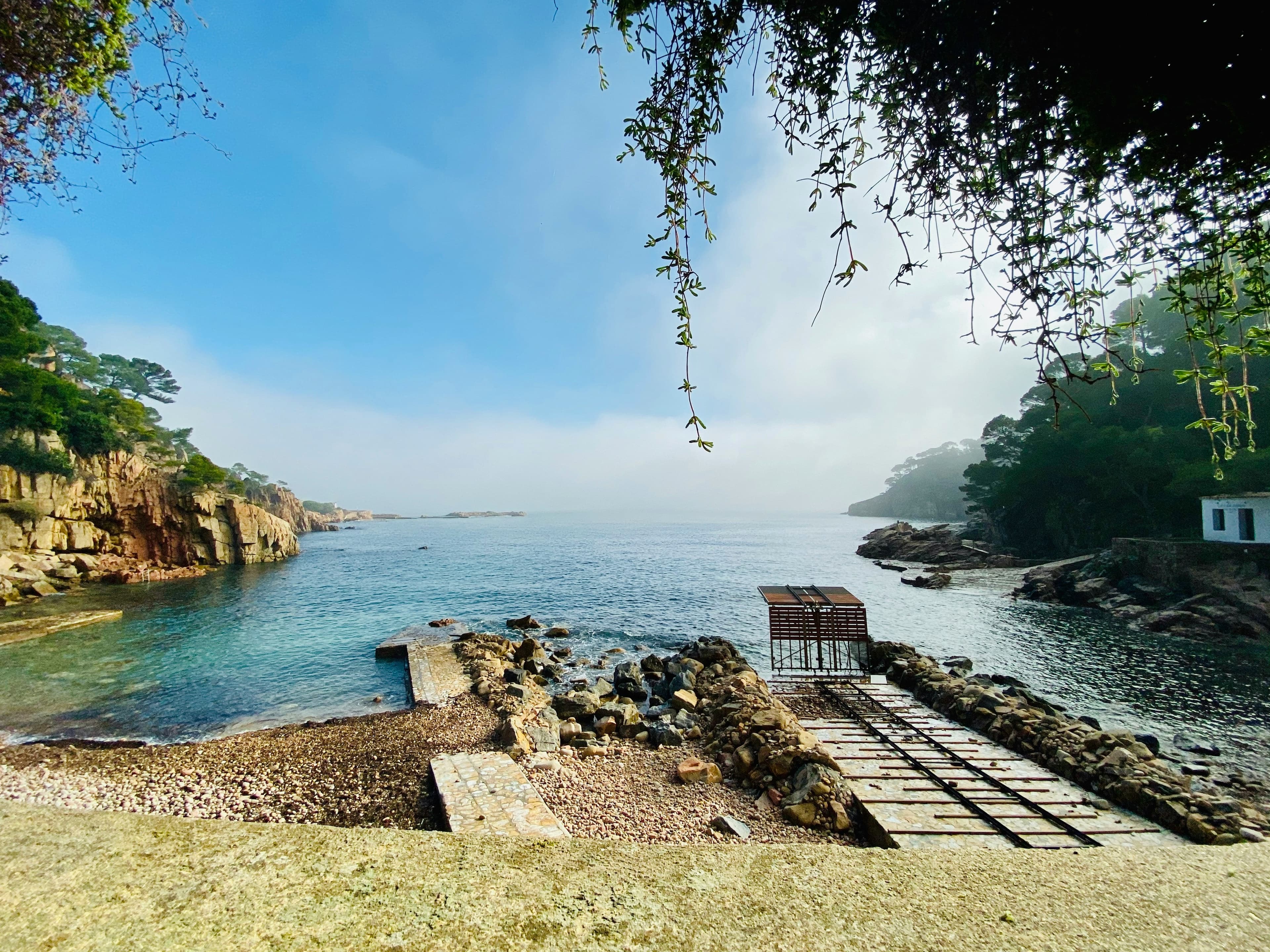
More than an ordinary beach, Cala S'Alguer is a small stage where time seems to have stopped. The shore is stony, the water clear, and lined up in front of it stand whitewashed fishermen's cottages with brightly painted doors, listed as a site of national cultural and landscape interest.
You reach it on foot, usually from Platja de Castell or along the Camí de Ronda, and as you get closer you start to see boats drawn up on the shore, ropes, nets, and details that recall the area's fishing past. It's not the most comfortable cala for lying around for hours, but it's one of the most photogenic and genuine on the whole Costa Brava. Ideal for a long pause, a quick swim and some quiet contemplation: the pines reach almost to the water, and the whole scene looks pulled from an old film.
Cala Aiguablava (Begur): the Costa Brava's "Caribbean"
Aiguablava is probably Begur's most famous cala, and it's no accident. The combination of very fine sand, a wide, short stretch of beach, and water of an intense turquoise creates a landscape that brings to mind some of the calas in the Balearics. Small green hillsides shelter the bay, keeping the sea generally calm and shallow — good for families with children or anyone who feels safer able to touch the bottom.
Unlike the wilder calas, here you'll find plenty of facilities: showers, accessible bathrooms, a beach bar, lifeguards, a diving centre, and even a car park right beside the beach (paid in summer). That also means high season brings real crowds, so it's worth arriving early or visiting outside July and August. Aiguablava works well as a base for a full day out: a swim, some snorkelling, a bit of kayaking, then lunch with a sea view.
Cala de Rosamar (Santa Cristina d'Aro): bends in the road, pines, family calas
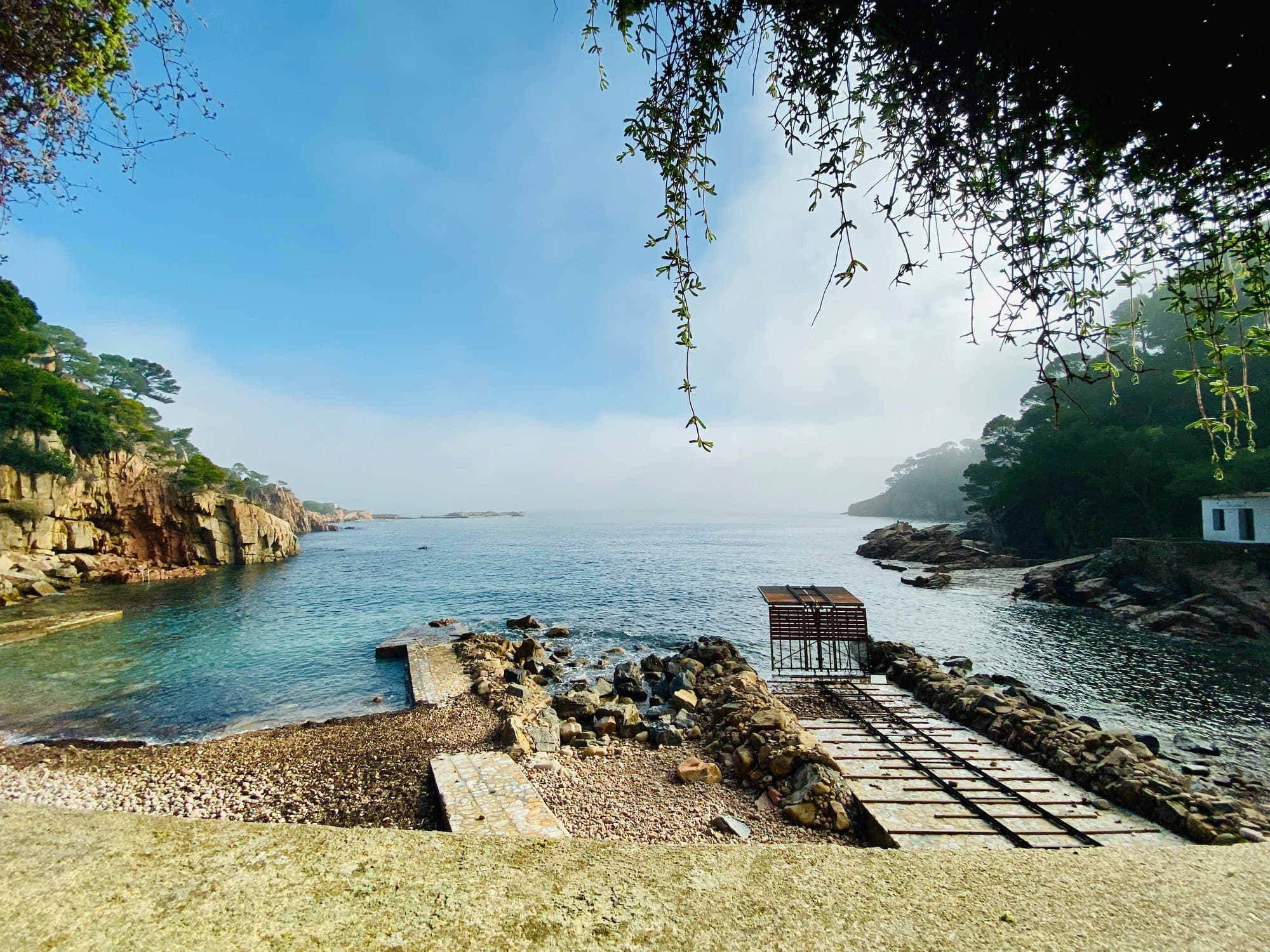
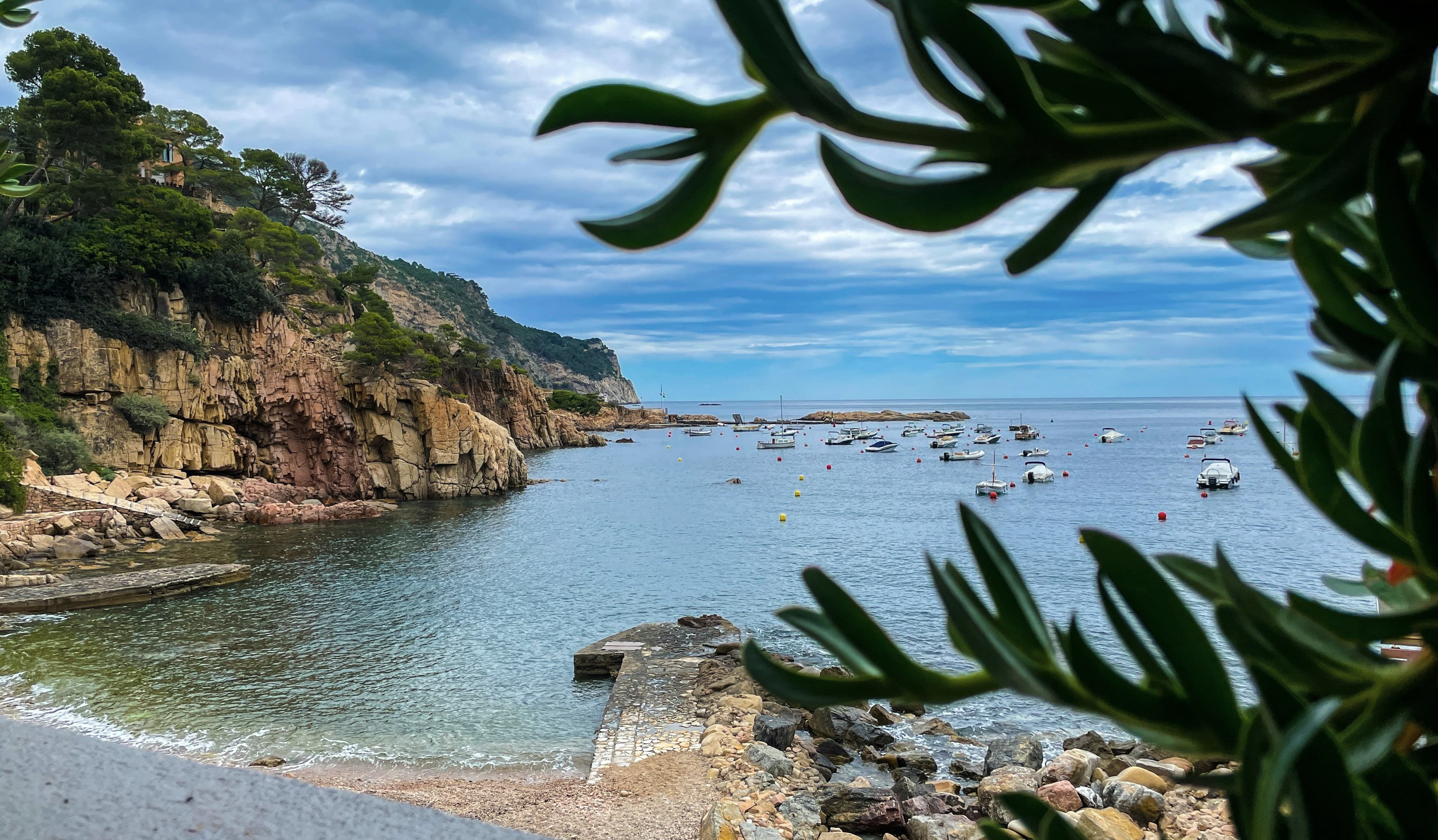
The Rosamar area, between Sant Feliu de Guíxols and Tossa de Mar, is a small world of its own. Getting there means a winding road that hugs the cliff on its way to the development, surrounded by Mediterranean woodland. At the bottom, the reward: a cluster of small, highly photogenic calas, with reddish rock, pines leaning over the water, and that sense of a hidden refuge so typical of this coast.
Along this stretch you'll find beaches like Cala Canyet, known for its stone walkway over the sea, which has become one of the Baix Empordà's quieter "secret" spots. These calas usually have basic facilities in summer and a family mood, without the crowds of the bigger resort towns. Good for a day with children, alternating swims, snorkelling among the rocks, and shade under the pines before heading back along that same winding road.
The Costa Brava, a paradise made for exploring on foot, unhurried
Exploring the beaches and calas of the Costa Brava is more than a summer getaway: it's an invitation to connect with nature, culture and the sea. The path known as the Camí de Ronda runs along much of the coastline and lets you link many of these places on foot, between cliffs, lookouts and pine woods.
Every stretch offers a new perspective: hidden beaches, old watchtowers that once looked out to sea, natural lookouts, and the unmistakable smell of salt air mixed with pine and rock.
Visit the Costa Brava outside high season and you'll find another side of the coast entirely: quiet, luminous, made for taking in the landscape without hurrying. In spring and autumn, the sea still holds a pleasant temperature and the calas take on a soft light that invites you to simply sit and look.
Frequently asked questions
What's the best time to visit the Costa Brava for quiet calas?
High season (July–August) is the busiest, so to avoid the crowds, May, June or September are the better bet. The weather is still good and the sea still swimmable, but with far fewer people around.
How do you get to the less accessible calas, like Cala Estreta or Cala Taballera?
On foot — and that's exactly what keeps them quiet. Cala Estreta is reached by leaving the car at Platja de Castell and following the Camí de Ronda for 20–25 minutes through pines and rock. Cala Taballera asks more: it sits inside the Cap de Creus Natural Park and is reached by trails from Cadaqués or El Port de la Selva. Either way, wear closed shoes and bring water from the start — there's nowhere to buy it once you're down there.
What facilities do these hidden calas have?
Almost none, and it's worth knowing that before you go down. Cala Estreta, Platja Fonda and Cala Taballera have no beach bar, no showers, no lifeguard, no parasol rental. Whatever you bring is what you'll have: water, food, sun protection, and a bag to carry your rubbish back out. In exchange, you get silence — which is exactly what you came looking for.
Are these beaches suitable for families with children?
Some are, some clearly aren't. Cala Aiguablava is the easiest on this list: fine sand, a seabed that deepens gradually, showers, accessible bathrooms, lifeguards and parking nearby. The Rosamar calas, like Cala Canyet, also work well for families. Platja Fonda, on the other hand, means a long flight of stairs down and back up with everything you're carrying, and Cala Estreta has a rocky seabed and no facilities at all.
Do I need to arrive early to find parking?
In July and August, yes. Parking near the calas is limited, and Aiguablava charges for it in summer. The rule that works across the whole Costa Brava is the same everywhere: arrive before ten or after six. Mid-afternoon you'll not only find a spot but also the best light of the day. And if you can choose your dates, May, June or September spare you the problem entirely.
Can you snorkel in these calas?
It's one of the reasons to come. Cala Estreta and Cala Sa Cova have clear water and rocky seabeds right by the shore, which is where the life is. Bring a mask, and water shoes if the seabed is rocky. One request: don't touch the posidonia. Those underwater meadows are what keep the water this clear, and they take centuries to recover once damaged.
What do I do if the cala I want is full?
There's almost always an alternative ten minutes' walk away. The Camí de Ronda links small calas that most people skip because they have no dedicated parking — follow the path a little further and a gap usually opens up. The other option is to change the time instead of the place: the same cala looks entirely different early morning or at sunset. Or see it from the water instead, by kayak or boat.
Can you get around the Costa Brava without a car?
Only partly, and it's worth being honest about that. The larger towns are well connected by bus, but many of the calas on this list have no public transport reaching them — access is on foot, via the Camí de Ronda. The combination that works best is staying in a coastal town and using the footpath the way you'd use a road. For Cap de Creus, though, a car is nearly essential.
Are there rules worth knowing about naturism, pets or drones?
Cala Estreta is a well-known naturist spot, and the mood there tends to be relaxed and respectful. Dogs and drones need more care: each municipality has its own rules, which change between summer and winter, so it's worth checking the relevant town hall's website — Palamós, Begur, Cadaqués — before you go. In protected areas like Cap de Creus, restrictions are stricter still.
What should I bring to a cala with no facilities?
Water — more than you think you'll need — something to eat, sun protection, a hat and a towel. Closed shoes for the walk in, and water shoes if you'll be swimming among rocks. A snorkel mask if you feel like looking down. And a bag for your rubbish: there are no bins at these calas, and whatever you don't carry out stays there.