The Costa Brava keeps changing its mind. Cliffs give way to Mediterranean woods, woods open onto hidden calas, and paths thread between mountain and sea without ever quite deciding which one they belong to. Most people picture it as a beach destination and nothing more — but those who know the coast well know it hides some of the finest walking trails on the Spanish shoreline. Easy paths along the water, wild routes over bare rock, walks between fishermen's cottages, wetlands thick with birdlife. These trails show a different Costa Brava: slower, greener, more itself. And the good news is there's something here for every level of walker. Below, five essential routes that between them capture the territory in all its variety.
The Camí de Ronda in S'Agaró
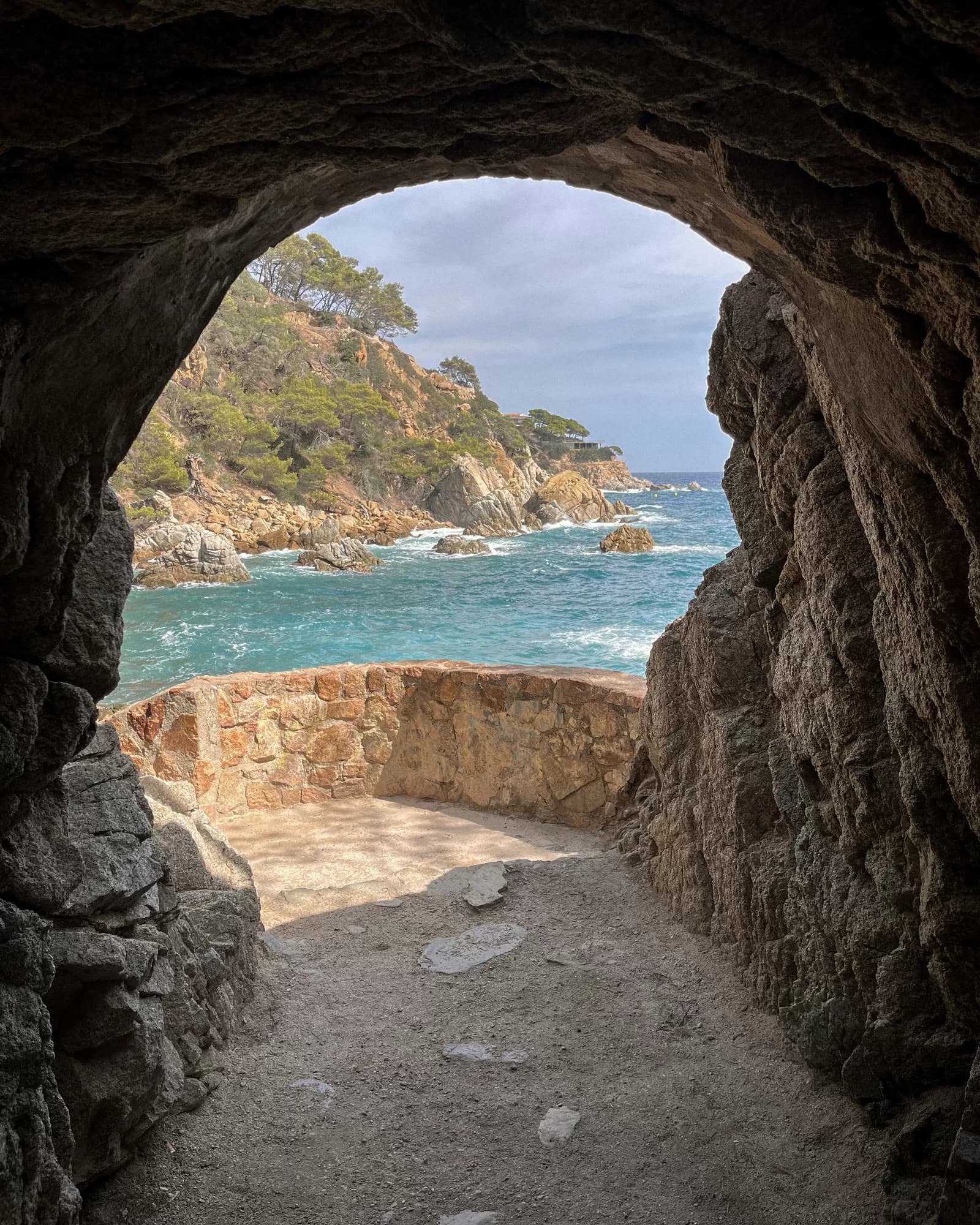
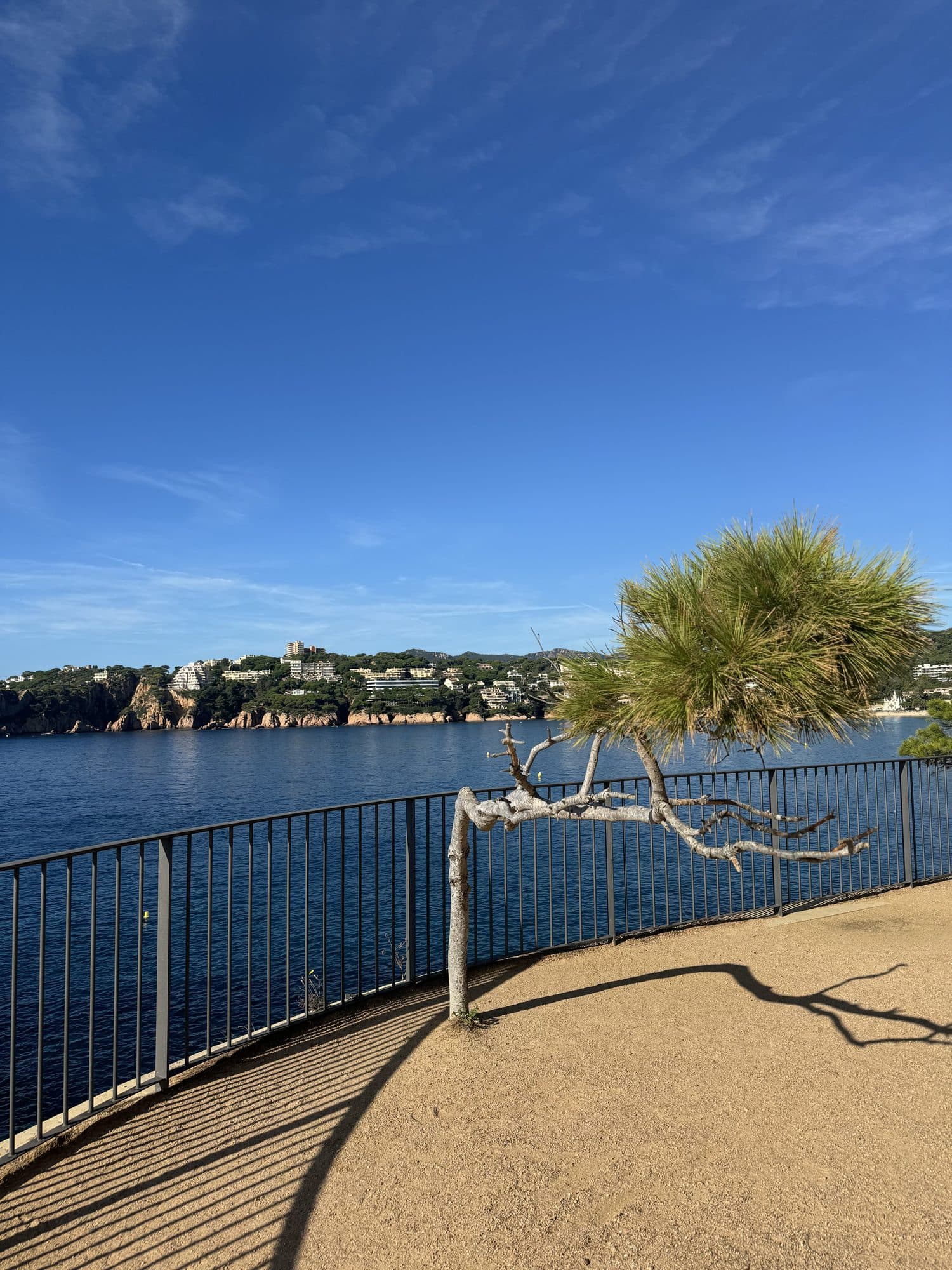
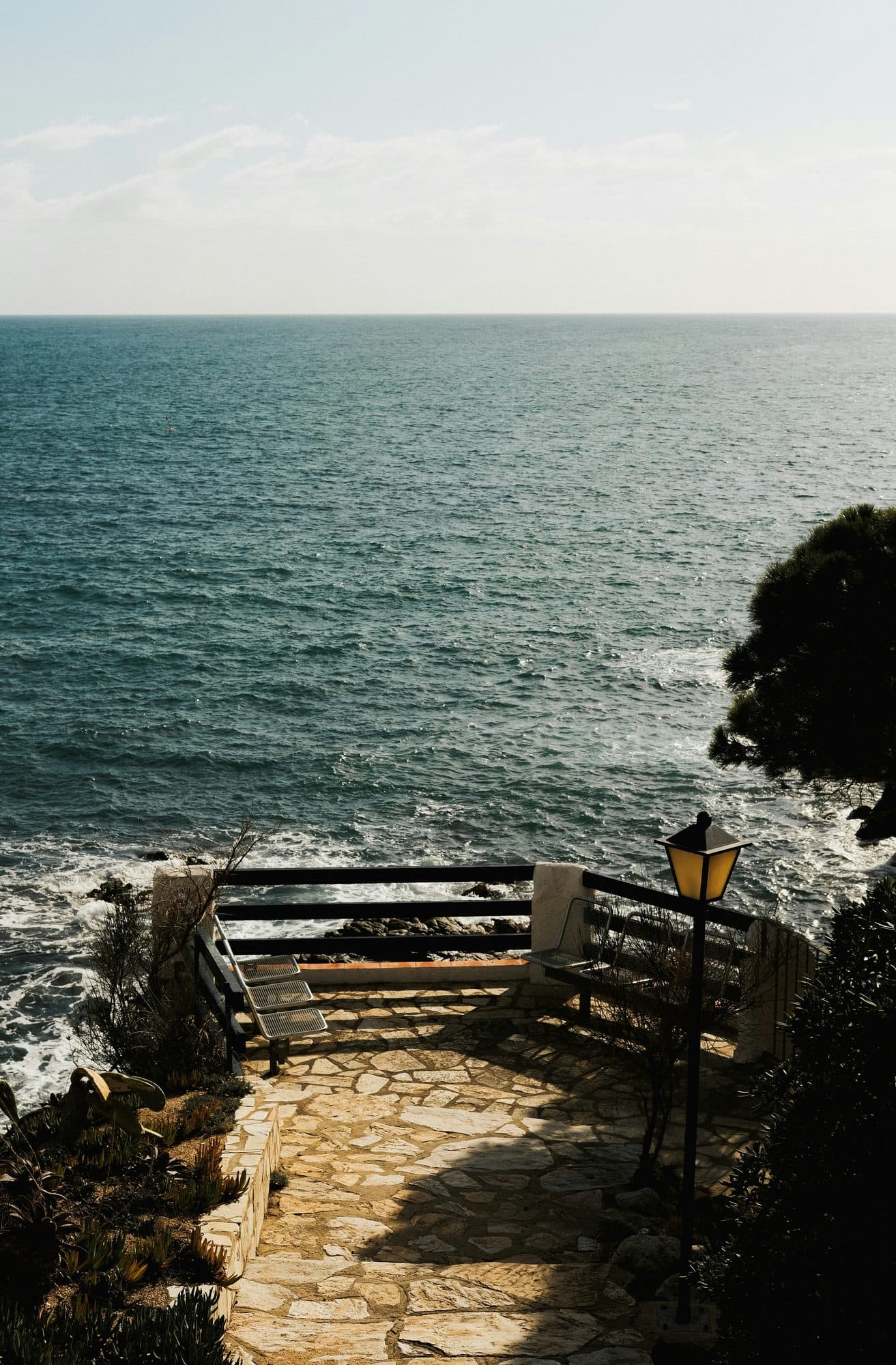
The Camí de Ronda in S'Agaró is one of the most pleasant walks on the Costa Brava, ideal for anyone after something short, easy and beautiful. It runs between Sant Pol and Sa Conca along a path in immaculate condition, mixing gentle cliffs, Mediterranean lookout points and early-twentieth-century architecture.
Walking it feels like stepping into a postcard: stone stairways, white pergolas, balustrades looking out to sea, small balconies from which the coastline seems to run on forever. Plenty of visitors call it simply the most elegant path on the Costa Brava.
What makes this stretch special is that it asks nothing of you but time. No real effort is required — it takes under an hour — and it offers a surprising variety of corners along the way. The breeze arrives clean off the sea, and on calm days the water turns that particular turquoise this stretch of the Girona coast is known for.
The Cap de Creus route
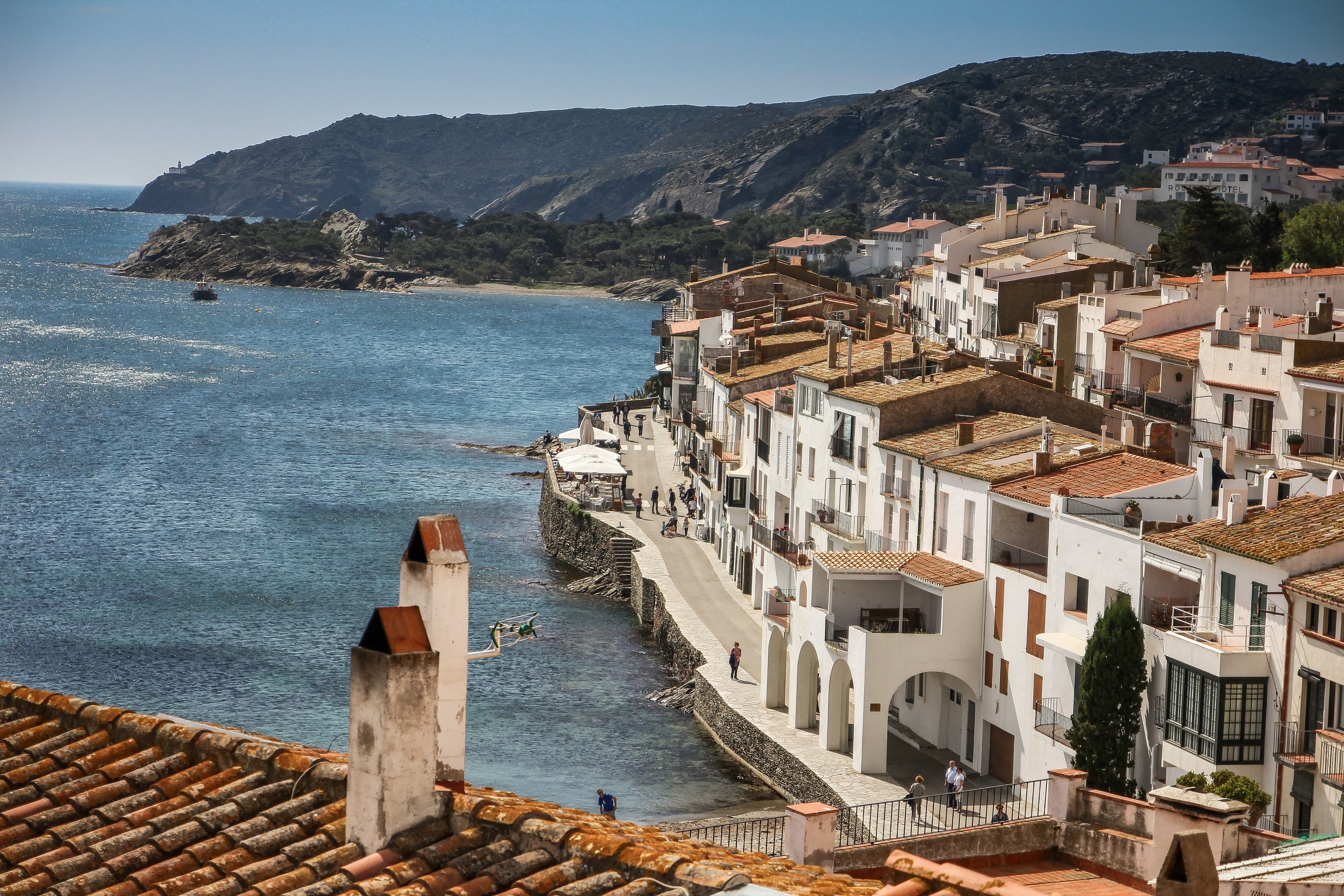
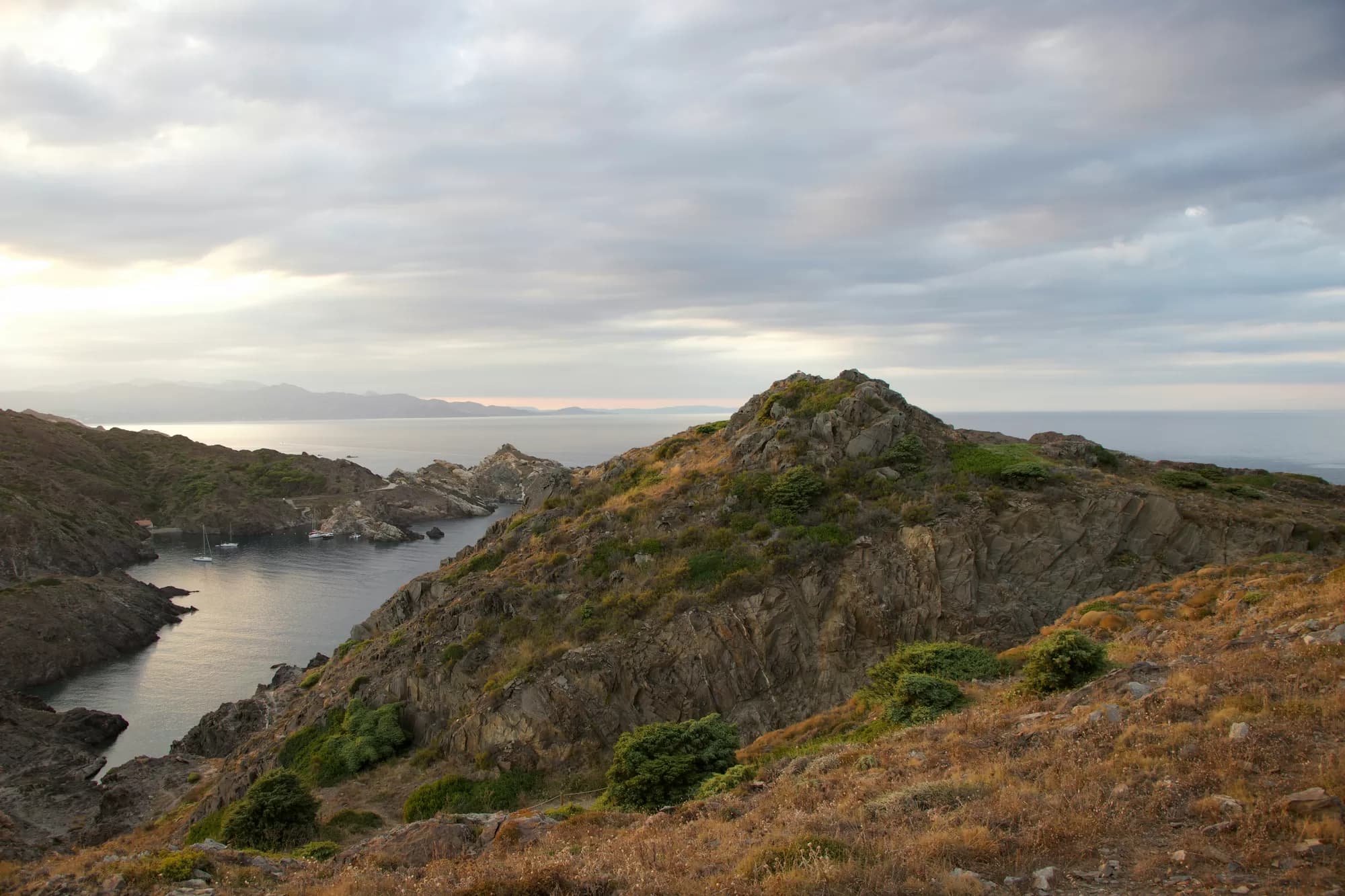
From Cadaqués to the lighthouse at Cap de Creus runs one of the most striking trails in all of Catalonia. Here the landscape turns on its heel: rock formations worn down by the tramuntana — the north wind that scours this coast for days at a stretch — minimal vegetation, bare cliffs and a sea that seems to have no edge. This is the easternmost point of the Iberian Peninsula, where the light hits the coast with a force found nowhere else.
Many walkers describe the route as lunar — a place where it feels as if land and sea were carved out by some capricious force. The path itself isn't difficult, but it does ask for some stamina, since most of it lies exposed to sun and wind.
The final stretch, the lighthouse cutting its shape against the horizon, is one of the most memorable moments of all. There, silence mixes with the sound of the sea and the sense of standing somewhere remote, genuine, and Mediterranean to its core.
From Calella de Palafrugell to Llafranc
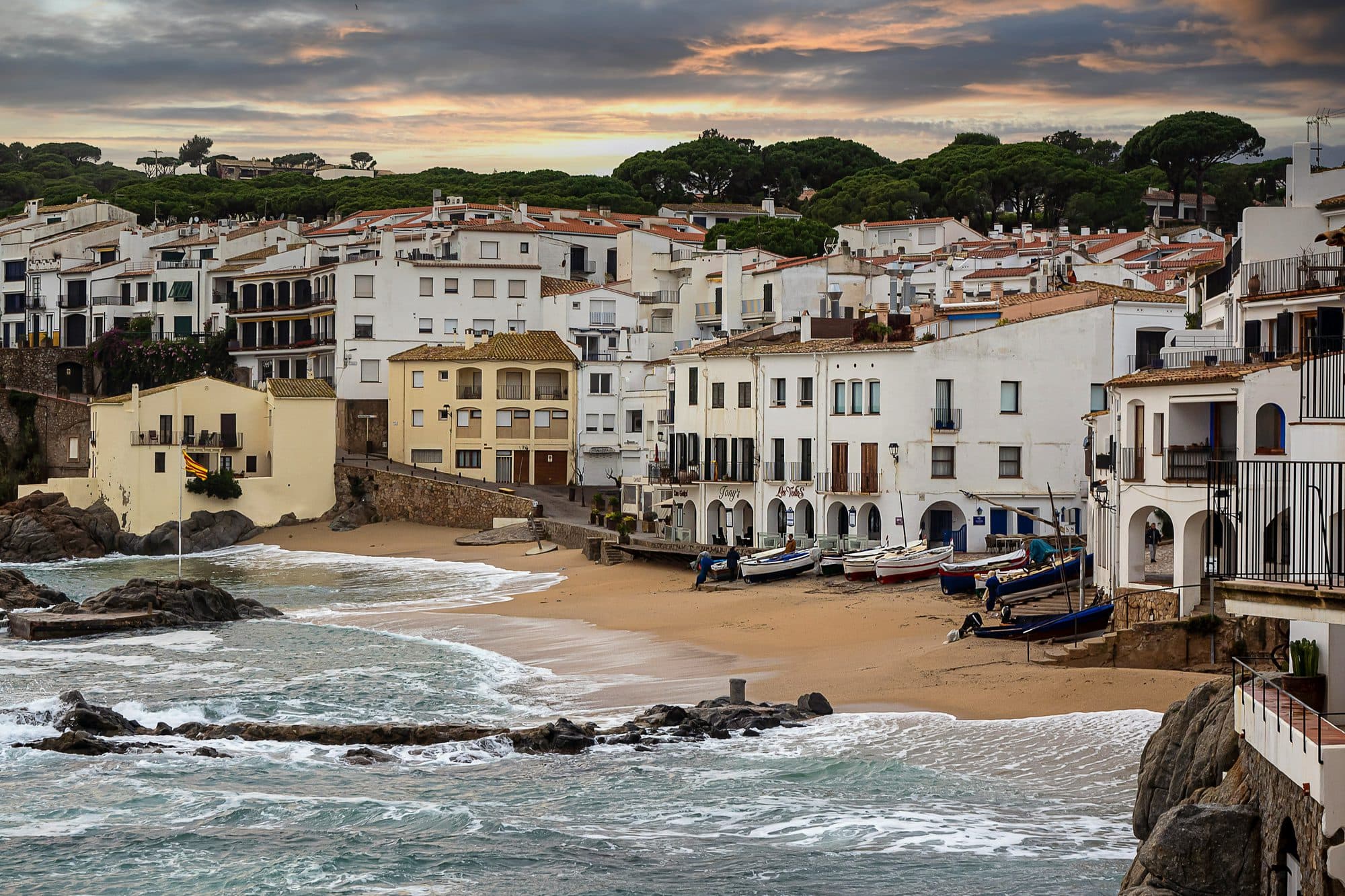
This short stretch of the Camí de Ronda is one of the most charming on the whole coast. It links two emblematic towns — Calella de Palafrugell and Llafranc — in a gentle walk through pine woods, cliffs and small terraces above the sea.
The path is short but full of small pleasures: the sea knocking softly against the rocks, the smell of pine, fishermen murmuring as they ready their boats, and the view from the Carles Sentís lookout, one of the most photographed in the Empordà.
It's a fine route for a morning: stop at a cala, take a swim, then carry on to Llafranc, where the unhurried mood invites you to sit down at a terrace facing the sea. And if you'd rather stay put in Calella, here's where to eat in Calella de Palafrugell.
Es Castell to La Fosca (Palamós)
Between La Fosca and Es Castell lies one of the most genuine, least crowded stretches on the whole Costa Brava. It's a route that mixes beach, woodland, history and one of the corners locals love most: Cala S'Alguer.
The path starts behind La Fosca, where the woods close in on the sea and the trail winds between tree trunks, roots and the constant smell of resin. Halfway along appears S'Alguer, a small cluster of eighteenth-century fishermen's cottages painted white and green. Travellers often call it a trip back in time — a corner that has kept its seafaring character intact.
Further on, the route continues to Es Castell beach, one of the few that has resisted development and kept its wholly unspoiled character. Golden sand, clear water, quiet: a privilege that's getting harder to find.
Through the Aiguamolls de l'Empordà
If the Costa Brava means cliff and rock, the Aiguamolls de l'Empordà show its other face: wet meadows, lagoons, reed beds, and one of the most important bird habitats in the western Mediterranean.
The paths here are flat and calm, ideal for a family walk or for anyone after a natural setting with no real exertion. Hides scattered through the park let you watch storks, herons, flamingos and dozens of migratory birds that find a steady refuge here throughout the year.
Visitors tend to agree on one thing: this route brings calm. The only sounds are birdsong and the wind moving through the reeds. And its closeness to the Empordà beaches means walking and swimming fit easily into the same day.
The route is flat and well signposted, suitable for all ages, and can be done on foot or by bike. In spring the park shows its liveliest side, with wildflowers, reflections and a golden light that turns every photograph into something close to a painting. Visiting the Aiguamolls is discovering the Costa Brava's calmest, greenest, wettest side — a reserve of life that stands in contrast to the raw, wind-scoured coast at Cap de Creus. A good place to switch off and reconnect with something closer to wild nature.
The best routes on the Costa Brava
The Costa Brava's trails are more than paths: they're a way of understanding this territory from the inside, of feeling the mix of sea and mountain that defines the region. From elegant walks along the water to wild, tramuntana-scoured landscapes, by way of hidden calas, fishermen's cottages and marshes full of life.
To explore these routes is to discover a more intimate, quieter, deeper Costa Brava. One you experience by walking, breathing, watching — and one that leaves its mark on anyone who wanders into it without hurrying.
Frequently asked questions
What's the best Costa Brava route if I only have one morning and I'm not very fit?
The Camí de Ronda in S'Agaró is the one most recommended for beginners — it's the only stretch that's fully paved, with no sharp gradients and railings throughout. You can finish it in under an hour, and it has several access points and safe lookouts along the way. It's the route most first-time visitors choose for an easy introduction to this coastline.
Is it safe to walk to the Cap de Creus lighthouse on days with strong tramuntana winds?
It isn't advisable. The tramuntana can gust past 60–80 km/h, and since the landscape here is exposed, with uneven rock and no shade, walking becomes uncomfortable and can even turn dangerous. On days of strong wind, local hikers tend to choose sheltered routes instead — the Aiguamolls de l'Empordà, or the inland stretches of the Camí de Ronda between Calella and Llafranc. When the wind is moderate, bring glasses against the dust, extra sun protection, and plenty of water.
Is the Calella de Palafrugell to Llafranc route suitable for young children or a stroller?
Not with a stroller — the path has narrow stretches, stairs and walkways cut into the rock. But for children who already walk on their own (from around 4–6 years up), it's one of the routes families rate most highly: short, engaging, with sea views throughout and plenty of shade. It also allows stops at small calas for a swim, ending in Llafranc, which has safe places to rest.
Which route is best for avoiding crowds, even in high season?
The La Fosca–Es Castell–Cala S'Alguer route, near Palamós, is one of the quietest stretches on the whole Costa Brava, even in August. Access isn't as immediate as on other trails, so it draws fewer casual visitors. Es Castell is also a protected beach with no development around it, which keeps crowds down considerably. Plenty of locals choose exactly this stretch when they want the "real" Costa Brava without the mass tourism.
Where can I see wildlife in the open without walking long distances?
The Aiguamolls de l'Empordà Natural Park is the best option. The main hides sit close to the car parks and are linked by entirely flat paths. Within a few minutes you can spot storks, herons, coots, night herons, and at certain times of year, even flamingos. It's ideal for photographers, families and travellers after a natural experience without a demanding walk.