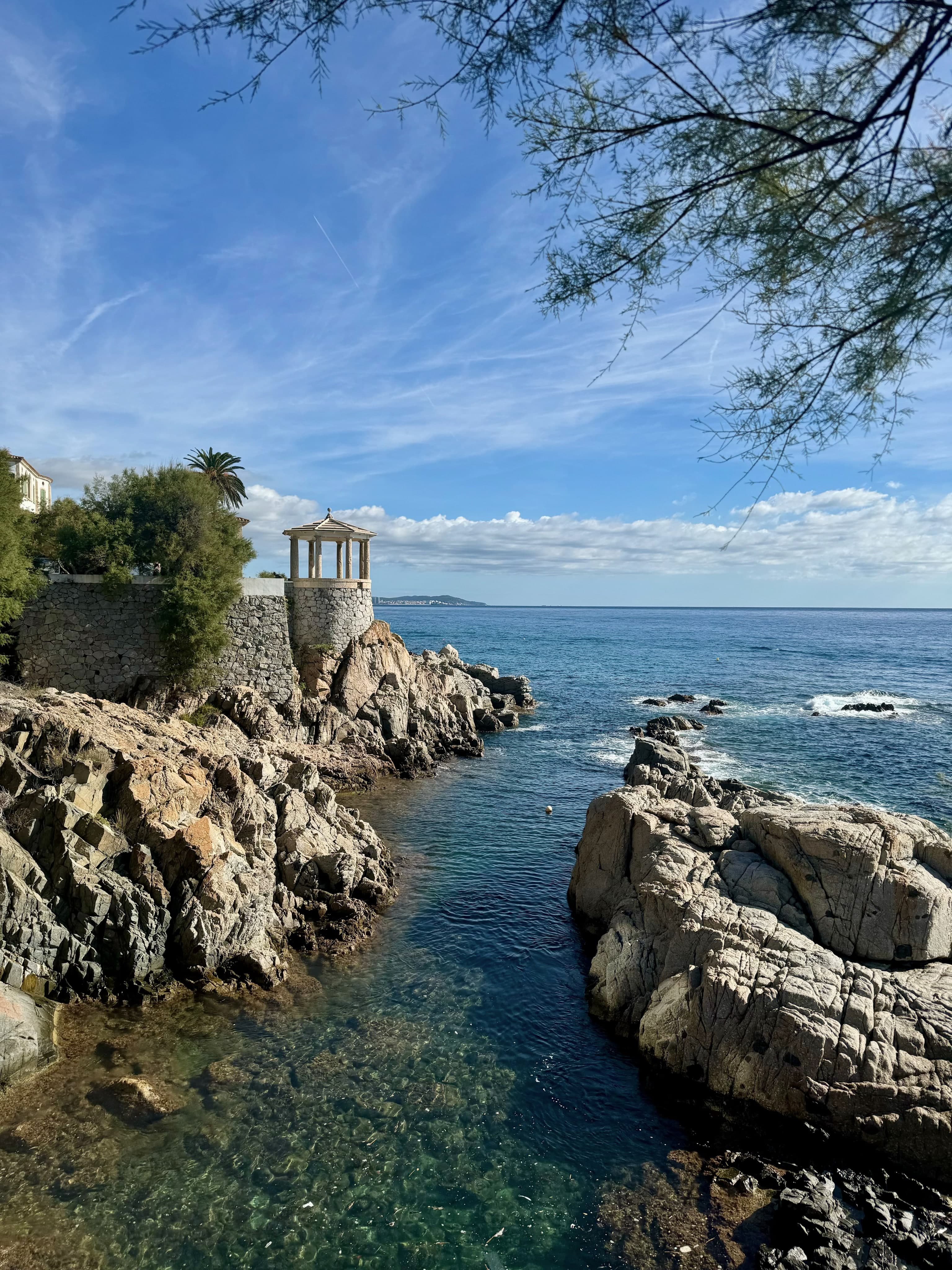
S’Agaró is a case apart on the Costa Brava: it didn't grow up around a harbor or a fish market, but from a plan drawn up in 1916 by the architect Rafael Masó. You feel it on every corner, and it's exactly what lets a short visit almost plan itself, with no need to wander side streets guessing what's worth the detour. Below, five essential stops for seeing the best of S’Agaró in a day, from the architecture to the sea, and from the lookout to the table.
The camí de ronda from Sant Pol to Sa Conca
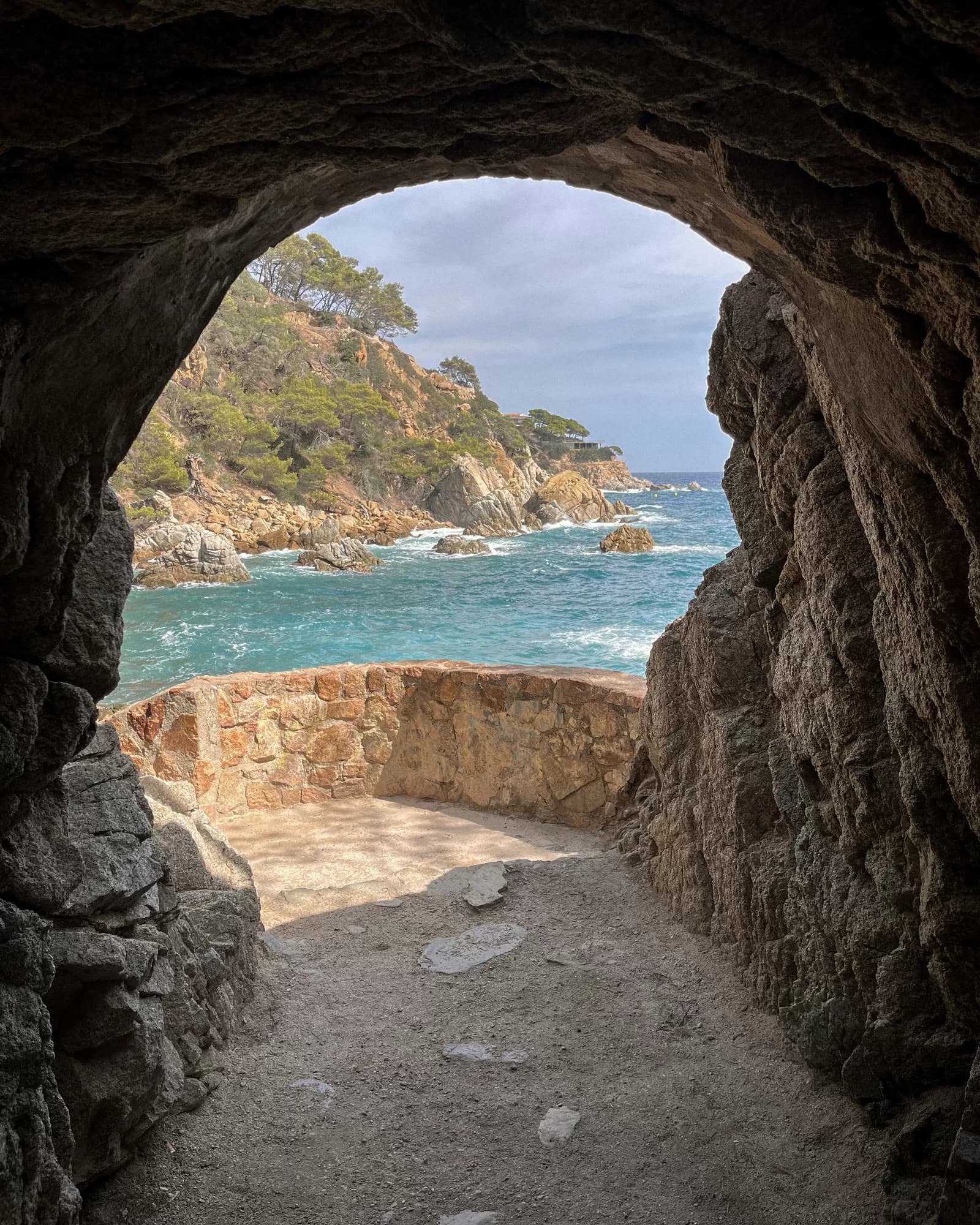
This is the walk that defines S’Agaró, and the obvious place to start. About two kilometers, well maintained, with barely any climb, linking Platja de Sant Pol to Platja de Sa Conca along the cliff edge. Unlike most coastal paths in Catalonia, this one wasn't born as a watch-path: it was designed as a piece of landscape architecture, with stone arcades and lookouts placed on purpose so the walker stops.
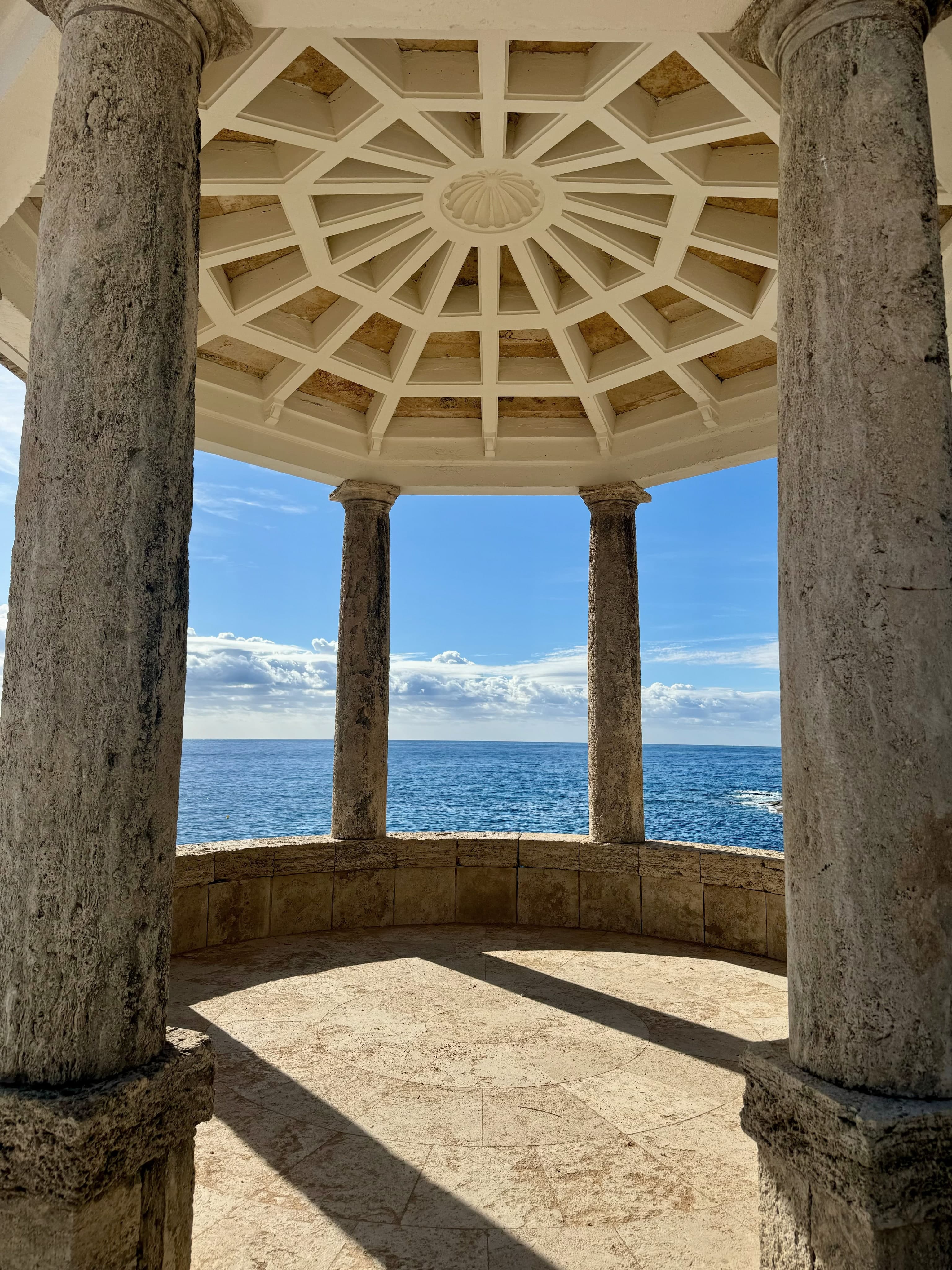
Halfway along stands the Mirador del Cap de Mort, the widest view on the whole route. You can do it with children or with no hurry at all: it takes just over half an hour, but it's worth stretching out.
Cala Pedrosa
Tucked away halfway along the camí de ronda, this is S’Agaró's most photographed cala and also its smallest: clear water, good for snorkeling, and a granite menhir among the rocks that's a reminder this coast was inhabited long before the town existed.
There's no beach bar or sunbed rental here. Anyone after more facilities and wider sand has the alternative at the far end of the path, Platja de Sa Conca.
The Sant Pol beach huts
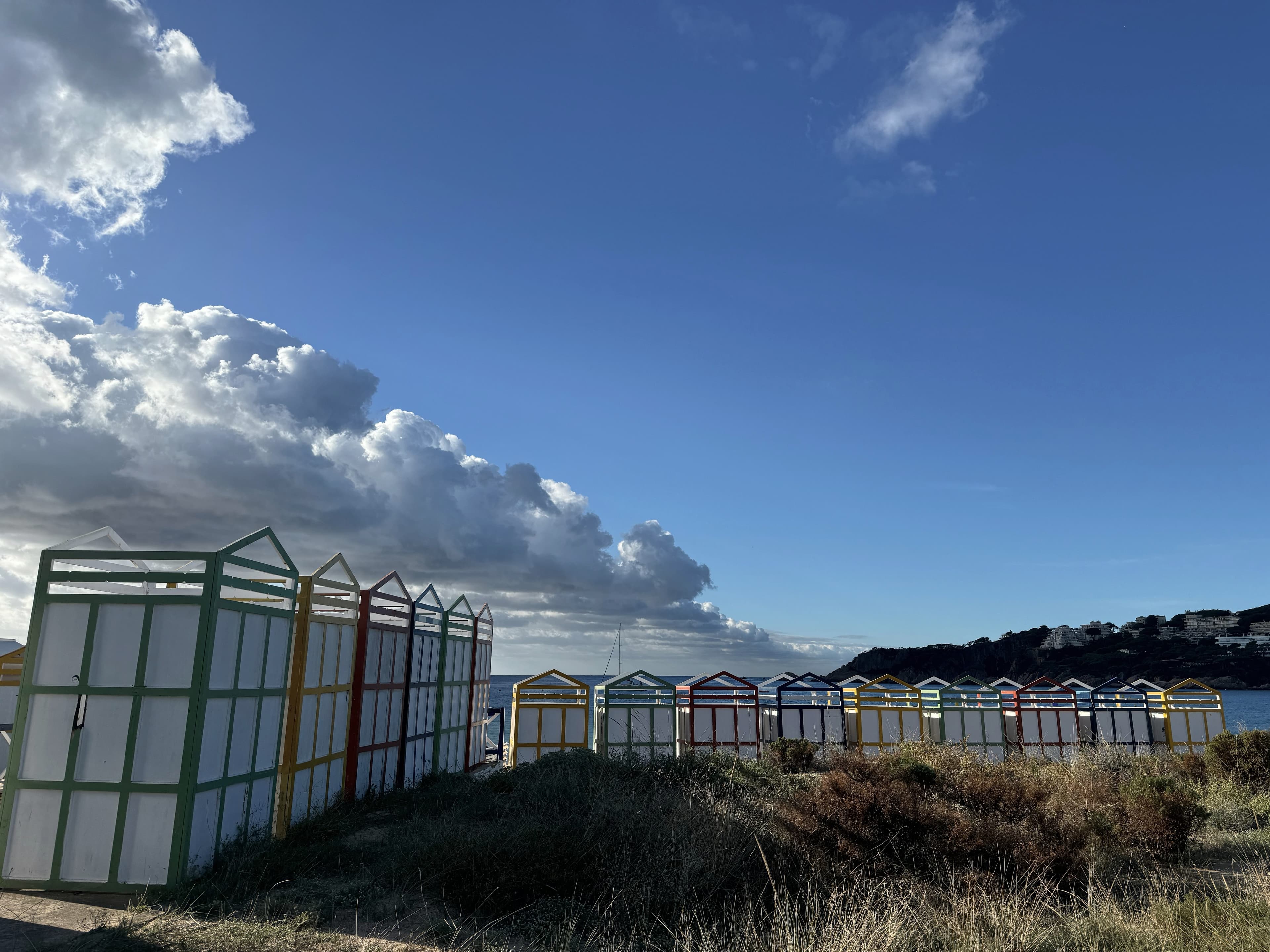
Forty-five wooden huts painted in bright colors, lined up facing the sea along Platja de Sant Pol, are one of S’Agaró's most recognizable sights. They've belonged to local families for generations and aren't rented out individually, but photographing them — especially late in the afternoon, as the light softens — is close to a rite of passage for a first-time visitor.
Rafael Masó's garden town
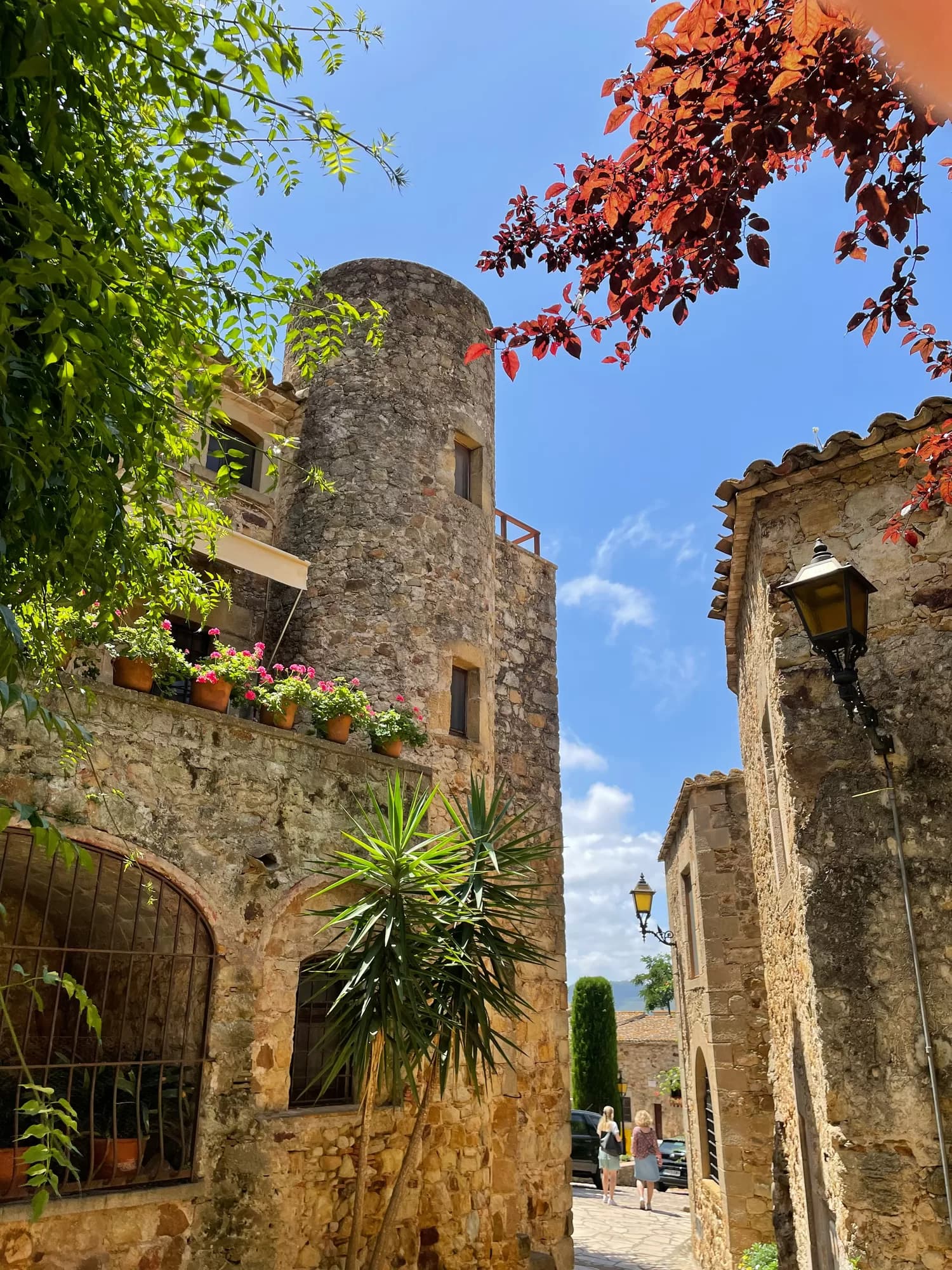
Before or after the coastal walk, it's worth wandering the inner streets without any particular route in mind. Everything you see — villas of clean Mediterranean lines, gardens tended down to the last hedge, even the layout of the streets themselves — answers to a single commission: the one the industrialist Josep Ensesa gave to Rafael Masó, the central figure of Girona noucentisme, to build an entire town at once.
That's why S’Agaró looks like nowhere else on the Costa Brava: there are no layers added by later generations here, just a plan carried out exactly as it was drawn.
The Hostal La Gavina
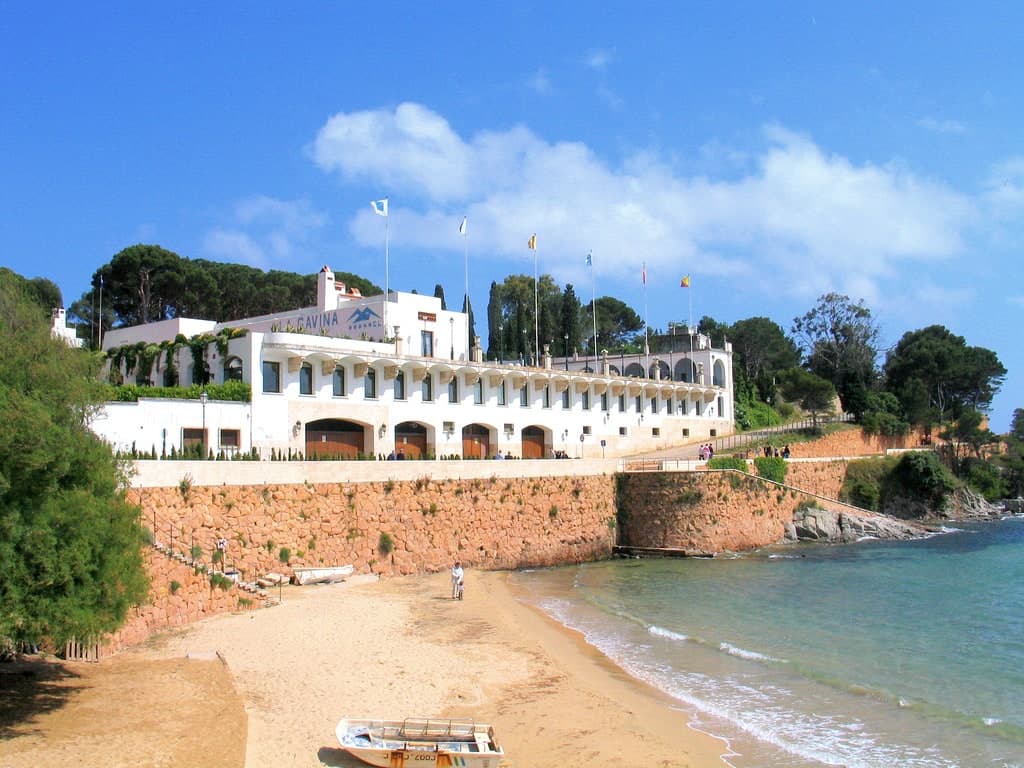
The route closes with the hotel that has anchored S’Agaró since 1932, opened by the same Ensesa family that built the town. You don't need to stay there to wander its gardens or have a drink with a sea view; and for a meal worth marking the occasion, there's the restaurant Candlelight, led by chef Romain Fornell.
Frequently asked questions
How much time do you need to see S’Agaró in a day?
Half a day covers the essentials: the full camí de ronda from Sant Pol to Sa Conca (just over half an hour without stops), a swim at Cala Pedrosa, and a walk through the town's streets. If you'd also like a leisurely meal by the sea or a longer afternoon at one of the calas, plan for the full day.
Where do you park to walk the camí de ronda?
There's parking beside Platja de Sant Pol, at one end of the path, and also near the boatyard in Platja d’Aro, close to the other end at Sa Conca. In high season both fill up early, so it's worth arriving early or parking a little further out and walking in.
Is it a good plan with children?
Yes. The camí de ronda between Sant Pol and Sa Conca is well maintained and has almost no climb, so it's manageable at an easy pace even with a stroller on the early stretches. Cala Pedrosa, by contrast, is reached over rocks and steps, better suited to children who already walk on their own.
What's the best time of year to visit S’Agaró?
Outside July and August is best: the camí de ronda and the calas see far fewer people, and the weather stays pleasant for walking in spring and early autumn. In peak summer, going early in the morning is the best way to avoid the crowds at Cala Pedrosa.